#war

Статті

How air raid alerts are paralyzing Kyiv

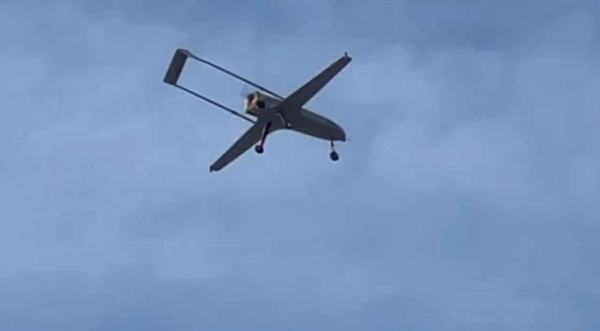
What helps you stay sane? Nothing! That is roughly how Kyiv residents have been describing their state of mind over the past week. Air raid alerts keep sounding one after another. What is that noise in the sky? A Ukrainian fighter jet or an enemy Shahed drone? Most likely, the latter.Texty.org.ua analyzed how air raid alerts were distributed throughout the day in late August and how much working time they cost.After August 26, Russia sharply intensified its drone attacks on Kyiv and the surrounding region. It seems Russian jet-powered drones have moved into the capital’s skies. But as air raid alerts skyrocketed, the workday was shattered into short stretches of time. The city was brought to a standstill.Читати українською
Статті

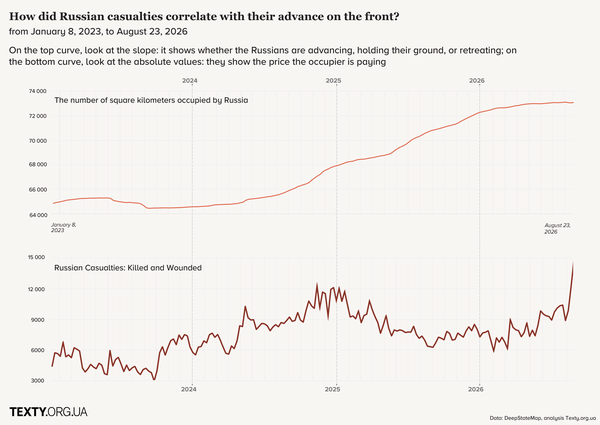
Trend toward victory. Russian advances stall as casualties surge

Trend toward victory. Russian advances stall as casualties surge
In early June, we published another analysis of the current situation on the frontline. Today, we explain what has changed since our previous publication. We examine how the situation has evolved along each section of the frontline from north to south, look at which positions have been lost or retaken, and analyze the tactics used by both sides.Читати українською
Статті

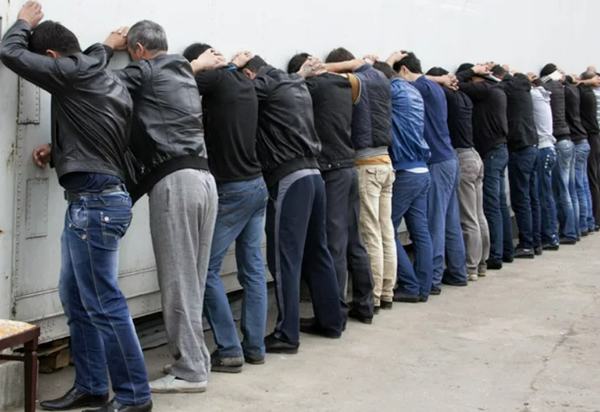
"The Russians were afraid of Azov fighters". Azov Brigade soldier August on the Olenivka explosion and torture in Taganrog

A soldier from the 12th Special Forces Brigade Azov, call sign August, lost a leg and suffered severe eye damage in the Olenivka penal colony and learned German in Taganrog. He spoke about the terrorist attack, pro-Ukrainian doctors in Donetsk, and Russian prison guards who feared the superhuman abilities of Ukrainian soldiers.Читати українською
Журналістика даних

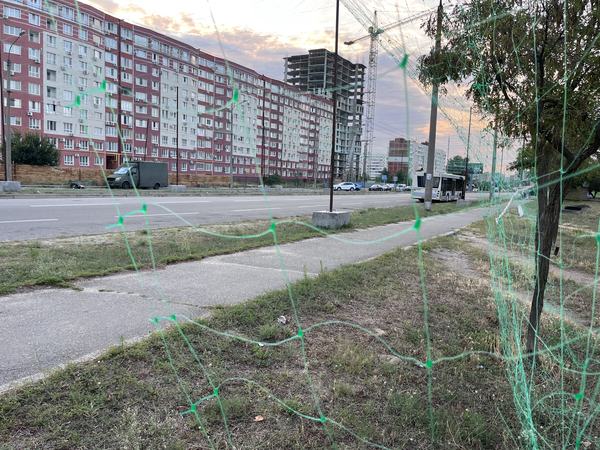
Within FPV's reach. How Zaporizhia is getting used to living under nets

Within FPV's reach. How Zaporizhia is getting used to living under nets
The advancing front line and the increased flight range of Russian drones have led to a sharp rise in FPV strikes on Zaporizhzhia. In just one month, the city has been covered with anti-drone meshes, and locals are adjusting to the new challenges of war. Together with analysts from the Center for Information Resilience (CIR), we analyzed the geography of FPV drone attacks on Zaporizhzhia and determined what cities within FPV range can expect.
Статті

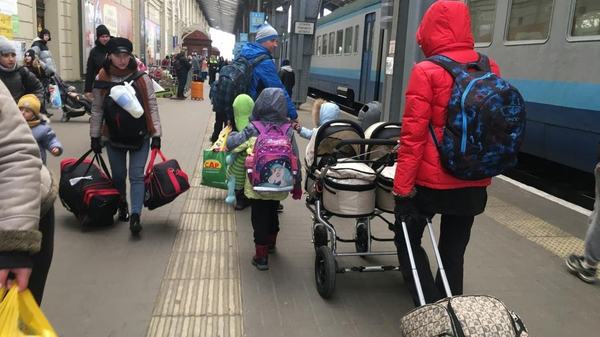
The battle for people: Ukraine is losing population faster than Russia

The battle for people: Ukraine is losing population faster than Russia
In recent months, heated debates about migrants have been raging in Ukraine — from arguments on social media to public statements by officials. A wave of memes about "Indians in Ukraine" has swept across those same social media platforms. But amid all the emotional uproar, the main issue is being lost: the demographic crisis is becoming truly dangerous. The country’s population is shrinking faster than it was before 2022. That is precisely why the state needs a well-thought-out migration policy, a strategy to bring back its own people and attract foreigners. The state migration policy strategy adopted in 2017 expired in 2025, and a new one — covering the period up to 2035 — is still only being developed.Читати українською
Статті

Why Ukrainians soldiers haven't left their combat positions for months

Why Ukrainians soldiers haven't left their combat positions for months
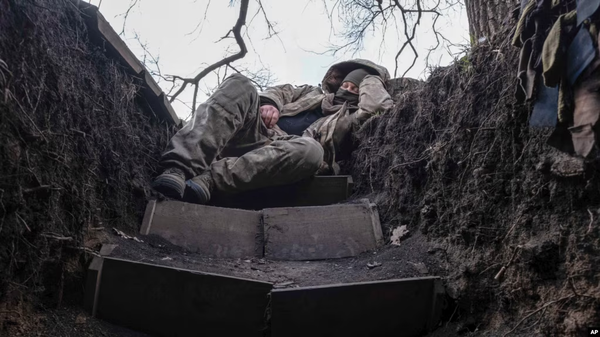
"They held their positions for 90, 200, and sometimes 240–280 days", we read in the news. Recently, Volodymyr Zelenskyy commended a commander whose unit spent 343 days on the front lines. There are no set rotation periods, but commanders usually try to rotate units much more frequently — from a few days to one or two weeks — to maintain combat capability. So, staying on the front lines for 30–200 days is a consequence of the harsh conditions of war. Here's why this is becoming the norm.Читати українською
Статті

How Ukraine’s long-range strike system works against Russia

How Ukraine’s long-range strike system works against Russia
When Ukraine first struck deep into Russian rear areas, these were considered isolated cases. However, by 2024–2025, it had become clear that a new type of operation had emerged. Systematic pressure on the enemy’s infrastructure, industry, and logistics hundreds and thousands of kilometers from the front lines. The shift in approach was not even about distance, but rather the emergence of a whole range of Ukrainian long-range weapons — from inexpensive unmanned aerial vehicles (UAVs) to missiles. It was precisely this combination that gradually changed the nature of the war.Читати українською