Статті
Ukraine has changed the math of the war. Why that is not enough to win
In retrospect, the period from late 2024 to early 2025 in the Russo-Ukrainian war can be seen as a time that did not bode well for Ukraine, in terms of the immediate prospects on the front lines and, consequently, the strength of our negotiating position.
2024: a critical year for Ukraine
In 2024, Russians started to crawl forward at the front - for the first time since July 2022. Ukraine lost approximately 3,600 square kilometers of territory that year. These were not breakthroughs in our defense. The front line was pushed by Russians, but there was no frontline collapse. At the same time, Russia sought to translate its local battlefield gains into strategic dividends, and overall this trend did not bode well for Ukraine.
The gradual Russian advances at front line reflected growing problems with manning, command, and uneven supplies within the Defense Forces of Ukraine. As a result, Ukraine lost Ocheretyne, Vuhledar, Kurakhove, New York, and Velyka Novosilka, while fighting reached the outskirts of Pokrovsk and Myrnohrad.
At the same time, Russia had devised an optimal military strategy on the battlefield that it could sustain for some foreseeable time given its resources. The strategy relied on the Russians’ superiority in troop numbers and firepower and was aimed at converting local advances on the front into strategic dividends, while spreading the narrative that further resistance by Ukraine and its international support were futile.
Donald Trump’s return to the White House meant a shift in the United States’ position on the war in Ukraine. Trump and his inner circle made no secret of their skepticism about the role of Euro-Atlantic security in US foreign policy more broadly and towards support for Ukraine in its war against Russia in particular.
It was expected that the US would stop providing direct military and financial support to Ukraine, as it had been done under the administration of Joe Biden. In 2022–2024, Ukraine received between $34 billion and $35 billion in US assistance in the form of weapons, equipment and ammunition alone. Losing one of its two key partners did not bode well for Ukraine either.
Furthermore, even without a shift in the US stance, it was becoming increasingly clear that the political West had no intention of carrying out an economic and industrial mobilization, as had been the case during the wars of attrition of the 20th century. And by the end of 2024, it was clear that Ukraine’s strategy of buying time for its partners to mobilize and gain a quantitative and qualitative advantage over Russia on the battlefield would not materialize.
New approaches had to be found while simultaneously conducting a strategic defensive operation within these constraints.
Taken together, these trends were expected to weaken Ukraine’s negotiating position further, narrowing its strategic objective to a more modest one—to prevent Russia from winning and to force it to abandon its maximalist political demands without making concessions on matters of principle (territory, sovereignty, security).
As a result, in 2025 Ukraine faced unprecedented dual pressure from Russia and the United States to settle war through unjustified concessions and disregard for its national interests.
Ukraine faced unprecedented dual pressure from Russia and the United States
However, we managed to withstand this dual pressure and avoid concessions that could have undermined domestic unity and Ukraine’s ability to continue resisting if Russia violated the agreements in question. Today, Ukraine is generally in a better position on the battlefield than it was in 2024–2025. The enemy’s advance has slowed, while the cost of that advance has remained consistently high at 30,000–33,000 killed and wounded per month.
Ukraine has managed to get through the peak period of military, political, and diplomatic vulnerability, another surprise for most observers, especially given the situation that had developed by late 2024 and early 2025. So how did this happen, and what are the limitations of the current strategic framework for waging the war, developed throughout 2025?
Europe's key role
Unlike the United States, which has "two beautiful oceans", Europe is genuinely in the same boat as Ukraine when it comes to security and the prospects of the Russo-Ukrainian war.
When it became clear that the Trump 2.0 administration was going to withdraw its direct support for Ukraine, certain countries and EU institutions were faced with a very clear choice: either increase aid to Ukraine or leave Ukraine on its own against Russia and face the negative consequences should it collapse.
Europe chose the former, recognizing its own self-interest. It is cheaper to help Ukraine here and now than to deal with the consequences of its collapse later, given the continent’s lack of preparedness for a confrontation with Russia.
It was precisely the uncertainty surrounding US security guarantees that forced Europe to step out of its comfort zone formed in 2022-24 - where on the one hand, Russia’s aggression was clearly limited to Ukraine and on the other, there was no doubt about US obligations under Article 5 of the Washington Treaty (the founding document of NATO).
At the same time, Europe’s new primary responsibility for supporting Ukraine was an attempt to strengthen its position in dialogue with the Trump administration, prevent a rupture with the US, and gain as much time as possible to adapt to the new realities.
Calculations by the Kiel Institute for the World Economy in February 2026 showed that EU countries and institutions had largely managed to compensate in 2025 for the shortfall in US military and macroeconomic assistance.
Norway, Sweden, Denmark, Germany and the Netherlands stood out in particular. They were prepared to purchase weapons and ammunition both from their own manufacturers and producers in third countries, as well as from Ukrainian manufacturers.
UK, NORWAY, SWEDEN, DENMARK, GERMANY AND THE NETHERLANDS ARE THE CORE OF UKRAINE’S STRATEGIC REAR IN EUROPE
In fact, when it comes specifically to military support, these countries, together with the United Kingdom, form the core of Ukraine’s strategic rear in Europe.
Incidentally, in 2026, the EU decided to provide aid to Ukraine in a more balanced manner: of the €45 billion allocated for this year, €28.3 billion will go toward the purchase of weapons and military equipment, with the remainder going toward macroeconomic assistance. In contrast, in 2025, the EU primarily helped Ukraine cover its budget deficit for social benefits.
Another area of assistance was the PURL (the Prioritized Ukraine Requirements List) mechanism, through which priority weapons that Europe cannot produce on its own are purchased from the United States.
The mechanism was launched in July 2025 and initially focused primarily on ammunition for air defense systems (including not only Patriot, but also NASAMS and FrankenSAM), as well as air-to-air missiles for F-16 Fighting Falcon. In total, over the 11 months of its existence, the program received $6 billion in contributions, and it was thanks to this program that Ukraine weathered the winter of 2025–2026 better than it otherwise would have if direct US aid had been cut off (as paradoxical as that may sound, given the harsh winter).
EU countries and institutions chose to proceed very cautiously when it came to the Trump 2.0 administration’s peace initiatives regarding the Russo-Ukrainian war. Europe was clearly unhappy with Washington’s "tilt" toward Moscow, but no one was willing to say so openly and unequivocally.
Following the public confrontation at the White House on February 28, 2025, European leaders developed and articulated a common position whenever it became clear that the Ukrainian government could not cope on its own with the dual pressure from the United States and Russia.
Overall, Europe demonstrated remarkable political balancing in 2025. On the one hand, support for Ukraine was maintained and even strengthened. On the other hand, despite the aggressive rhetoric of the Trump 2.0 administration toward Europe and questionable peace initiatives concerning the war in Ukraine, no EU country was willing to risk a break with Washington. Europe remains asymmetrically dependent on the United States for security and did not possess all the tools needed to support Ukraine.
Only by exercising restraint toward the US and increased support for Ukraine could Europe buy itself time to adapt to a world in which the US is no longer the primary guarantor of security in the Euro-Atlantic region.
Robotics revolution
If Europe was able to provide Ukraine with resources and certain categories of critical weapons, Ukraine managed to carry out a robotic revolution that made it more self-sufficient in meeting battlefield needs.
The robotic revolution shifted the geometry of the battlefield and tactics in a direction that was quite favorable to Ukraine, given all our constraints.
It began in 2023 and accelerated in 2024. The driving forces behind the robotic revolution were a persistent shortage of ammunition for barrel and rocket artillery, the West’s inability to rapidly ramp up production, and uncertainty regarding continued support from partners. The decision was made to rely on the first generation of radio-controlled kamikaze drones based on FPV technology.
The driving forces behind the robotic revolution were a persistent shortage of artillery ammunition
While in early 2024 Ukraine and its partners were tracking the ratio of artillery ammunition usage (which is why the Czech ammunition initiative was so important), analysts at the UK-based Royal United Services Institute (RUSI) noted, based on the results of combat operations in 2024, that 60% of battlefield strikes by Ukrainian forces were carried out using UAVs.
Thus, the artillery warfare of 2022–2023 gradually evolved into a war of robotic systems, with unmanned platforms shaping the battlefield. While Ukraine had set a target of producing 1 million UAVs in 2024, by 2025 and 2026 the figures had risen to 4 million and 7 million UAVs of various types, respectively. The reliability of these systems continued to improve.
Today, it is UAVs that carry out the bulk of reconnaissance and strike operations across the entire depth of the enemy’s combat formations — from the infantry, armored vehicles, and artillery of line brigades at the tactical depth to heavier artillery, air defense systems, and electronic warfare (EW) at the operational-tactical depth, and logistics and support at the operational depth.
UAVs, which served as a supplement to the fire support system in 2022–2023, have become the backbone of the Defense Forces of Ukraine's fire support system. As for conventional tube artillery, the only types in demand today are long-range (35–40 km) high-explosive fragmentation shells, cluster munitions, and remote mining systems.
There is still a need for short-range ballistic and cruise missiles. Still, here too, there are greater expectations for new developments than for large-scale deliveries of ATACMS (Army Tactical Missile System) and Storm Shadow/SCALP EG missiles. Although they have proven effective, these systems remain in very short supply.
It is important that, between 2024 and 2026, Ukraine develops the capability to conduct operations at operational depth (what we call a "middle strike") thanks both to loitering UAVs similar to Russia’s Lancet and to the adaptation of drones for strategic strikes at operational depth through the integration of Starlink satellite internet and an increase in warhead weight.
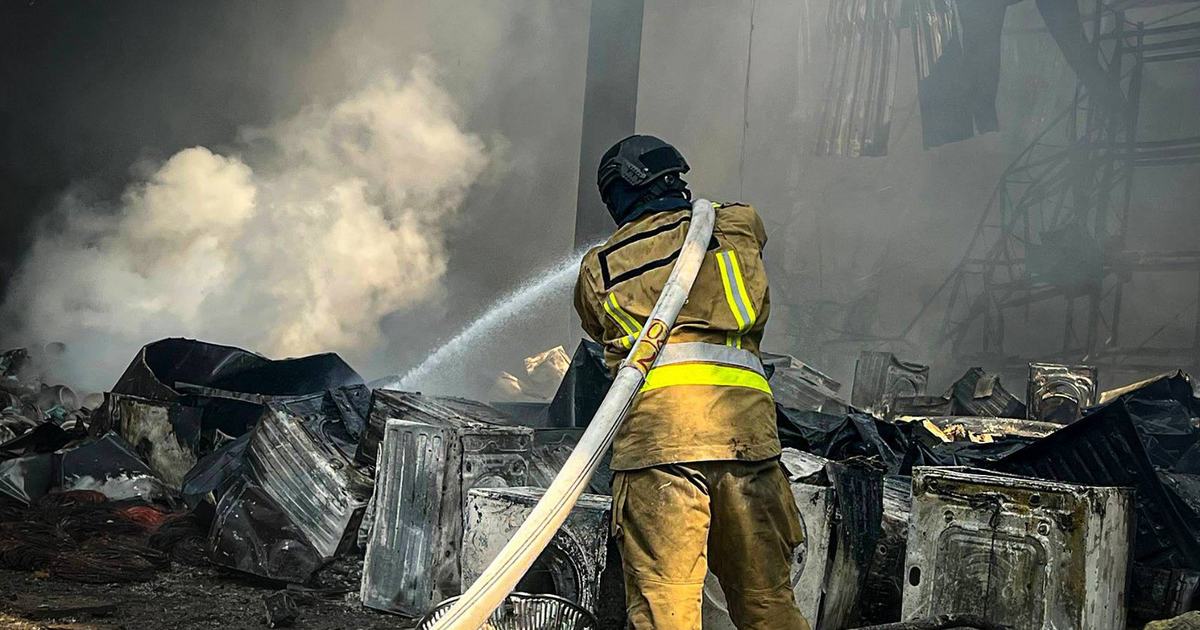
This allowed Ukraine to largely compensate for the limitations of GMLRS (Guided Multiple Launch Rocket System) munitions in terms of range, warhead weight, and guidance systems. GMLRS was the only mass-produced means of striking at operational depth in 2022–2023. It has also helped increase Ukraine’s self-sufficiency. All of this created the conditions for attempts to impose a logistical lockdown in 2026 on the temporarily occupied territories in southern and eastern parts of Ukraine.
The mass use of robotic platforms for air defense has been no less important. This includes both adapting the first FPV-based kamikaze drones for air defense missions on the battlefield and developing specialized interceptor drones.
The development of this capability, driven by a shortage of interceptors for the ground forces’ surface-to-air missile systems, helped the Defense Forces of Ukraine reach a figure of 260,000 enemy UAVs of various types destroyed between January and July 2026. Without effective drone-based air defense using interceptor drones, the Ukrainian military would be more vulnerable, given the enemy’s superior reconnaissance and strike capabilities across the entire depth of our combat formation.
Another important innovation has been the spread and use of ground drones (unmanned ground vehicles, UGVs), both for combat support, including logistics and medical evacuation, and for combat missions. UGVs emerged in response to Russian efforts in 2024–2025 to sever the link between forward positions and the immediate rear by targeting the crews of armored vehicles responsible for logistics and medical evacuation. It is worth noting that evacuation using UGVs places high demands on the robots’ protection and speed, and effective solutions are still being developed.
Between January and July 2026, the Ministry of Defense of Ukraine contracted more than 22,000 UGVs. During the same period, UGVs carried out more than 66,300 missions.
Taken together, reconnaissance and strike UAVs operating at different depths, various types of air defense UAVs and UGVs now shape the battlefield. And all of these are products of Ukrainian arms manufacturers.
THE ROBOTIC REVOLUTION CHANGED THE MATHEMATICS OF WAR IN UKRAINE’S FAVOUR
Direct links between manufacturers and users played an important role in the innovation cycle, as did market forces, with manufacturers competing in the same niches and constantly improving their products in terms of price and quality. Tools such as DOT-Chain Defense and Brave1 Market also played an important role.
No less important is the fact that the robotic revolution changed the mathematics of war in Ukraine’s favor. A war fought according to the doctrines of the second half of the 20th century, with its emphasis on conventional heavy weapons and their ammunition, would have left Ukraine with no chance because of its limited resource base and its partners’ unwillingness to turn their own latent economic advantage into an advantage for Ukraine on the battlefield.
Within the framework of the robotic revolution, Ukraine has better chances given its limited financial resources.
Beyond increasing Ukraine’s self-sufficiency in producing the systems that now shape the battlefield, it is also important to understand how the robotic revolution has changed the battlefield itself and the tactics of both sides.
The saturation of the tactical depth, up to 30 km, with an increasing number of real-time reconnaissance and strike systems has led to the emergence of a kill zone with a guaranteed level of destruction (you can read more about this in our project here).
This has led to increasingly dispersed, thinned-out combat formations on both sides across this depth, because any significant concentration of forces and equipment almost automatically becomes a target.
The continuous front line based on platoon and company strongpoints has ceased to exist. Instead, there are isolated foxholes with minimal human presence on the front line and enormous gaps in the combat formation.
On the one hand, this facilitates the infiltration of very small groups, from one to four foot soldiers, which has replaced the mass mechanized assaults that have almost disappeared as a phenomenon. The Russians placed particular emphasis on infiltration in 2025, taking advantage of their numerical superiority and disregard for human life. On the other hand, such a dispersed combat formation, combined with the effective use of different types of reconnaissance and strike UAVs, air defense UAVs, UGVs, and high-quality remote mining, has made it possible to maintain the defense despite an acute shortage of personnel.
Otherwise, it is difficult to explain how, in 2026, amid a robotic revolution, the Ukrainian army has managed to hold the line with fewer forces, particularly along the front line, while inflicting heavier losses on the enemy than in 2024, when the robotic revolution was only gaining momentum, and Ukraine had more personnel on the front line than it does now.
USING OUTDATED FORMULAS, MANY ANALYSTS PREDICTED UKRAINE'S COLLAPSE IN 2024
Based on the ratio of personnel to the length of the front line — drawn from the experience of 20th-century wars — many Western analysts were already privately predicting Ukraine’s collapse as early as 2024, citing problems with troop numbers and command and control.
But at that time, no account was taken of the consequences of the full-fledged robotic revolution or the extent to which it is radically changing the geometry of the battlefield and defensive tactics. Meanwhile, the revolution has led to the exhaustion of the potential of the Russian battlefield strategy formulated in 2024–2025.
Weaknesses of our strategy
Ukraine has once again managed to surprise the world positively, given the situation in late 2024 and early 2025, and this is an undeniable success that many have not even fully realized. However, an analysis of how this was achieved would be incomplete and biased without discussing the weaknesses of Ukraine’s current war strategy.
1.The current strategy addresses how to continue fighting, but it cannot answer the question of how to end the war as quickly as possible (within the next 6–12 months) on terms acceptable to Ukraine.
Ukraine’s key objective remains not merely the successful conduct of military operations (meaning both frontline and strategic strikes), but ending the war as quickly as possible on acceptable terms, since its continuation means a further aggravation of social, economic, and political risks due to direct and indirect demographic losses, the destruction of critical infrastructure, and the degradation of economic potential.
Thus far, the cumulative level of damage inflicted has proved insufficient to convince the Russian leadership to end the war without Ukraine having to make significant geopolitical concessions, despite the Armed Forces of Ukraine's growing ability to strike the enemy in 2024–2026.
A theory of victory based on outlasting the enemy is highly risky
A theory of victory based on outlasting the enemy while remaining critically vulnerable to enemy strikes on critical infrastructure is highly risky.
In fact, this is where a fundamental difference between Ukrainian and European interests also becomes apparent. While Europeans may view the preservation of Ukraine’s ability to mount systematic resistance for some time — provided the war remains confined to our territory — as an acceptable scenario, it is important for us not merely to maintain the capacity to wage combat operations, but to end them as quickly as possible on acceptable terms, bearing in mind all the risks of wars of attrition and total wars of the 20th century.
2. The current strategy does not address our structural problems.
Combining European resources with the innovation capabilities of Ukraine’s defense industry makes it possible to minimize the negative consequences of our structural problems to a certain extent, but it cannot fully resolve them.
This concerns a shortage of strategic management skills needed to wage a war of attrition, particularly in such critical areas as planning and the management of resources and personnel. As a result, Ukraine still struggles to find a mobilization model that is both legitimate and capable of providing a steady supply of qualified and motivated personnel.
The problem of effective coordination at the strategic level (president — Minister of Defense — commander-in-chief/General Staff), operational-strategic, and operational levels (corps reform is ongoing) also remains unresolved.
3. Critical dependence on foreign partners.
This problem has several dimensions. On the one hand, there remains a dependence on the US for interceptors for air/missile defense systems: as a result of Donald Trump’s impulsive decision to start a war against Iran, the shortage of interceptors — as demonstrated by the Russian strikes in July and August 2026 — has increased.
On the other hand, the US is constantly testing the strength of transatlantic relations — whether through its demands regarding Greenland or through a war against Iran. Ultimately, a number of European partner countries are not immune to a wave of populism that could lead them to refuse to continue supporting Ukraine at the necessary level. These include France, Germany, and, to a lesser extent, the United Kingdom.
4. Technology partially compensates for the shortage of troops, but it does not eliminate the human factor in war.
Innovations make it possible to fight quite effectively even amid personnel shortages and dispersed combat formations. Still, they do not eliminate all the challenges associated with troop rotations on the front line. This problem became critical in 2025 and remains so today.
Likewise, the planning of military operations starting at the tactical level and above requires high-quality skills from officers at the appropriate levels, since it is precisely synchronization and scale that ensure the necessary quality in war. Technological and tactical innovations do not remove the quality of soldier and officer training from the agenda — military education and training must also remain a focus.
5. The enemy isn't standing still and has the means to act asymmetrically.
Russia’s battlefield strategy has ceased to deliver the results it once did, largely due to Ukraine’s robotic revolution. This does not mean, however, that the enemy lacks tools to exert pressure.
Russia’s response to its inability to advance on the battlefield at the same pace as in 2024–2025, as well as to successful Ukrainian strikes deep inside Russian territory, has included attacks on military production facilities, warehouses, and critical infrastructure in the Kyiv area, ports in the northwestern part of the Black Sea, and infrastructure in frontline regions.
The success of Ukrainian air defense systems against Russia’s strategic UAVs powered by internal combustion engines has prompted the enemy to deploy and use jet-powered drones and inexpensive cruise missiles.
The blocking of Starlink satellite internet access for Russian forces in early February 2026 gave additional impetus to the Rassvet satellite communications system project. Once again, the enemy has demonstrated its ability to create serious dilemmas for Ukraine’s political and military leadership.
Instead of a conclusion
Our framework continues to be defined by two key factors. On the one hand, Ukraine has no choice but to resist, given the unacceptable political demands regarding a settlement and the Russian Federation’s unwillingness to abandon them while maintaining its offensive capabilities. Compounding this are the losses and destruction resulting from the hostilities that have been ongoing since 2014.
On the other hand, the country remains vulnerable to Russian attacks on critical infrastructure, and the continuation of the war means growing social, economic, and political risks due to demographic losses, the destruction of infrastructure, and the deterioration of economic potential.
Therefore, the key measure of success is not only delivering strikes of the appropriate intensity, but also bringing the hostilities to an end as quickly as possible on terms acceptable to Ukraine.
European material and financial assistance, combined with the innovative capabilities of Ukraine’s defense industry, has halted the negative strategic trend of 2024–2025, particularly on the battlefield. Today, the situation appears far less pessimistic than it did at the beginning of 2025: dual pressure from the United States and Russia to force us into an unfavorable deal has subsided, and the deterioration on the battlefield has slowed.
But this should not lead to complacency. The combination of European money and the innovativeness of Ukraine’s defense industry does not resolve all the structural problems associated with a war of attrition that increasingly displays characteristics of total war, if understood as the parties’ efforts to undermine each other’s ability to function and maintain the front line.
Ukraine continues to play a risky game: trying to compel the enemy to stop the war without making major concessions by carrying out strikes at the "necessary level", whereas Russia is waging a total war against us, hoping to achieve its stated political goals before it reaches its own point of no return.
Підпишіться, щоб отримувати найкращі статті на e-mail (раз на два тижні)

Підписатися