Статті
"The Russians were afraid of Azov fighters". Azov Brigade soldier August on the Olenivka explosion and torture in Taganrog
A soldier from the 12th Special Forces Brigade Azov, call sign August, lost a leg and suffered severe eye damage in the Olenivka penal colony and learned German in Taganrog. He spoke about the terrorist attack, pro-Ukrainian doctors in Donetsk, and Russian prison guards who feared the superhuman abilities of Ukrainian soldiers.
On the night of July 28–29, 2022, Russian forces blew up a barracks at a penal colony near Olenivka in Donetsk region, where Ukrainian soldiers were being held after being evacuated from the Azovstal steel plant following 86 days of heroic defense of Mariupol. At least 53 Ukrainian defenders were killed, and more than 130 were injured in the terrorist attack.
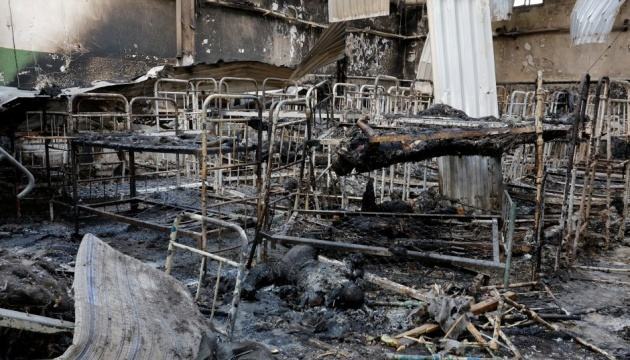
The Russians blamed the terrorist attack on Ukrainian forces, claiming that they had struck the prison with a HIMARS rocket. Ukrainian and international experts rejected this claim. However, the attack cannot be properly investigated because the Russians have denied both investigators and representatives of international organizations access to the site.
The "barracks of death" also held Azov Brigade soldier Yan Danylko, call sign August. He lost a leg and suffered an eye injury that later required the removal of his eye after he returned to Ukraine.
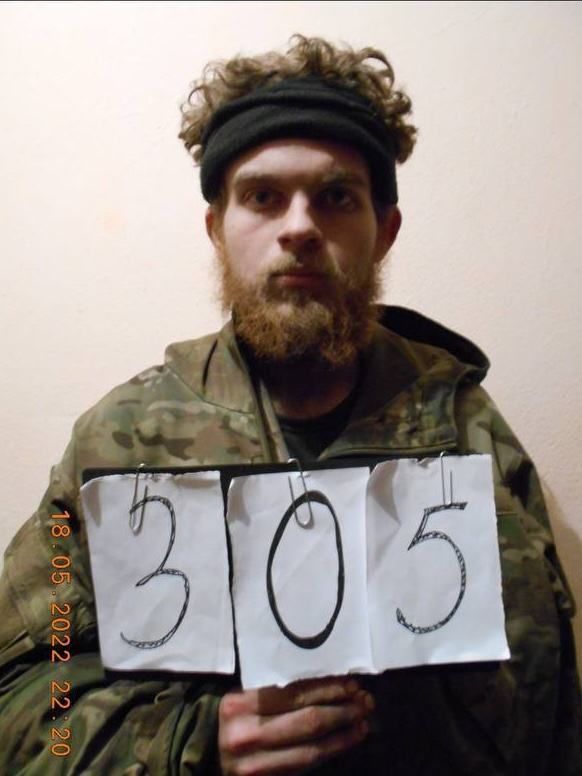
After being held in the penal colonies in Olenivka, Taganrog, and Kizel (Perm Krai), August returned home in June 2025 and is preparing to return to service. He told the publication Ukrainian Witness about the killing of Ukrainian defenders and his long journey home through Russian captivity.
Before the terrorist attack
According to August, when the soldiers from Azovstal were brought to the penal colony, there was initially chaos. There were many people, and the wounded were placed together with those who had no injuries. Later, however, the Azov fighters were separated, and the wounded were taken to a hospital in Donetsk. The Olenivka penal colony was not prepared to accommodate them, as it had previously been mothballed. There was not even a toilet there until a month later. "And even then, it was just a pit that we dug ourselves," the soldier recalls.
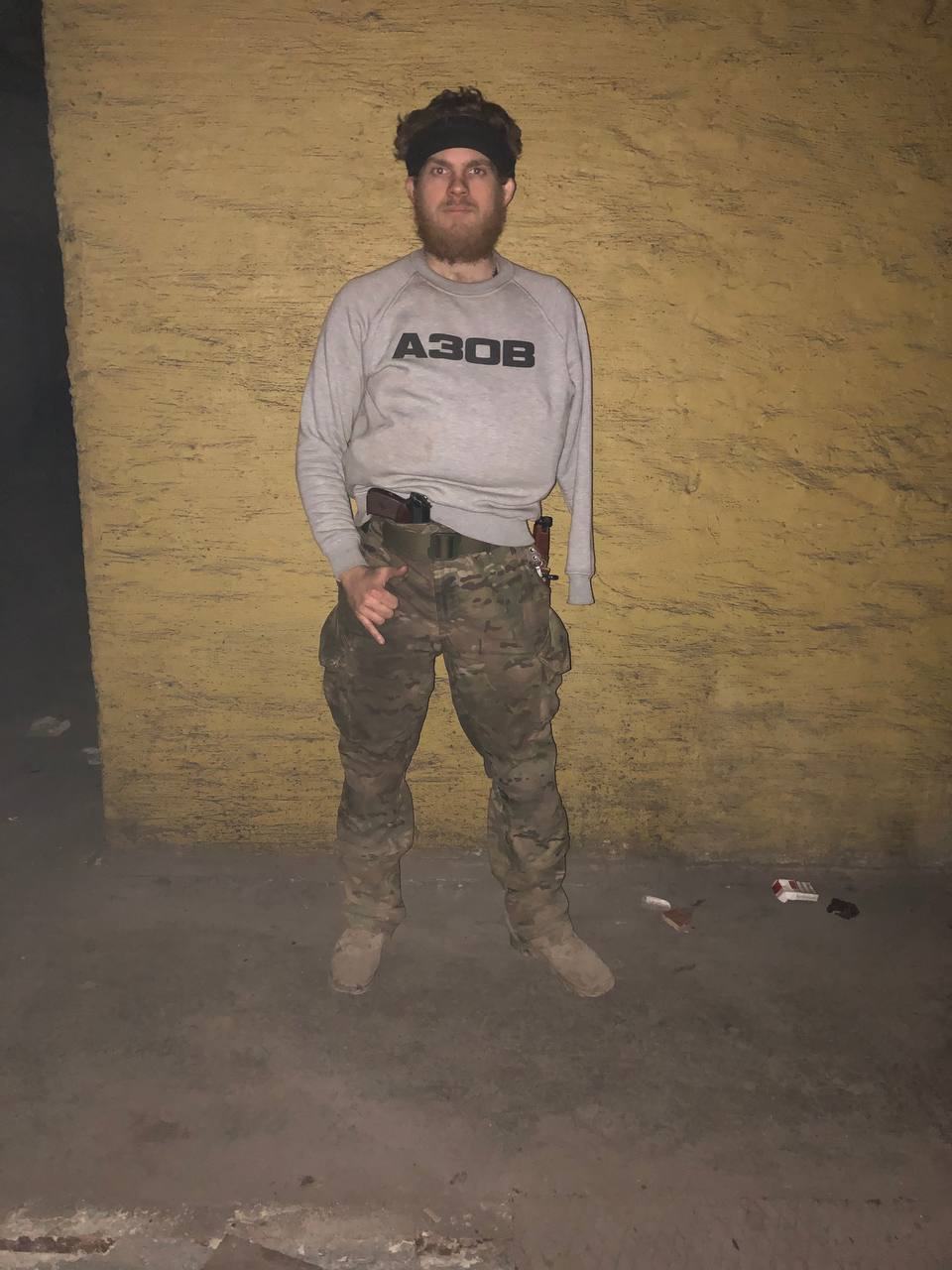
The day before the terrorist attack, some of the Azov fighters were moved to another building. "I was very surprised because they separated us alphabetically and somewhat selectively, roughly every fourth or fifth person from the barracks," August says. It was either a carpentry shop or a workshop. Wire mesh beds were placed there.
The local warden explained the transfer as an improvement in conditions and told them to settle in and make themselves comfortable. The soldiers began to hope that they were being prepared for a prisoner exchange. The idea was that there would be no need to gather them later, and they could all be loaded onto transport at once.
August says he didn't believe it himself because it seemed suspicious, but he didn't expect anything bad either. "You’re in captivity, and supposedly nothing should happen to you anymore," the soldier recalls. "Especially since this was supposedly honorable captivity, meant to preserve our lives. Only that night did it become clear what it had all been for".
The explosion
At night, the prisoners were awakened by explosions. August was sure that nothing unusual was happening, that it was just another Russian provocation. "Our positions were 8–10 kilometers from the colony," he recalls. "The Russians would bring multiple rocket launchers up to the fence and fire Grad rockets. They used us as cover because they knew the Ukrainians would not fire on their own prisoners".
One of his fellow soldiers sat up in bed, but August told him that the Russians were probably firing from behind the fence again. He told him to lie back down and rest. That saved his life, because a few seconds later, an explosion occurred inside the barracks. It was so powerful that part of the soldier’s arm and shoulder muscles were torn away. "If he hadn’t lain down and had been sitting or standing, he would have been hit directly in the torso," the soldier says.
"I WAS CLOSE TO THE EPICENTER"
Despite his injuries, August considers himself lucky. "A lot of guys died there," he says. "I was close to the epicenter. The guy who was lying in the bed next to me died, while I survived. I think I’m very lucky". Shrapnel hit his torso, the bone in his left leg, and his eye. August also suffered a concussion.
In the first few minutes, everything was unclear, but the soldier says he remained very calm and did not panic. "First of all, because of the adrenaline, of course. Secondly, all military personnel are taught the MARCH first-aid protocol. We didn’t have first-aid kits, but I twisted a cord out of a bandage and tried to apply pressure somehow".
The building where the Azov fighters were held had massive metal doors on rails, typical of industrial facilities. The explosion was so powerful that it tore them out as if they were made of paper and sent them flying off the wall. Those who were able to move got out on their own and began rescuing the injured. They knocked down the fence and carried the injured to the colony’s administrative building.
"Then all these special forces started running out. They were firing into the air, throwing stun grenades at us, shouting for us to come out of the grass and lie down on the pavement so they could see us," he recalls. "And they wasted about an hour that way. They were in shock".
The soldier believes the penal colony administration did not expect events to unfold this way. The guards did not know what to do with the injured and the dead. "They probably miscalculated," the soldier suggests. "They probably thought we were all supposed to die there, but we survived".
The fighters helped the injured. They tore sheets into strips and, using sticks or pieces of metal rods, twisted them into makeshift tourniquets and made bandages out of pillows.
"THEY PROBABLY THOUGHT WE WERE ALL SUPPOSED TO DIE THERE"
"Far more people could have survived if they had been helped even an hour earlier. I was taken to the hospital with the first group. I helped load the wounded into a KamAZ truck and then unload them. Two guys died while I was there, during the unloading. A huge amount of time was lost. And there was a second group, then a third. I’m not talking about three or four hours. If it had been even an hour earlier, more people would have survived".
Those who managed to get outside continued to hear the cries of the injured inside the building for a long time. "Not everyone died immediately," he says, sparing the details. "I hope the guys who were at the epicenter didn’t suffer. Many of those who were sleeping remained in that position".
The hospital in Donetsk
After the explosion, August was taken to a hospital in Donetsk, where he spent 10 days in intensive care, including a week unofficially. Keeping patients there required funding that was not provided, so on paper, Yan was discharged after just three days. During that time, while he was barely conscious, Russian propaganda media managed to interview him.
"When I returned to Ukraine, the guys told me I had held up well," Yan recalls. "I tried to answer very carefully, so as not to harm either my country or myself. I understood that the journalists couldn’t turn off the medical equipment because they didn’t like what I said. But there were guys in balaclavas standing behind them".
At the hospital, doctors and medical staff supported August and the other soldiers, helping them at their own initiative. Many of them were pro-Ukrainian. "They spoke to us in whispers," the soldier recalls. "They said they were waiting for Ukraine to return and liberate them. Many of them had stayed there because of their relatives and their homes. They had circumstances that forced them to stay, but they were waiting for Ukraine".
"Doctors and medical staff spoke to us in whispers"
He received similar support at Hospital No. 15, where he was later transferred. It was a specialized hospital for prisoners of war. Many soldiers who had reached the hospital after leaving Azovstal without passing through Olenivka were being treated there.
Yan needed medication: antibiotics, ointments, IV fluids, and other supplies. A nurse bought them for him with her own money. "The guards checked anyone who had contact with the prisoners," Yan recalls. "She would say that the doctor had prescribed them and that’s how she managed to bring the medication to me".
The soldiers were tortured at the hospital. August says he was spared: "What more could they do to me?" Others were interrogated and tortured, including being shocked with stun guns.
In total, August was hospitalized for 18 days — at the time of his discharge, the incision from the amputation hadn't even healed yet. He was discharged because the occupiers began preparing for an offensive. They cleared a floor of the hospital and adapted it for their own needs in anticipation of incoming injured soldiers. Military medics arrived from Russia for this purpose. August and his fellow soldiers were therefore briefly returned to Olenivka.
Olenivka — Taganrog
Soon after returning to Olenivka, some of the soldiers were sent on the first major prisoner exchange. August was not included on the list because of his amputation.
He assumes the Russians did not want to deal with a severely injured prisoner who would have to be carried. So Yan remained at the colony. Medical care was provided to him, as to the other injured, by fellow soldiers who were medics, using whatever medication they had. All of this took place in cramped, overcrowded cells without access to water, while the Donbas heat is particularly intense: 35°C (95°F) and stagnant, scorching air. As a result, the wounds healed slowly and with difficulty.
In September 2022, August and his fellow soldiers were transferred to Taganrog in Russia's Rostov Oblast. The conditions there were extremely brutal, with torture and beatings beginning literally at the door, during the so-called "intake procedure".
"DURING INTAKE, A PRISONER’S RIBS WERE BROKEN, PUNCTURING HIS LUNGS"
The prisoners were beaten so severely that some of them later died. "It’s a tradition dating back to Soviet times," the soldier says. "The intake is meant to break you, to destroy you. I was into sports, but I had never taken so many blows to the head in my entire life as I did there". Yan recalls a man with whom he shared a cell. During intake, his ribs were broken, puncturing his lungs. He developed a pneumothorax, a condition in which air accumulates inside the chest cavity and puts pressure on the lung, causing it to collapse. The prisoner was not given medical assistance and died.
August says the conditions were extremely harsh. There was mold on the cell walls. They were fed rotten potatoes. Even the guards complained among themselves about the nauseating smell.
The prisoners were forced to sing the Russian national anthem and memorize propaganda poems apologizing to Russia. They were interrogated in a neighboring building across from the cells. Those in the cells could constantly hear the screams of people being tortured. They were beaten and subjected to electric shocks.
ONE OF THE RUSSIANS’ FAVORITE TORTURES — THE "OBSERVATION WHEEL"
The soldier recalls one of the Russians’ favorite forms of torture, known as the "observation wheel". The person had to bend over and clasp their hands behind their knees, after which they were handcuffed. A stick was placed between the body and the arms, and the person was suspended from a set of parallel bars. The guards could also push them, making the body swing back and forth. With every passing minute, the pain in the arms became increasingly unbearable. "If you hang like that for about 15 minutes, you’ll confess to killing John F. Kennedy," Yan says.
The Azov fighters were treated differently: they were beaten and tortured more severely than the others. At the same time, the guards were afraid of them. They were heavily guarded and were not sent to work because, according to the prison guards, that would have required an entire company of special forces. "I know this story will sound like something out of science fiction, but it’s true," he says with a laugh.
AZOV FIGHTERS WERE BEATEN AND TORTURED MORE SEVERELY
The Russians were convinced that Azov fighters possessed special knowledge and skills similar to those of Shaolin monks. The prison guards were afraid to approach them. "They talked about some techniques that we supposedly knew. That we could cut someone’s throat with our fingernails or something like that," Yan recalls.
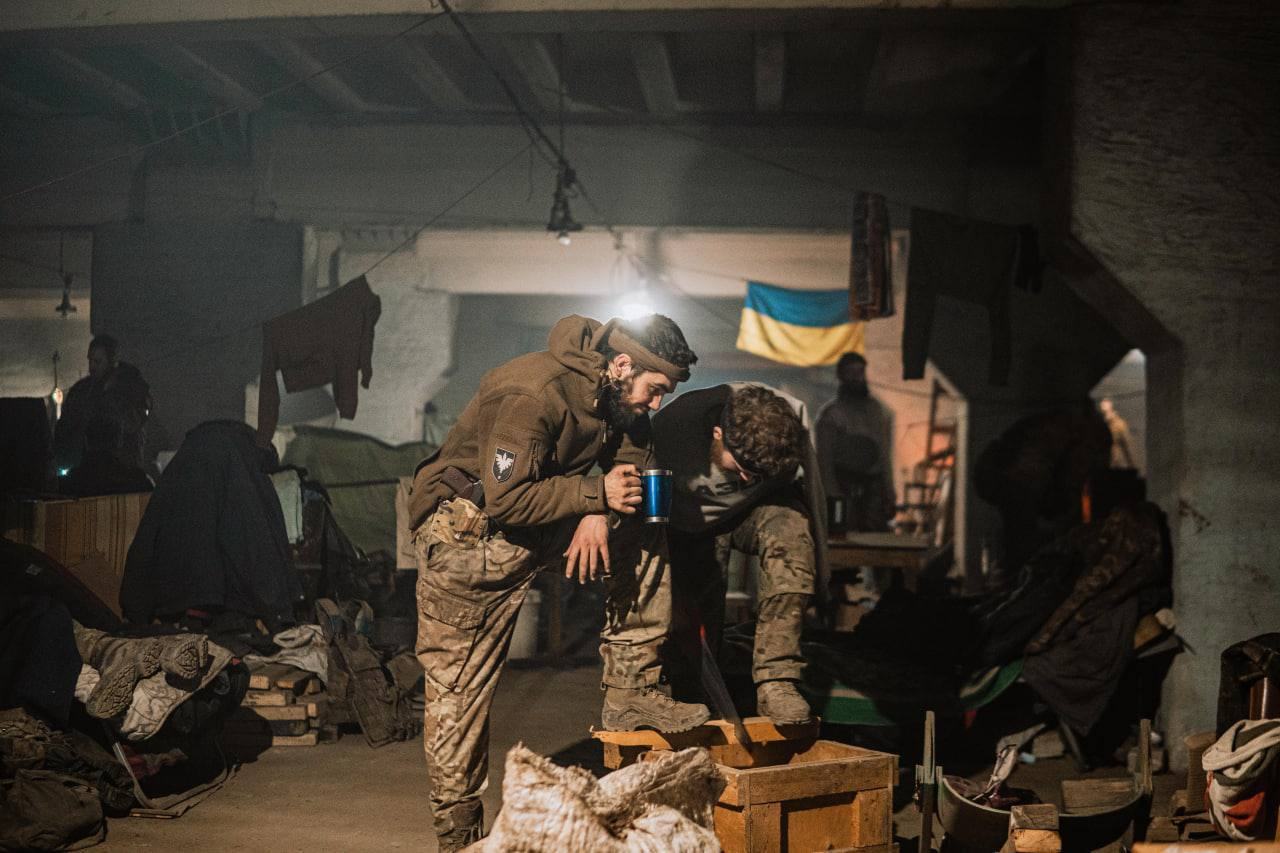
August also shares his observations about the Russians.
"It’s nonsense in our country," the soldier says. "After captivity, I believe I was a billion percent right to go and defend it. I saw how their system works. They shift responsibility, they’re only afraid of their superiors, and they can’t organize even basic supplies. While I was mending my shirt, practically knitting a new one, they couldn’t manage to replace our uniforms. And they constantly smelled of alcohol. Even those who worked for the Investigative Committee, which is a respected institution there. Someone would sit down for an interrogation smelling of a mixture of onions and garlic. You’re a civil servant. Is that the level? I saw enough of them there, and I absolutely don’t want anything like that in my country".
A RUSSIAN SITS IN AN INTERROGATION SMELLING OF ONIONS AND GARLIC
The community kept them going. August was held in the colony together with fellow soldiers he had known before. They talked and read. He recalls that one of his comrades memorized an entire poem. Intellectual activity helped sustain him throughout his captivity. He himself studied German, learning it from a man with whom he shared a cell. The prisoners were not allowed to communicate with one another, but they found ways to do so secretly.
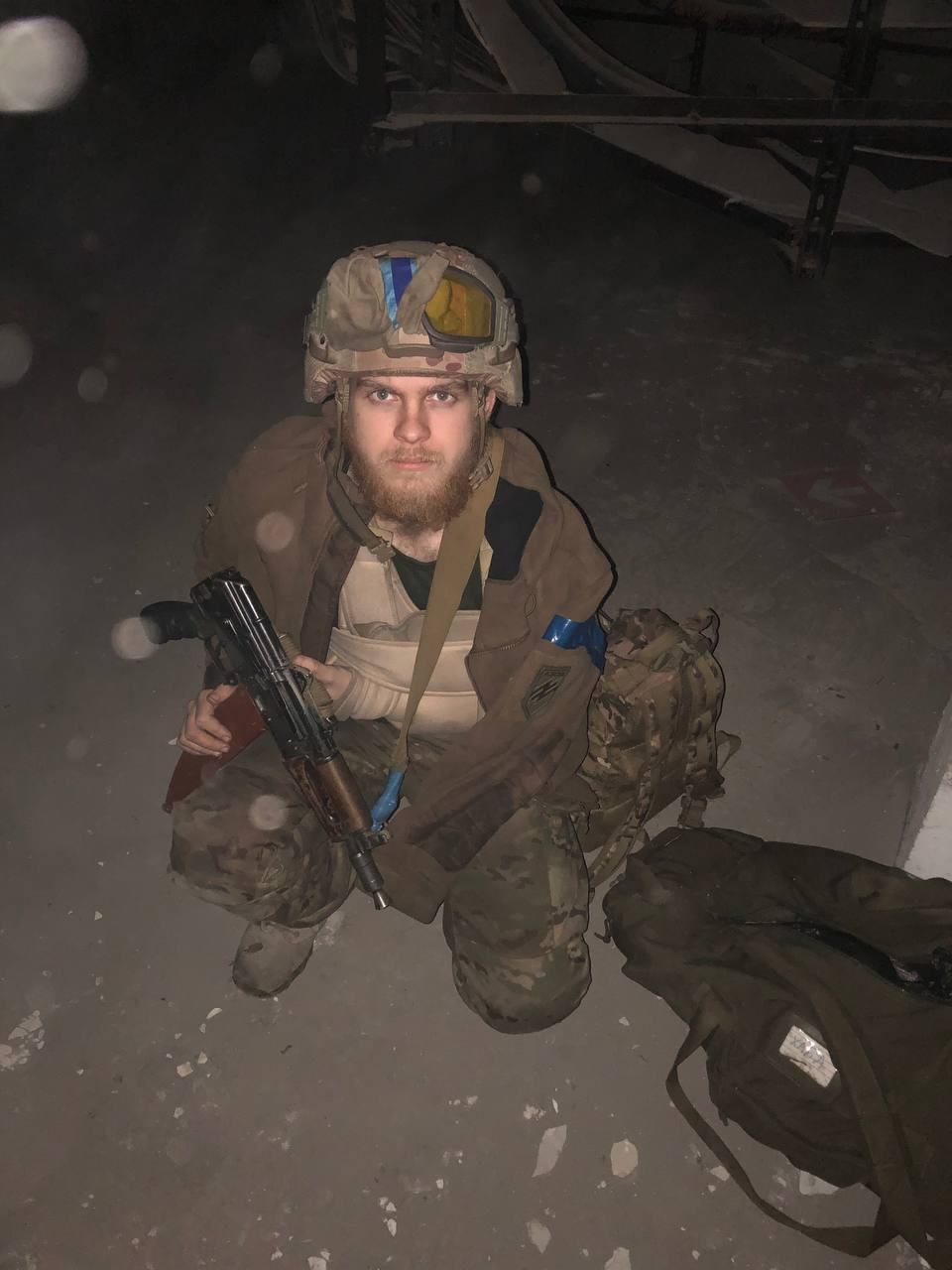
"We would position our heads somehow, lower our faces toward the floor, and use as little gesturing as possible so that nothing could be seen on the camera," he recalls. "It would have been foolish not to use that time while I had it. When you’re in a vacuum, you find inspiration. Besides, if I had wasted that time, it would have meant that they had won. I believe I lost nothing in captivity. I used my time".
Kizel and the prisoner exchange
In August 2024, August was transferred to a penal colony in the city of Kizel. This was his final place of detention in Russia. From there, the soldier was sent for a prisoner exchange.
The day of the exchange was not particularly different from any other. August and his fellow soldiers did not know where they were being taken. "I realized we were being exchanged only when they uncovered our eyes in Belarus," he says. "Until then, I thought it was just another transfer. At certain points, it became clear that we were being escorted by military personnel. Everyone was very polite, and no one was beaten. So there were signs that it was an exchange, because they really like to put on a show when they need to".
The soldier says that after returning home, he spent a week washing himself clean. At the colony, prisoners were usually given two minutes to shower, shave, and wash their clothes. He was given slightly more time because of his injury. "Two thirty for the cripple", the guards would say, Yan recalls.
It has been just over a year since August returned home. Now he is preparing to return to active duty. Yan says the unit helps veterans adjust and provides everything they need for education, employment, or starting their own business. But he wants to continue serving.
On the one hand, he wants to continue developing his military career. On the other hand, he says his convictions drive him: "As long as the war continues, as long as I can be useful, I will do it. Right now, every person is worth their weight in gold. To reach victory, we all have to do it together".
Підпишіться, щоб отримувати найкращі статті на e-mail (раз на два тижні)

Підписатися