Матеріали автора Oleksandr Shulman

Статті

The battle for the Orikhiv salient. Can Russian tanks break through

By late autumn 2026, the Zaporizhzhia axis is once again emerging as one of the hottest spots on the battlefield. According to the General Staff of the Armed Forces of Ukraine and military analysts, Russian forces have amassed significant reserves of armored vehicles in the area. However, a conventional tank war reminiscent of the last century is unlikely. What scenarios could November bring? Why are Russia’s so-called "Tsar Mangals" waiting in treelines near the front, and how does the geography of the Orikhiv salient shape the course of the fighting? Read our analysis.Читати українською
Статті

"We’re all on the same side". How Ukrainian soldiers posed as Russians to escape

March, the settlement of Rozlyv in Ukraine’s Donetsk region. Everything is soaked: the walls of the few houses still standing are damp, and the relentless, heavy rumble of artillery tears through the wet expanse of the steppe. It is impossible to tell where the fog ends and the smoke from fires begins. Second lieutenant Serhii, a mechanized platoon commander with the call sign Boxer, came face to face with two groups of Russian stormtroopers. The first was wiped out in the settlement. The second led to a "conversation" that saved his life.Читати українською
Статті

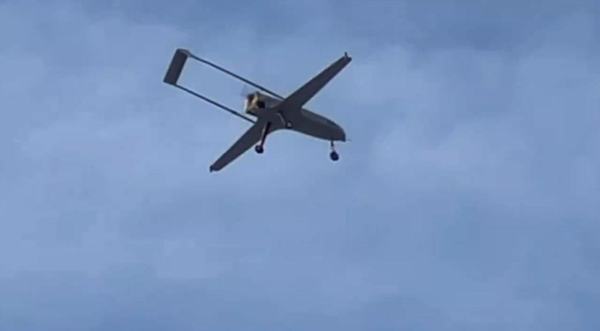
How the Lima EW system helps protect Kyiv from Russian missiles

Fierce fighting is raging on this stretch of the frontline. But this is a different kind of war — one invisible to the naked eye, unfolding every night in the skies above Ukraine’s capital. There are no missile launches, bright flashes, or loud blasts. There is only the low hum of generators and five seconds between the air raid alert and the activation of electronic warfare (EW) systems. Today, the security of Kyiv’s strategic sites rests in the hands of units where a journalistic report begins not with theory, but with an order to switch off your phone in advance.Читати українською
Статті

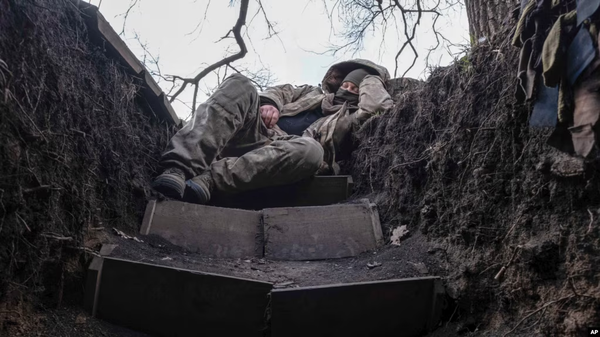
Underground cities. How Ukrainian infantry survive under fire

The modern front line is steadily moving underground, echoing some of the darkest episodes of World War I and its "mole-like" existence. But now, instead of the filthy trenches of trench warfare, infantry are forced to take shelter underground, seeking refuge from the total dominance of drones. Lieutenant Colonel Roman Kovalov, commander of the motorized infantry battalion of the 43rd Separate Mechanized Brigade, explains how these "underground positions" are organized and defended.Читати українською
Статті

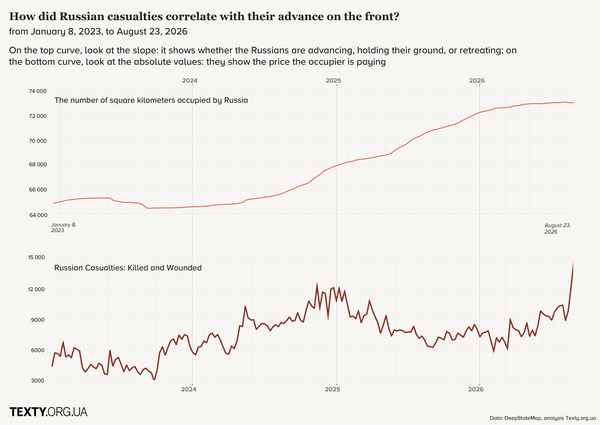
Trend toward victory. Russian advances stall as casualties surge

Trend toward victory. Russian advances stall as casualties surge
In early June, we published another analysis of the current situation on the frontline. Today, we explain what has changed since our previous publication. We examine how the situation has evolved along each section of the frontline from north to south, look at which positions have been lost or retaken, and analyze the tactics used by both sides.Читати українською
Статті

Why Ukrainians soldiers haven't left their combat positions for months

Why Ukrainians soldiers haven't left their combat positions for months
"They held their positions for 90, 200, and sometimes 240–280 days", we read in the news. Recently, Volodymyr Zelenskyy commended a commander whose unit spent 343 days on the front lines. There are no set rotation periods, but commanders usually try to rotate units much more frequently — from a few days to one or two weeks — to maintain combat capability. So, staying on the front lines for 30–200 days is a consequence of the harsh conditions of war. Here's why this is becoming the norm.Читати українською
Статті

How Ukraine’s long-range strike system works against Russia

How Ukraine’s long-range strike system works against Russia
When Ukraine first struck deep into Russian rear areas, these were considered isolated cases. However, by 2024–2025, it had become clear that a new type of operation had emerged. Systematic pressure on the enemy’s infrastructure, industry, and logistics hundreds and thousands of kilometers from the front lines. The shift in approach was not even about distance, but rather the emergence of a whole range of Ukrainian long-range weapons — from inexpensive unmanned aerial vehicles (UAVs) to missiles. It was precisely this combination that gradually changed the nature of the war.Читати українською
Статті

Four years of full-scale war in five graphs: air raid alerts, Shaheds, missiles, losses

Four years of full-scale war in five graphs: air raid alerts, Shaheds, missiles, losses
Five graphs show four years of full-scale war: 74,768 air raid alerts, the evolution of drone and missile attacks, the effectiveness of air defense, changes in Russian military equipment losses, the pace of occupation, and estimates of Russian losses as of February 2026.The data in the graphs covers the period from February 24, 2022, to January 30, 2026.Читати українською
Статті

"The wounded were thrown into an old ZIL". Reconstruction of the events after the rocket attack in Poltava

"The wounded were thrown into an old ZIL". Reconstruction of the events after the rocket attack in Poltava
On September 3, Russians launched a double missile attack on a military educational institution in Poltava. A day later, the number of dead and wounded continued to grow (as of the evening of September 4, 53 dead, 298 wounded).Читати українськоюRescuers from different regions of the country are still searching for people under the rubble. Relatives are coming to the city to find out at least something about their loved ones who were at the site of the attack. Doctors are fighting for the lives of twenty people in intensive care units.Ihor Shafarchuk, a volunteer who was one of the first to arrive at the scene, rescuing people and organizing the triage of the wounded, told what happened in the first minutes after the explosions. A military expert explained whether it was possible to prevent the strike or shoot down the ballistics.