Статті
How the Lima EW system helps protect Kyiv from Russian missiles
Fierce fighting is raging on this stretch of the frontline. But this is a different kind of war — one invisible to the naked eye, unfolding every night in the skies above Ukraine’s capital. There are no missile launches, bright flashes, or loud blasts. There is only the low hum of generators and five seconds between the air raid alert and the activation of electronic warfare (EW) systems. Today, the security of Kyiv’s strategic sites rests in the hands of units where a journalistic report begins not with theory, but with an order to switch off your phone in advance.
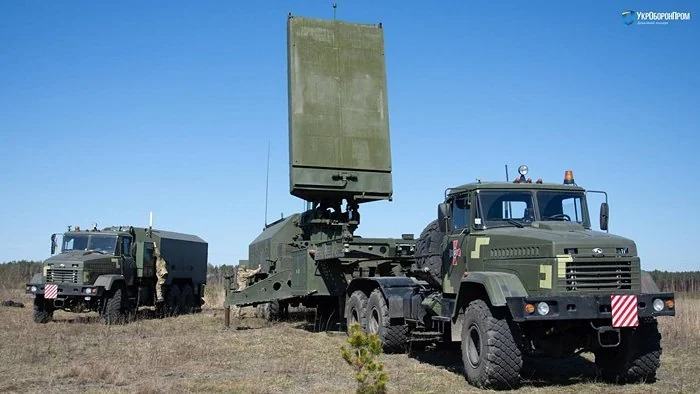
A commander with the call sign Max heads one such unit. However, the driving force behind the operation and the person effectively running it is Alkhimik, an electronic warfare (EW) specialist responsible for the technical side of the Lima electronic warfare system.
Max’s journey
Max has a degree from the National Academy of Internal Affairs and has worked as a district police officer and an investigator. Before the full-scale invasion of Ukraine, he headed a public organization responsible for maintaining law and order in the Kyiv region. In February 2022, almost all its members joined the Territorial Defense Forces.
Asked how a lawyer manages a complex electronic warfare unit, he gives a simple answer: "I’m the commander. My main task is to ensure the unit functions properly. EW is about more than just a piece of hardware. If logistics, headquarters, planning, and supplies don’t work, nothing will. My job is to make sure the guys have everything they need and that the system operates reliably".
Round-the-clock operations
The unit operates around the clock, with its teams spread across numerous rear and frontline regions.
The military position we visited is quiet. We are greeted by silence, the watchful gaze of a man in civilian clothes, and the aroma of borshch. Max explains that, given the large number of dispersed posts, delivering hot meals from a central kitchen would be impractical — it could take several days. So the soldiers cook for themselves. The command supplies them with food, water, and fuel for the generators.
Local bakeries provide the soldiers with bread. They also arrange to get firewood from the local community. At the same time, strict secrecy measures are observed: wearing civilian clothes is regulated by the relevant command orders.
Five seconds to action
The air threat alert is transmitted from a centralized command post via cellular networks. There are also backup channels for receiving information.
Once the command is received, the equipment reaches operational capacity within five seconds. The system requires a substantial amount of electricity. If the grid voltage drops or the power supply is cut off, the crew immediately switches to alternative power sources.
Operators at the position do not witness the target being engaged directly, as pilots or anti-aircraft gunners might when monitoring a radar screen.
"The equipment is automated. Information is sent up the chain, and the command reviews and analyzes it. We monitor changes in the behavior of enemy assets. When we 'reinforce' a particular region, we can see enemy drones or missiles changing course. They start wandering aimlessly or flying in circles until they run out of fuel or are shot down," Max says.
What are jamming and spoofing?
A commander with the call sign Alkhimik explains the technical side of this war. He says that Ukraine’s Lima electronic warfare system creates a zone where satellite navigation becomes impossible. When a drone or missile enters this zone, it loses contact with satellites and is forced to switch to an inertial navigation system (INS).
The Lima EW system’s signal combines three components.
- Jamming (signal interference). Explains the concept using the analogy of a shared room. "When there are two people in a room, you can hear the person you’re talking to perfectly well. But when there are several people in the room, we have to speak a little louder because others are talking too, and our brains start perceiving the overlapping voices as interference. In the Lima EW system, jamming works in such a way that all possible satellites 'speak' to the enemy drone simultaneously. For example, a jet-powered Geran drone has 34 antennas, and Lima broadcasts spoofed signals to all 34. Since the power of this signal is slightly higher than that of the original satellite signal, the missile or drone receiver cannot distinguish the genuine signal from the 'noise', and navigation is completely lost".
- Spoofing (coordinate manipulation). Transmitting false navigation data to the target’s onboard computer, causing it to deviate from its intended route.
- Cyberattack. This function has been part of the Lima EW system since 2023. It prevents enemy receivers from recovering after leaving the jamming zone or significantly delays their recovery.
Why Kinzhal missiles break apart midair
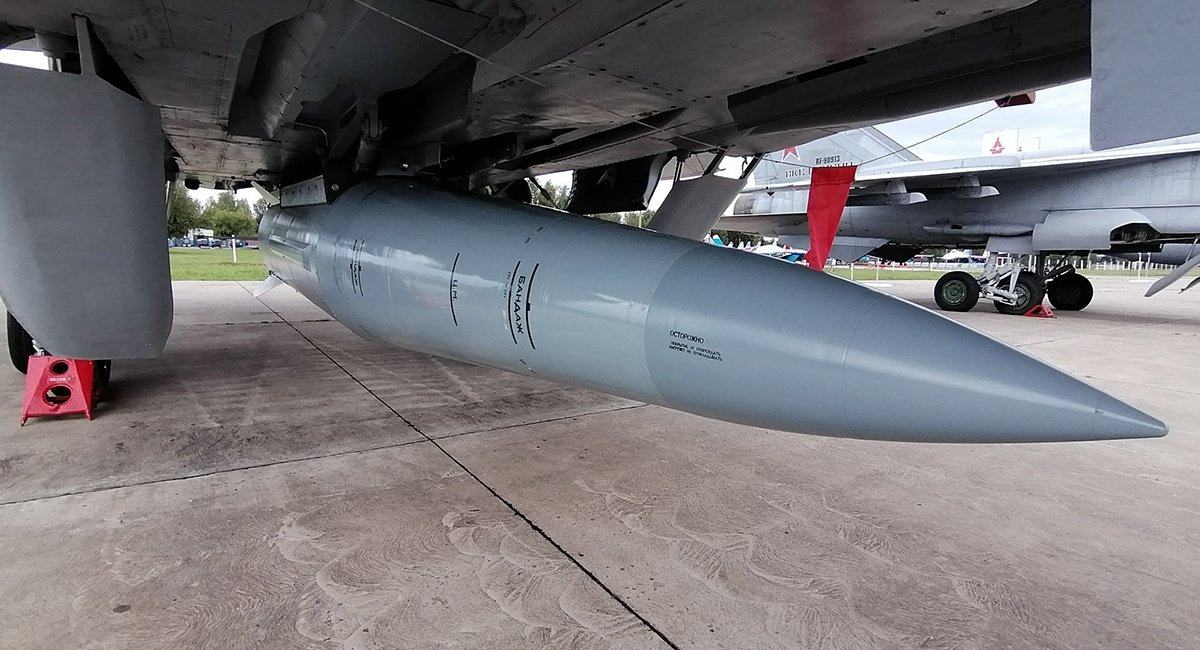
Any inertial navigation system without satellite-based corrections accumulates errors over time. Without electronic warfare interference, Russian missiles have a stated accuracy of 10 to 30 meters. Under the influence of Lima, a missile not only veers off its intended course but can also break apart midair. This regularly happens to Kh-47M2 Kinzhal missiles.
"When the Kinzhal missile launches, its engine provides continuous acceleration and is not designed for maneuvering afterward," Alkhimik explains. "When the missile enters Lima’s coverage zone, it loses its coordinates and 'thinks' something is wrong, triggering its automatic correction system. However, the turning angle turns out to be so sharp that the missile’s body breaks apart midair. Of the 63 recorded Kinzhal launches, more than 30 missiles broke apart this way, while some others deviated from their course by 5–6 kilometers".
The theory about cellular networks and SIM cards
There was once a theory that Shahed drones used cellular networks and cell towers as navigation "beacons". However, an analysis of drone flight paths with and without EW interference revealed that as soon as a Shahed enters an EW coverage zone, all these "beacons" suddenly disappear. The theory was eventually dismissed.
The enemy uses foreign SIM cards for a different purpose. When drones approach Belarusian territory closely enough, they can connect to its cellular networks and upload the reconnaissance data they have collected.
Mesh networks and electronic reconnaissance
The enemy has now moved on to using drones equipped with radio bridges, or, more precisely, mesh networks, to carry out precision strikes against critical infrastructure, including bridges in Kyiv. More about how they work here.
- How a mesh modem works. The drone uses an interference-resistant protocol across a wide 200 MHz frequency range. Within this range, it selects an operating bandwidth of 4.5 MHz or, for control channels, just a few dozen kilohertz, using signal concealment and frequency shifting. Under the frequency-hopping spread spectrum (FHSS) algorithm, the operating frequency hops across the range dozens of times per second, using encryption keys and precise time synchronization between the receiver and transmitter.
- Power advantage. To jam such a channel, an EW station must cover the entire 200 MHz range, spreading its power across the spectrum, while the drone concentrates its energy within a narrow bandwidth.
- Repeaters. To maintain the control link over distances of several hundred kilometers, the enemy uses powerful 200–300 W amplifiers and directional antennas with 20 dB of gain, compared with the drone’s own 35 W and 3 dB. These are deployed in Russia and Belarus, beyond our radio horizon.
- Chinese origin. The components of these mesh systems, including amplifiers, devices, and software, are not Russian-made. They are produced by Chinese companies, confirming the direct supply of critical military technologies to the enemy.
- Flight route and altitude. The drone flies at an altitude of 7–9 km and maintains a stable connection with an over-the-horizon repeater at altitudes of up to 15 km. During the final mile, manual guidance or machine vision is activated.
To counter mesh networks, the Ukrainian team has developed airborne electronic reconnaissance stations that can operate at altitudes of 2 km or higher and detect the frequencies used by over-the-horizon repeaters in time.
The difference EW makes
The effectiveness of electronic jamming becomes clear when comparing the outcomes of attacks carried out with the EW system switched on and when it was not in use for various reasons.
How critical is access to US intelligence?
Asked how critical the US decision to stop sharing intelligence, particularly information about incoming Russian missile launches, would be, Alkhimik said it was not critical for EW. The system can switch to round-the-clock operation, for example, to counter ballistic missiles. This would increase costs, as amplifiers are high-wear components that need to be replaced after a certain period of operation. However, it would make it possible to get through the winter successfully.
The situation can be compared to an incident in which a missile struck an Israeli destroyer/corvette because its defensive system had not been switched on. Alkhimik cited several examples from Ukraine:
- Ballistic missile strikes. When the EW system was not activated due to a lack of intelligence or delays in receiving it, Russian ballistic missiles struck their targets with an accuracy of up to 10 meters — hitting precisely the objects the enemy had intended to target.
- The strike on an airfield. In one case, an airfield in Dnipro was hit after command decided not to use EW. The missile struck a newly built aircraft protective shelter where an aircraft had not yet been placed.
"Many people thought that ballistic missiles had an inherent deviation of 300–400 meters and could not hit their targets accurately at hypersonic speeds," Alkhimik concludes. "When the system was not used, we obtained data showing that these missiles could hit targets with an accuracy of up to 10 meters. The fact that missiles fall in forests hundreds of meters away from their intended targets, break apart in midair or miss by several kilometers is the result of the work of EW specialists".
However, like any weapon, EW systems do not provide 100% protection. They are an important, but only one, component of air defense.
Підпишіться, щоб отримувати найкращі статті на e-mail (раз на два тижні)

Підписатися