

Статті
How Russia uses migration detention centers to jail Ukrainians and force them into war
Thousands of Ukrainian citizens may be held in Russian migration detention centers without a clear legal status or a release date. Russia is already using some of them as bargaining chips and a means of exerting pressure.
Ukrainian citizens can spend years in Russian Centers for Temporary Detention of Foreign Nationals — essentially closed prisons with no set detention periods. Among them are former political prisoners, people who have served sentences in Russian penal colonies, as well as Ukrainians detained simply because they lacked Russian documents. Formally, Russia promises deportation, but instead uses these people as a resource for military recruitment and political bargaining.
When people talk about Ukrainians in Russia, they most often mention prisoners of war or people from the occupied territories. But there is another large and significantly less visible category of Ukrainian citizens — people who have ended up in Russian deportation and migration centers.
Some of them had lived in Russia for years, some ended up there after the occupation, and some after serving time in Russian penal colonies and prisons.
Formally, Russia refers to them as "foreigners subject to deportation". But in reality, many of them have been deprived of their liberty for years without even a ruling from a Russian court. They remain in closed detention centers without any legal certainty or the possibility of returning home.
Before the occupation of Crimea and parts of Donbas in 2014, 2.5 million Ukrainian citizens were working in Russia. Some left after the war began, while others arrived. As of today, official Russian sources cite a figure of 2 million people. However, these figures are not specific. Russians themselves add that they are referring generally to people from Ukraine without specifying their citizenship.
"We have about 2 million people living here who are from Ukraine — either those who have obtained citizenship or those who have not", said Tatyana Moskalkova, the Human Rights Commissioner of the Russian Federation.
Some Ukrainians have been living in Russia and settling into life there for decades, effectively becoming Russian citizens of sorts. But some have never changed their citizenship. And that, as it turns out, is enough to be detained in broad daylight right on the street and taken to one of the migration centers.
But this is not about those who voluntarily chose to remain in the aggressor country. It concerns another fairly large group of Ukrainian citizens who were serving sentences in Russian prisons. This includes both political prisoners and those convicted of criminal offenses. The Russian penal system is designed to prevent people from being released even after they have served their full sentences.
According to official Russian data, as early as 2014, there were at least 81 migration prisons in the Russian Federation.
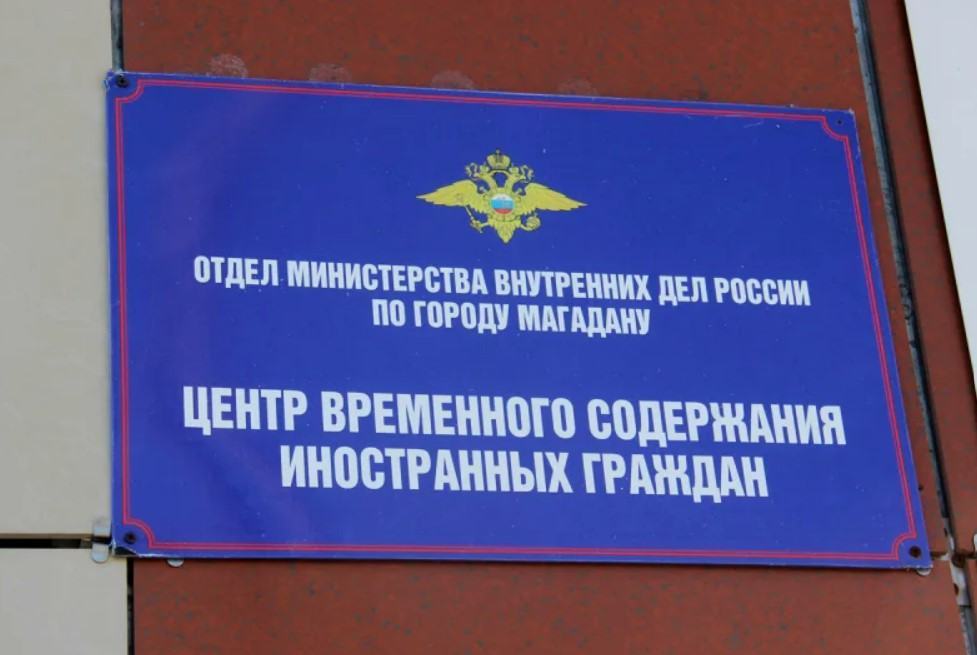
Since the start of the full-scale invasion, this system has been used to force Ukrainian citizens to fight against Ukraine. Russia has not disclosed the exact number of our compatriots held there, but human rights activists estimate that thousands of Ukrainians have been unable to leave these places for years.
One such person is Kostiantyn Davydenko, who managed to escape through a prisoner exchange. He worked as a private appraiser and, at the request of clients from the unoccupied part of Ukraine, traveled to Crimea to assess property left behind there. In 2018, he was illegally detained (even by Russian standards) by the Federal Security Service. He was convicted of "espionage". He served his entire sentence — seven years, after which he was supposed to be deported. At least, that’s what Russian law says.
Instead, Kostiantyn Davydenko was transferred to another place — not a penal colony, but the Center for Temporary Detention of Foreign Nationals in Engels, Saratov region. Formally, this is a place for people who are to be deported from the country. In reality, however, it is yet another "gray" area within the Russian penal system, where people can be held for months or even years without any legal basis.
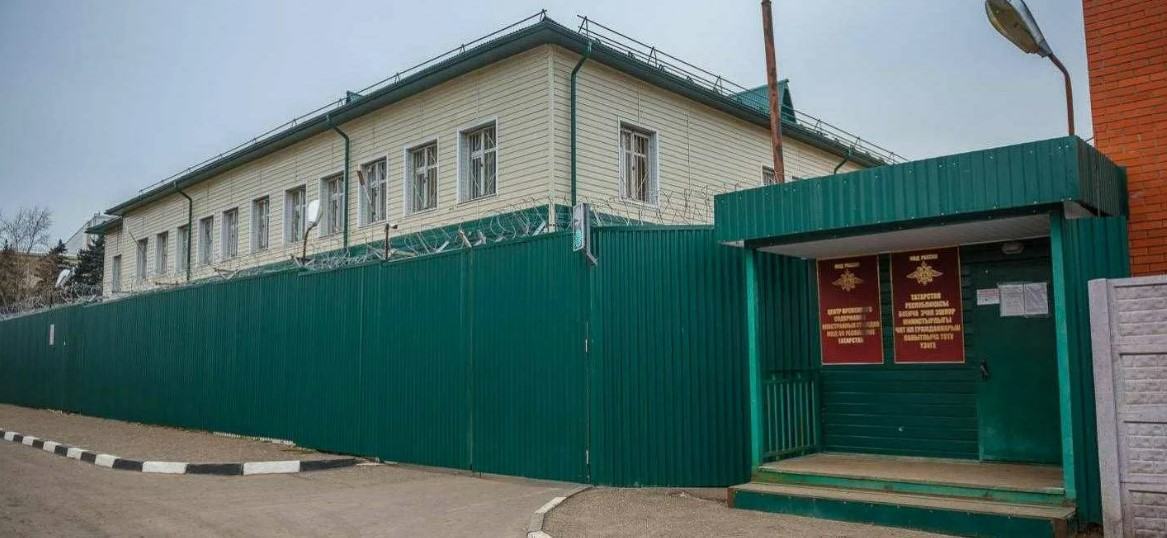
Inside the cell, there are metal doors, guards, and police officers. The conditions are slightly less harsh than in a pre-trial detention center: inmates can receive care packages, and sometimes they’re given a cell phone. But the main difference isn’t in their daily lives — it’s in their status. Formally, they are not criminals. Some have already served their sentences. Some have not committed any crimes at all. But in reality, they are prisoners, and the Russians have specific plans for them.
Kostiantyn Davydenko says:
— What are migrant detention centers?
They’re like pre-trial detention centers, but for people who are to be deported — those caught without documents. In the past, they were mostly filled with people from Central Asia, illegal migrants. But now there are many Ukrainians there. Some were serving sentences, while others hadn’t obtained Russian documents and remained Ukrainian citizens. Now they’re being rounded up and placed in these centers.
Some have not committed any crimes at all. But in reality, they are prisoners, and the Russians have specific plans for them
— How many Ukrainian citizens were there?
At the center where I was, out of a total of 40 detainees, 10 were Ukrainians. Some of them had already been there for more than two years. For example, one man had been living in Russia for about fifteen years for his own reasons. Just an ordinary civilian. He worked somewhere, at some construction site. A patrol stopped him. Just a routine document check. "Oh, you’re a Ukrainian citizen, and you’re here without temporary registration. That’s it, come with us". And now he’s been in that center for two years.
Many served time in Russia for various criminal offenses. After completing their full sentences, instead of being released, they were sent to a migration detention center, where they remain. Some ended up there after the full-scale invasion began. One left Bakhmut in 2022, even before the occupation. Somehow, he made his way to Russia via Belarus and arrived in Moscow, where a patrol detained him because of his Ukrainian passport.
— What is the official reason for detaining Ukrainian citizens in these centers?
Officially, everyone is held there pending deportation. But no deportations are actually taking place.
Generally, there are only a few ways to get out of there. Either someone is advocating for you, meaning you have relatives who are Russian citizens. A wife, for example, who is a citizen. Someone who will lobby on your behalf, file lawsuits, and go through a long and tedious legal battle. Then, perhaps, they’ll grant you Russian citizenship and let you stay there.
But such cases are very rare. For example, I knew one guy whose mother was a Russian citizen, whose wife was a Russian citizen, and whose child had Russian citizenship. And after six months of legal wrangling, he was finally allowed to stay in Russia and obtain citizenship.
Citizens who are registered in the Crimea, Donetsk, Luhansk, Kherson, or Zaporizhzhia regions can also apply for passports. But during the entire time I was there, only a few guys from Crimea were given Russian passports. Their relatives in Crimea spent a long time painstakingly gathering the necessary documents. And eventually, they were taken to Moscow, where there is a specialized center that handles such cases from all over Russia. And there, they were issued passports. And then, of course, those guys were sent to the front.
And this is the second way to escape this migration prison — to serve in the Russian army.
— Are they offering to enlist in the army right in migrant detention centers?
Yes, you sign the contract right there. And then they take you straight to the front from there. And only after the fact do they promise to grant you citizenship — if you survive, of course.
— And of those ten Ukrainian citizens who were there with you, did any of them agree to those terms?
Yes, some did. Two of them enlisted to fight in the war. Both were from the Donetsk region. In addition to working in Russia, they had previously served in DPR (Donetsk People's Republic) units.
By the way, we also had guys in the colony — Ukrainian citizens — who signed up for the Russian army right from there. A recruiter from the military enlistment office would come to the colony two or three times a month and talk about how good life is in Russia. Of those who enlisted, I know of two: one was also from the Donetsk region, the other from the Kherson region. But they were detained specifically on Russian territory. The one from the Kherson region was arrested for theft and sentenced to five or six years. I don't know what happened to him.
— So, as I understand it, the Russians view all Ukrainian citizens, without exception, as a "fifth column"?
More like a resource. The Russians tried to exchange Ukrainians from migration detention centers for their captured soldiers. But those held here are not military personnel and, accordingly, are not prisoners of war. They are simply people who, in Russia’s view, have violated Russian migration laws.
Russians tried to exchange Ukrainians from migration detention centers for their captured soldiers
Even under their own law, the Russians must take this person to the border and release them. That’s it. They don’t even have the formal right to detain them.
— Besides Ukrainians, who else is being held in these centers?
Most of them are from Central Asia, about half, if not more. Another 20% or so are Azerbaijanis, Armenians, migrants from Latin America — including Cubans — and people from African countries.
— Western media have reported on the existence of entire schemes in which migrants are deliberately lured into Russia under the pretext of job offers, only to be mobilized into the army. Have you ever encountered anything like this?
Personally, I haven’t encountered such cases. However, I’ve heard that this practice does indeed exist. For example, there was one guy from Côte d’Ivoire. And he said that there are many cases where people in Africa are offered jobs in Russia — supposedly jobs, but after they arrive, they’re sent straight into the army.
The Russians have another network in Africa called "Rossotrudnichestvo", through which African students come to Russia to study. And some of them go there solely to find work. Of course, some get caught, and they’re taken to these centers.
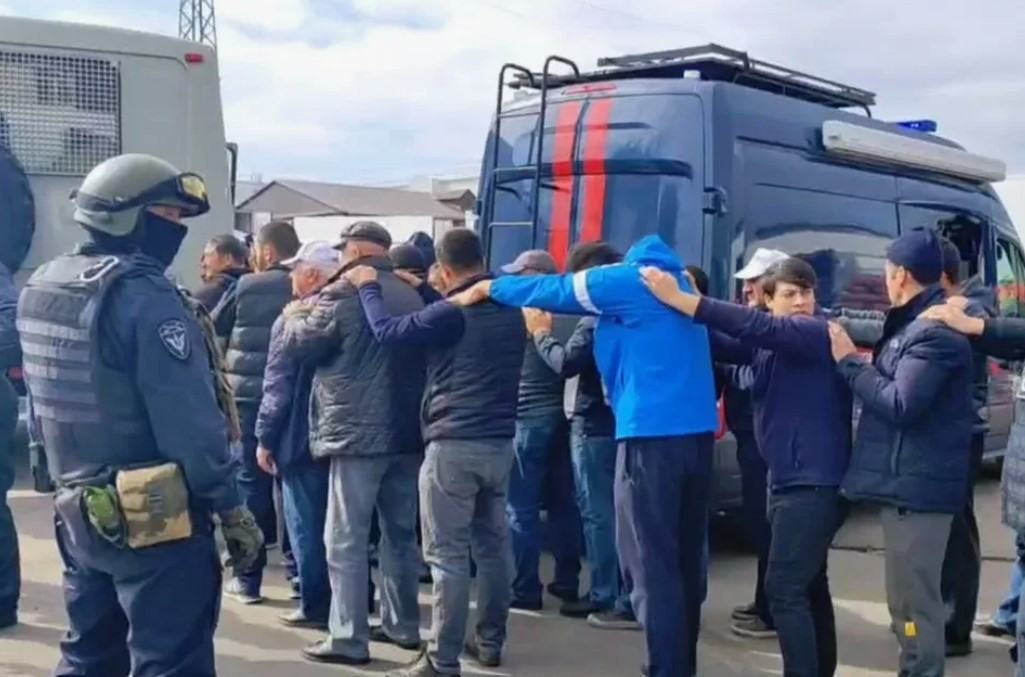
There was a whole different story with the Azerbaijanis. When relations between Russia and Azerbaijan deteriorated, the Russians began detaining migrants from there en masse. The local police knew where the Azerbaijanis ran their businesses — who was selling at the market and who was working elsewhere — so they simply raided all those places.
— Are they trying to recruit all these people into the Russian army as well?
Yes, of course. But I know that the recruitment of these same Central Asian migrants begins even before they are taken to the centers. Immediately after they are detained and brought to the police station, they start being subjected to abuse: they are beaten, false charges are brought against them, and so on.
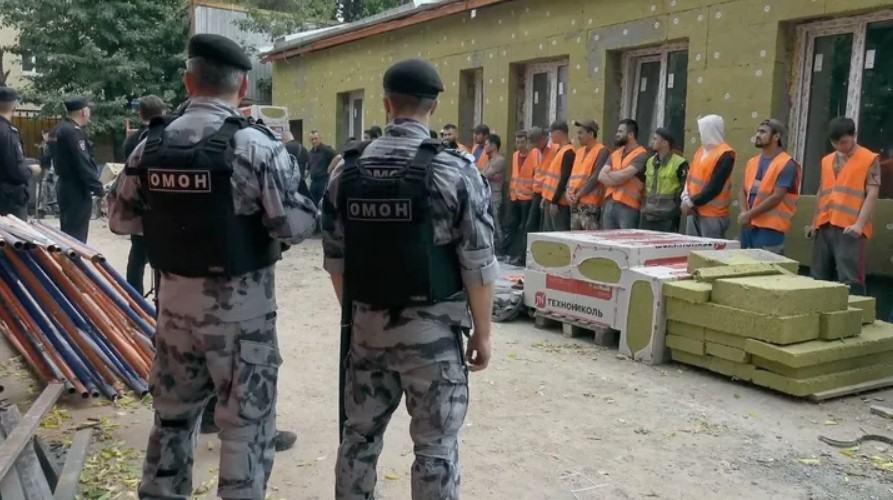
They spend anywhere from 5 to 15 days in a bullpen, and then they’re sent to migration detention centers. In centers, they’re beaten and actively recruited because the Russians have the necessary tools there and staff who specialize in this.
In general, beating people in police stations in Russia is standard practice. No one there is surprised if the police beat you. If the police detain you, you’ll most likely be beaten.
— Do they beat people in migrant detention centers, too?
No, there’s no physical abuse there; they don’t have enough staff for that. Maybe they used to do it, but now there are a lot of criminals there, and they wouldn’t allow it. If the staff started beating people, they’d be held accountable.
But there are other methods of influence, like psychological pressure. The main group they target is people from Central Asia. That is, people who have already been intimidated by the police because they’ve been beaten there.
And here, they’re met by operatives who start working on them even more. They say, "We’ll ban you and your family from entering Russia if you don't serve in the army".
— Do foreign migrants agree to serve in the Russian army?
Yes, some agree. I think about 25% end up enlisting. That doesn’t include those who were recruited right at the police stations after being detained. By the way, citizens of Central Asia who are ethnic Russians very often agree to enlist.
That is, they were living somewhere with Uzbek or Kazakh passports, came to Russia, and were detained as foreign nationals. Almost all of them from our center were recruited for the war.
In general, there is a certain turnover among migrants. Those who could not be recruited into the army are eventually sent home. But not Ukrainians — they’re still there, just as they were before.
Texty.org.ua also reached out to human rights defender Olha Skrypnyk, head of the Crimean Human Rights Group, for comment:
— Is there any information available regarding the total number of Ukrainian citizens being held in Russian migration detention centers?
There is no comprehensive data on the total number of Ukrainian citizens in these centers. We collect information on individual cases whenever possible. For example, during a certain period in 2025, up to 60 Ukrainian citizens were staying at one such center in the Gulkevichsky district of the Krasnodar Krai, having ended up there for various reasons.
A wide variety of people have been or are currently being held in these centers. There are political prisoners, such as Andriy Kolomiyets or Valentyn Vyhivskyi, who served 11 years of unlawful imprisonment and have been held in such a center for the past six months. But there are also those who, for example, committed a common criminal offense, served their sentence, and are currently being held there.
Formally, people end up in these centers after Russian authorities deem the presence of a Ukrainian citizen on Russian territory undesirable and initiate deportation proceedings. But then Russia fails to carry out its own decisions. People are not sent to Ukraine, with the explanation that deportation is allegedly impossible due to the "special military operation". However, Ukraine is ready to accept its citizens.
Some people have been held in these centers since 2022 — that is, since the moment Russia effectively stopped officially carrying out its deportation orders. Ukraine demands that the people who were and are currently in these centers be handed over as deportees without any conditions. But Russia refuses to release them. There have been isolated instances where the Russians handed over some of these people to us without any exchanges. But such releases do not occur systematically.
Instead of releasing those who are genuinely detained for political reasons, Russia periodically includes detainees from these centers in prisoner exchanges. The Russians are playing games: they refuse to return those who are being held in torture chambers for political reasons, while attempting to use the detainees from centers as bargaining chips.
Texty.org.ua also managed to have a brief conversation via messenger apps with a Ukrainian citizen who is currently being held at one of the migration detention centers. As previously noted, detainees at such centers have periodic access to mobile phones.
According to the source, despite the small size of the center where he is being held, there are currently about 25 Ukrainian citizens there. "Things are bad. They’ll keep us here for more than two years. And generally, they say our detention here could go on indefinitely. They’re violating our rights, and nobody cares. They’re constantly trying to recruit people into the army, but no one is going".
Despite any questions that may arise regarding specific individuals, their backgrounds, or their pasts, the people residing in these centers remain citizens of Ukraine.
Therefore, the Ukrainian government must still protect their rights and do everything possible to bring them home. At the same time, detention in such centers increasingly resembles not a migration procedure, but yet another component of Russia’s repressive machinery. For years, Russia has been detaining people whom it is formally obligated to deport, using some of them in political bargaining and exchanges, and attempting to recruit them into the army. The history of these centers demonstrates how an administrative mechanism in an authoritarian state transforms into yet another form of oppression and a tool of coercion.
Підпишіться, щоб отримувати найкращі статті на e-mail (раз на два тижні)

Підписатися