

Журналістика даних
Ukrainians who survived the winter. Chronicles of a 17-story building in Kyiv that was left without heat or light during the harsh cold
On Friday, January 9, residents of a high-rise building on the Left Bank of Kyiv woke up to cold, dark apartments. Overnight, Russia launched five missiles at the Kyiv Combined Heat and Power (CHP) Plant 5, leaving thousands of buildings in Kyiv without heat, electricity, or water.
For this building, the attack marked the beginning of a grueling ordeal — a relentless struggle for survival and to save their homes amid bitter cold.

Ukrainians who survived the winter
Chronicles of a 17-story building in Kyiv that was left without heat or light during the harsh cold
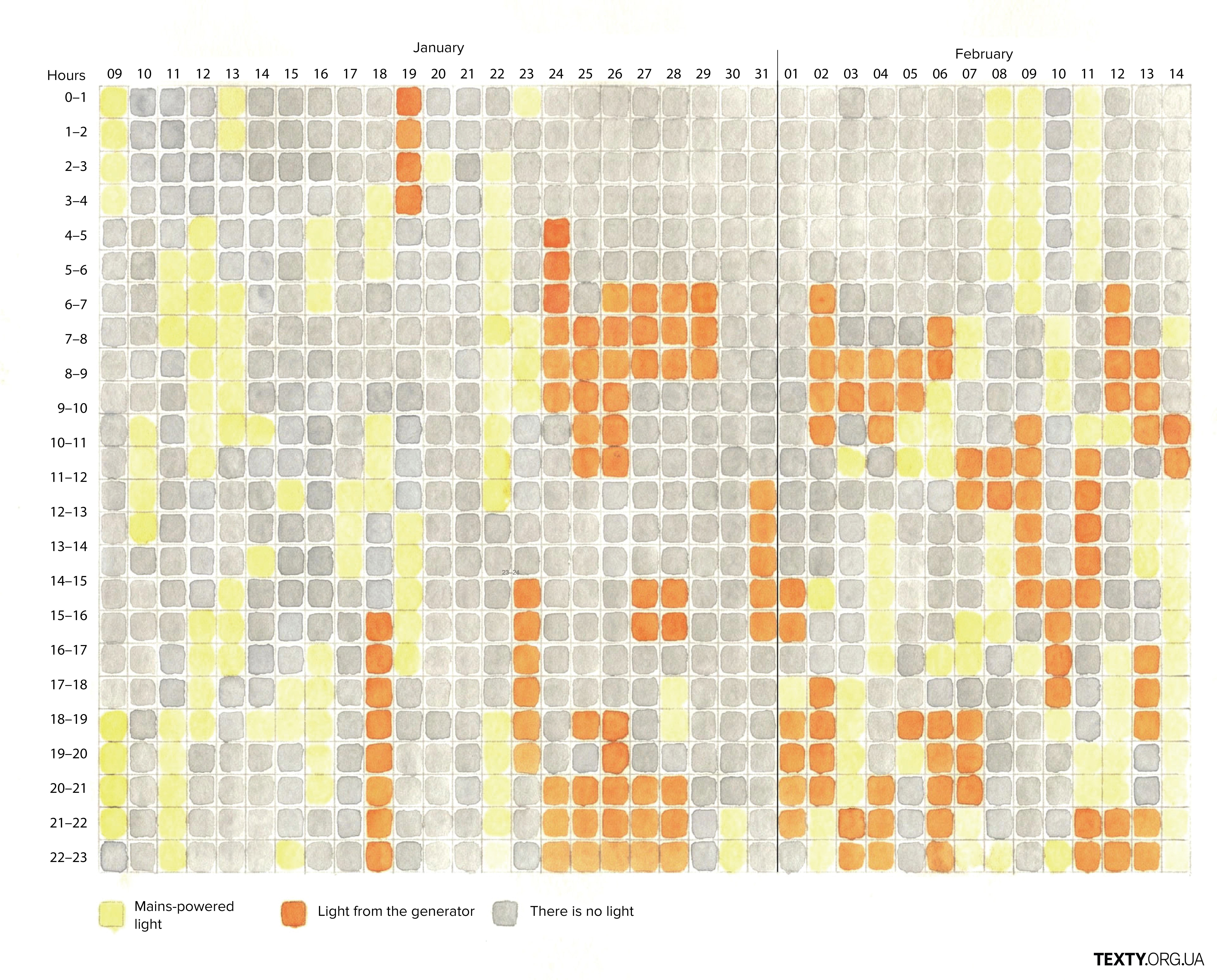
Burst pipes, flooded apartments, shattered windows, frozen electrical panels, melted live wires — all of this happened in this and hundreds of other Ukrainian high-rises during 20-degree frosts, air raids, and constant power outages. Texty.org.ua has reconstructed the events during January and February 2026 day by day.
All apartment numbers and names in the group chat of the residents of the buildings have been changed.
What are the features of a residential building
The high-rise building on the Left Bank of Kyiv was built in 1969 as part of an experimental project for a "high-quality panel residential building". Six such buildings were constructed in the former Soviet Union: the first two in Moscow, then four in Kyiv.
The building has no basement. The first floor is non-residential: it houses the lobby, elevator shafts, fire escapes, and utility rooms. And next to it are concrete supports with open space between them. It seems as if the high-rise is suspended in the air.
To clarify: between the first and second floors is a utility floor with utility pipes; there is another utility floor with pipes in the attic (marked in pink in the illustration).
The high-rise has 16 residential floors (from the 2nd to the 17th) and three entrances (128 apartments in each). The apartments are equipped with gas stoves, which is rare for buildings of this height. The exterior walls are constructed of three-layer concrete panels.
Previously, about 1,000 people lived in the building. After the war broke out, many of them left.
The heating system relies on electricity: the heat transfer fluid (technical hot water) is pumped upward by four electric pumps. Another pump is used for the water supply. The pumps are located in an underground heating station next to the building.
First, the third entrance is heated, then the second, then the first. Regular power outages cause disruptions. Air enters the pipes, and its bubbles block the flow of hot water.
It’s warm in this high-rise building. But when the power outages began, the apartments heated unevenly: in some, the temperature reached 20 degrees Celsius or higher, so people opened the windows to air them out, while in others it was 15–16 degrees Celsius.

The 2025 heating season got off to a rocky start. The building’s electrical system could barely handle the load fluctuations caused by frequent power outages: residents were turning on their appliances all at once to get their laundry done, clean up, and charge their gadgets.
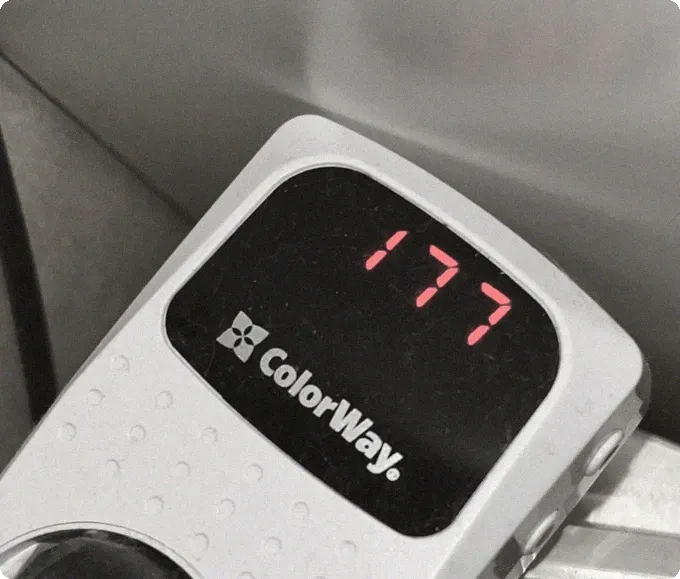
A home voltage meter belonging to one of the building’s residents shows only 177 V instead of the required 230 V, as everyone switched on their electrical appliances at once as soon as the power came back on
An important detail: the internet connection in the building remained almost uninterrupted even during prolonged power outages, thanks to the internet service providers’ powerful backup batteries.
The building is serviced by Housing Maintenance Unit 410, a subsidiary of the municipal management company. However, the unit is unable to cope with its responsibilities, as it maintains around fifty old panel residential buildings.
In 2016, the residents of the building tried to form a Homeowners Association, but they didn't have enough votes.
The heating has gone off
Day 2
January 10
City officials announced that repairs to the CHP-5 plant would take two days.
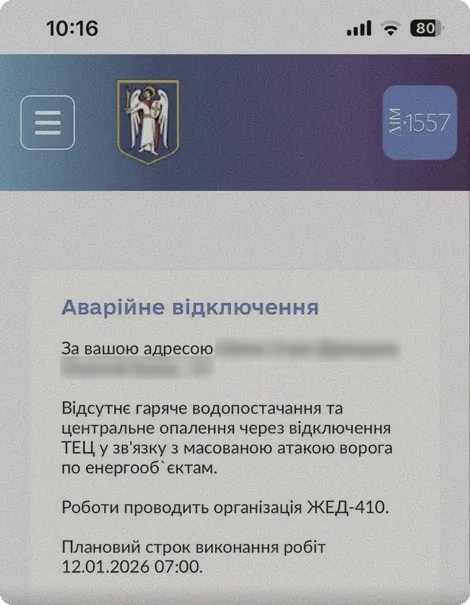
Kyiv city authorities have issued a warning of a prolonged power cut following an enemy attack
Due to the freezing temperatures, some residents began draining water from their heating systems to prevent pipes from bursting. However, the Housing Maintenance Unit decided to wait, hoping that heat service would be restored.
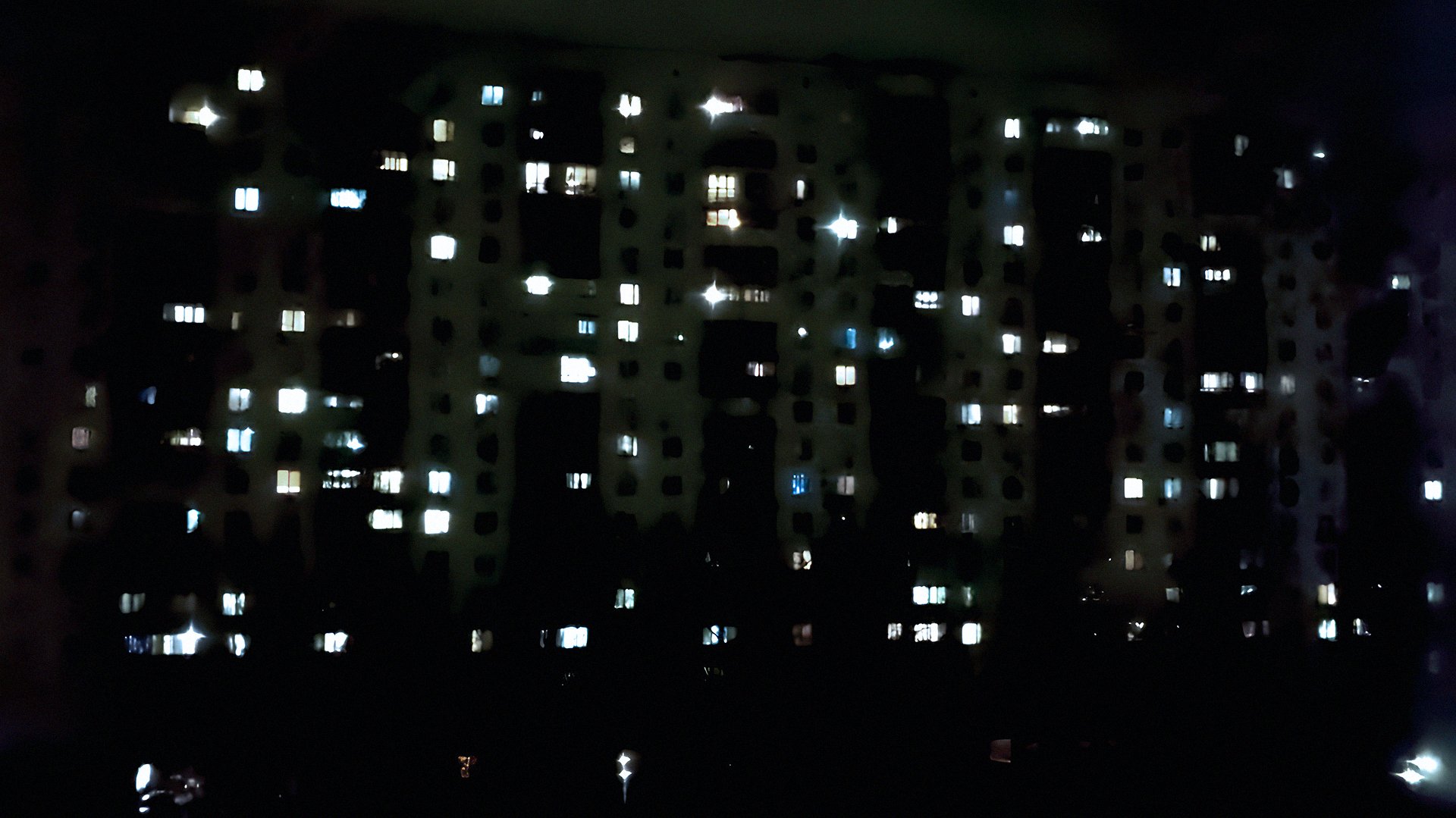
By evening, cold water had returned to the apartments, and even the electricity came back on, flickering briefly.
Day 3
January 11
The power came back on at 8:00 p.m. The building’s electrical system couldn’t handle the load: the transformer fuse blew, and it had to be replaced.
Later, one of the three phases blew out in the electrical panel. A third of the apartments were left without power again. The building’s residents set up an "emergency fund" in the group chat. They agreed to chip in money for an emergency fund: whatever each person could afford.
Ice in the radiators
Day 4
January 12
The heat was gradually returning, but not to everyone, not immediately, and not for long. The radiators in the first building remained ice-cold.
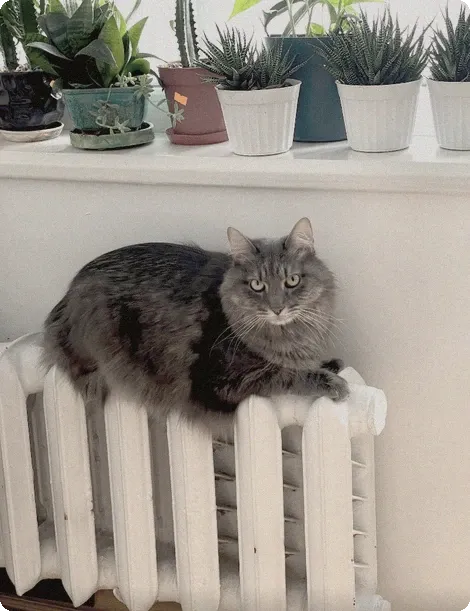
First entrance. The cat, out of habit, sits on the radiator waiting for warmth, but it is cold
"I’m really happy for everyone whose radiators have warmed up, but not from the bottom of my heart", admits Maryna from the first building. Her neighbors from the second building thanked her for her honesty.
The dilapidated CHP plant was unable to generate the necessary hot water pressure to allow the water to flow through all the risers (vertical pipes).
On top of that, air bubbles were clogging the pipes. It had to be released through special valves. To do this, Valerii, a plumber from the Housing Maintenance Unit, had to arrive precisely when the power was on, and the electric pumps were running: go up to the 17th floor (preferably by elevator), then to the top technical floor.
The situation was getting complicated. "Neighbors, I saw that the apartment on the 13th floor has windows without glass", Valentyna wrote in the neighborhood chat. "Everything in there must be frozen solid. I’ve reported it to the Housing Maintenance Unit twice".
The issue concerned an unoccupied apartment 83, which had broken windows. The frozen water in the radiators was apparently blocking the heat supply to the other apartments. The neighbors agreed to try to locate the owners of the apartment.
Day 5
January 13
The relay in the heating pump burned out. One of the residents bought a new one at a store. He had an electrician install it. The pump was replaced, but they couldn’t get it to start — the power went out again.
It got cold overnight, dropping to −18 degrees Celsius. In apartments without heating, the temperature dropped to 7–8 degrees Celsius. On the lawn behind the building, city officials set up two points of invincibility. You can charge your devices, warm up, and get a hot meal.
Day 6
January 14
The radiators are either cold or barely warm. There is no hot water. The power came back on for a few hours in the evening, but we can’t use electric space heaters, and we’re advised not to plug in power banks right away — the building’s electrical system can’t handle the load. By evening, two out of three phases have already blown on the electrical panel.
Active residents have printed a flyer urging people to use electricity sparingly, wear warm clothes indoors, heat water on the gas stove, and do laundry at 20–30 degrees Celsius.
"Your space heater at home means darkness in the house!” the activists suggest as a headline.
Day 7
January 15
Seeing a plumber was considered a stroke of luck. Plumbers were rushing from house to house. Residents faced a double challenge: waiting for the power to come back on and, during that very brief window, catching a plumber.
"Valerii called. He says it’s a woman’s 60th birthday, so he has to go shopping. He won’t be able to make it to us today", Oksana wrote in the group chat of the residents of the buildings on the evening of January 15.
"Let’s kidnap him", Andrii jokes in reply.
"Tell him what we’ll give the woman as a gift", adds Victoriia.
Even when the power and the plumber were both in the building, another accident would happen: a phase would blow on the panel or the pump relay would fail — it was impossible to bleed the air from the pipes.
The heating has been turned on
Day 8
January 16
In the evening, everything fell into place: the utility company workers, the plumber, and the head of the Housing Maintenance Unit got the heating system up and running.
But they couldn’t get the radiators in the first entrance to heat up — they were too far from the pumps. People joked in the chat:
"Good evening! Electricity, water, heating — do we have any of these?"
"Just the evening!"
But the building has gas. Residents are heating firebricks on their stoves and in their ovens, then spreading them throughout their apartments.
"I bought seven of them for 55 hryvnias (*~1.25 USD) each", Tetyana shares her experience. "I heat them and carry them on a tray into the room".
The temperature in the apartments is 1–6 degrees Celsius. The windows are starting to freeze over from the inside.
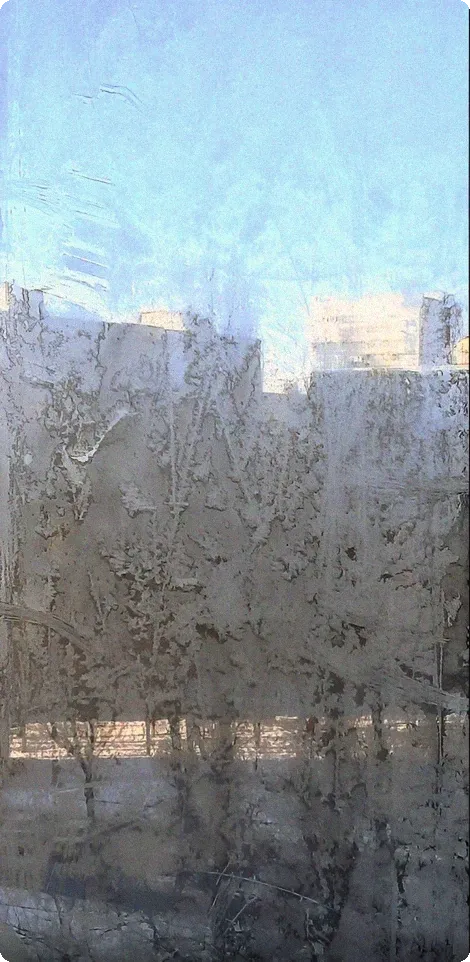
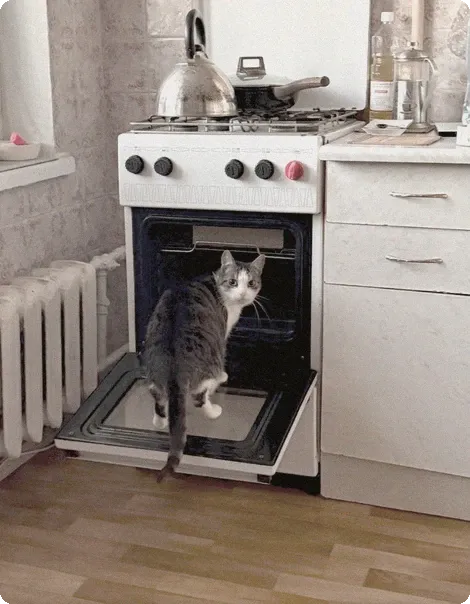
To keep warm, residents switch on their gas ovens and leave the doors open so that the warm air fills the room
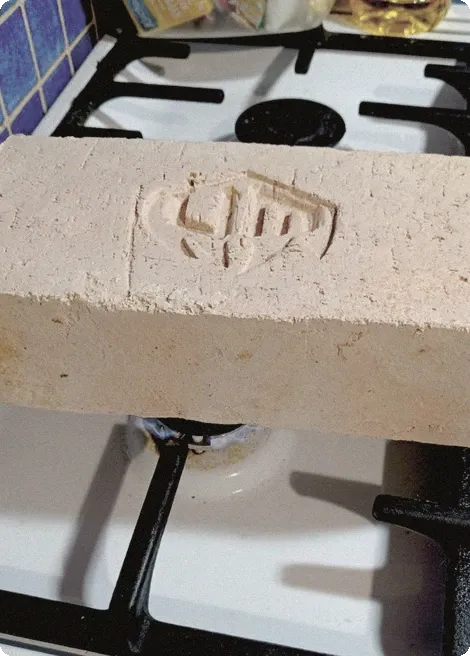
They heat firebricks on gas hobs
People are gradually leaving the high-rise in search of warmer housing.
Those who remain wear winter jackets and three pairs of pants at home, sleep in sleeping bags and outerwear, wrapped in heating pads and hot water bottles. Some set up camping tents in their rooms and light candles inside — it’s warmer that way.
On this day, the neighbors, along with a representative from the Housing Maintenance Unit, are trying to get into apartment 83 to check the condition of the radiators and convince the owners to glaze the windows or at least cover them with something.
The owner agreed to come after receiving a call from the unit. However, during the meeting, she refused to let the neighbors in, behaved aggressively, struck a representative, broke the glass in the building’s entrance door, and fled. The radiators were never inspected. The police did not respond to the call. The victim refused to file a report.
"Let’s call a cherry picker and board up the window from the outside", the neighbors suggested in the group chat.
“Maybe we should say there’s a terrorist group hiding in there? Let them come,” others suggest.
In the evening, utility workers installed a diesel generator near the building to ensure the uninterrupted operation of the heating pumps.
Day 9
January 17
In the morning, fuel was delivered for the generator, and the pumps started working. In the afternoon, water began pouring down from the lower technical floor above the first entrance — a harbinger of the floods to come.
In the ominous apartment 83, the radiators burst. Water flowed down to the lower floors. The first wet spots appeared on the 12th floor.
Only then did the police agree to open the apartment door (the owner refused to come). Neighbors entered the apartment along with the police and workers from the Kyiv Rescue Service.
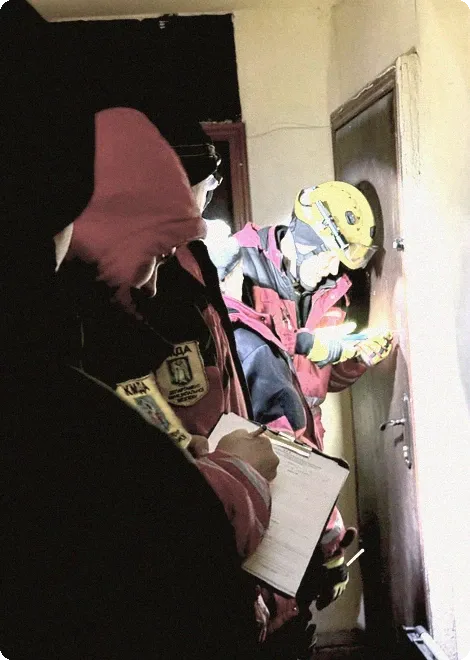
A Kyiv Rescue Service officer opens the door to the flat in question in the presence of police officers and residents of the building
Inside, the wind was blowing, piles of trash lay scattered, and swarms of cockroaches were running about.
The sewer was clogged, and the radiators in two rooms had frozen. One of them had cracked, and water was leaking from it.
The radiators were removed, and plugs were placed on the pipes. Later, the neighbors boarded up the windows with sheets of particleboard and covered them with plastic sheeting.
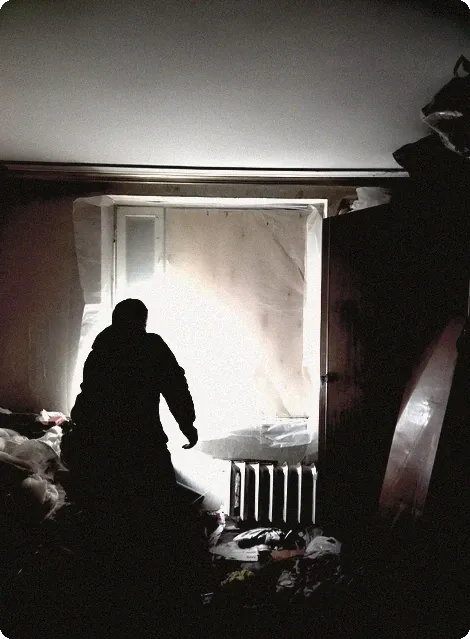
The residents of the building boarded up the broken window with a sheet of chipboard and covered it with plastic sheeting
The Flood
Day 10
January 18
The pressure in the heating pipes reached the required seven atmospheres. The radiators began to warm up very slightly, but not in the first building.
The plumber we managed to call on Sunday was very angry: 19 days straight without a day off, without a standard workday. He suspected that all the pipes on the upper utility floor had frozen.
They shut off part of the risers in the first entrance and tried to drain the water. It didn’t work. The water in the pipes had frozen.
A heating pipe burst on the lower technical floor above the first entrance. Water flowed into the courtyard and froze immediately. The lobby was flooded.
Residents are placing pots of hot water near the remaining radiators to keep them from freezing.
"We didn’t expect that instead of the radiators heating us, we’d be heating them", they joke in the group chat.
Day 11
January 19
The radiator burst in apartment 22. A wet wall was noticed in apartment 16. It’s unclear where the leak is coming from. The lobby was flooded again from the technical floor. Gas burners (blowtorches) were purchased with funds collected by the residents to thaw the risers. It was agreed to start the next morning.
The “Shahed” strike
Day 12
January 20
At 1 a.m., residents were awakened by the sound of a falling drone. It seemed as though it was flying toward the windows. Then there was a bright flash and an explosion — broken windows rattled, and potted plants fell from the windowsills.
The drone exploded upon hitting tree branches at a height of 10 meters and fell onto a parking lot 140 meters from the building. About fifteen cars were burned or damaged. No casualties.
At three in the morning, the sound of hammers could be heard. Residents were covering the broken windows with plastic sheeting and boarding them up with sheets of particleboard. Debris and the blast wave damaged the windows of twenty-one apartments in the first entrance and three apartments in the second. In two other apartments, the windows were blown wide open. The lower floors were hit the hardest.
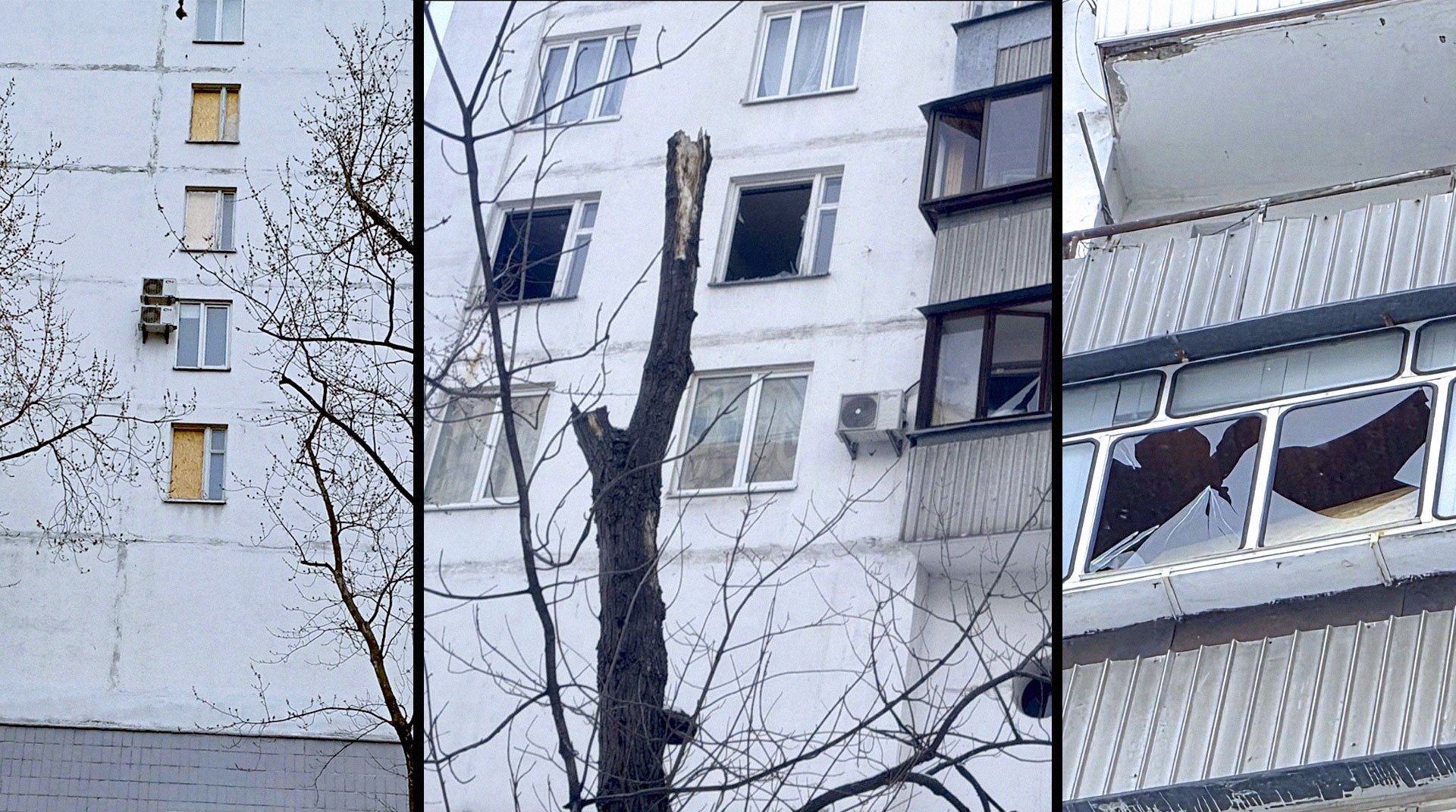
CHP-5 has been damaged again as a result of the air raid. The building has lost its heating, electricity and water supply.
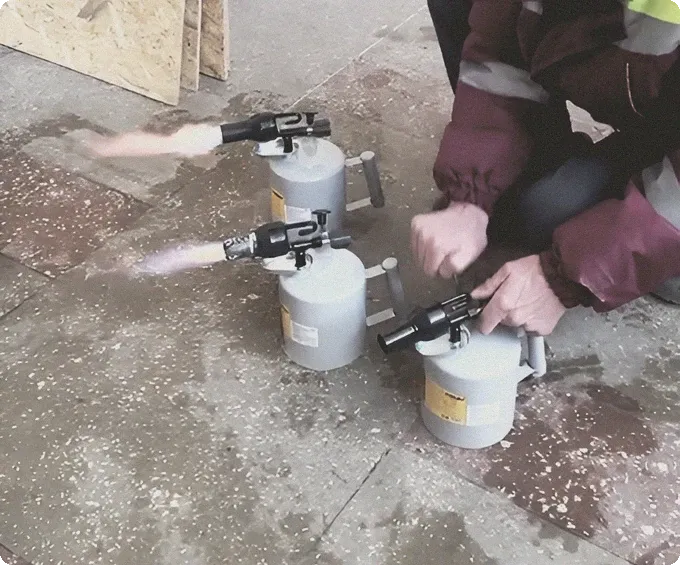
A resident is preparing gas burners to thaw the frozen pipes so that the ice melts and the heating system in the first block can start working again.
At eight in the morning, several men went to different floors to thaw the frozen pipes using blowtorches.
Women from the initiative group arranged for a cherry picker to be brought in and purchased sheets of particleboard to cover the broken windows of unoccupied apartments from the outside. In these and adjacent apartments, the air temperature dropped below zero, and the radiators began to freeze.
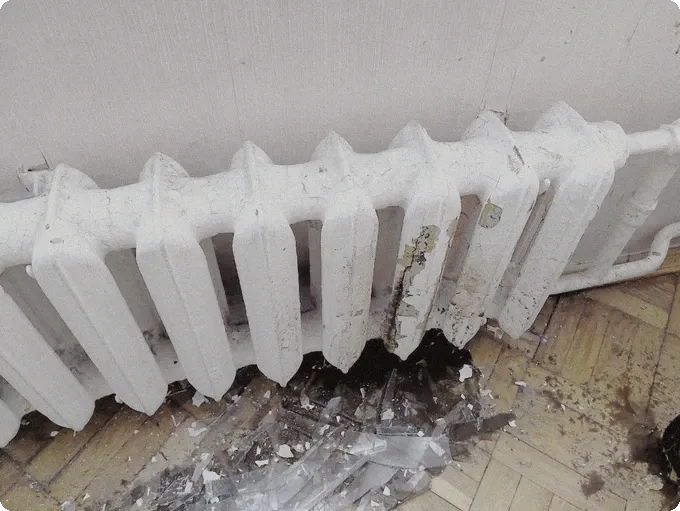
A burst by ice radiator in one of the apartments
The frozen radiators had to be cut off immediately to leave a chance to get the risers working to heat the other apartments. One of the neighbors went to buy valves and plugs to seal the cut-off points. It later turned out that the Housing Maintenance Unit had also purchased them.
Entrance 2. Overnight, a radiator and a heating pipe burst in the vacant apartment 249 on the 15th floor — the window had been blown open by a drone explosion. Several apartments on the 13th and 14th floors were flooded.
On the 7th floor, a riser burst. The surviving radiators are being heated with firebricks and tapped: without water or ice, they should sound "ringing".
Work crews from Rivne and Mykolaiv
Day 13
January 21
There is no heating in the building. The CHP plant is not operating. Pumps connected to a generator are circulating cold water to prevent the remaining risers from freezing.
A repair crew from Rivne has arrived at our points of invincibility. The government has brought plumbers from across Ukraine to the capital.
The residents of the building decided to insulate the pipes on the technical floors and seal up cracks and ventilation openings to keep the heat in.
Day 15
January 23
A crew from Mykolaiv has joined the workers from Rivne. They're going from apartment to apartment, checking pipes and radiators, cutting them off, and installing plugs to try to get the frozen risers flowing again.
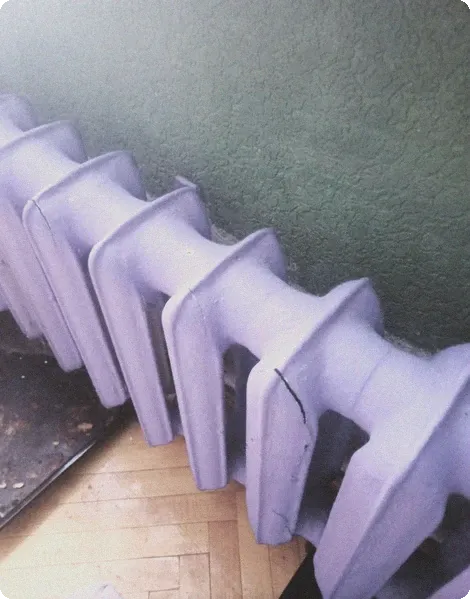
Burst radiators
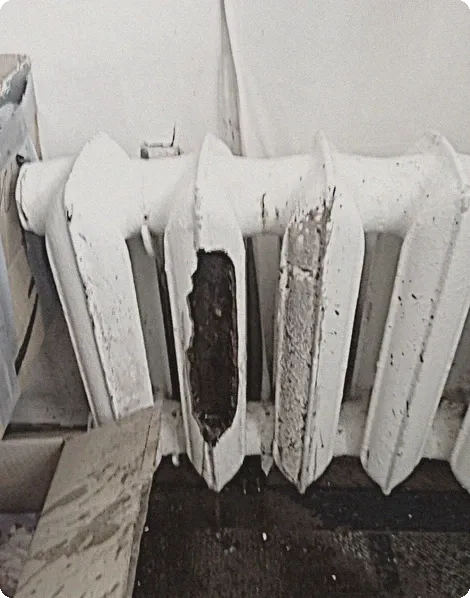
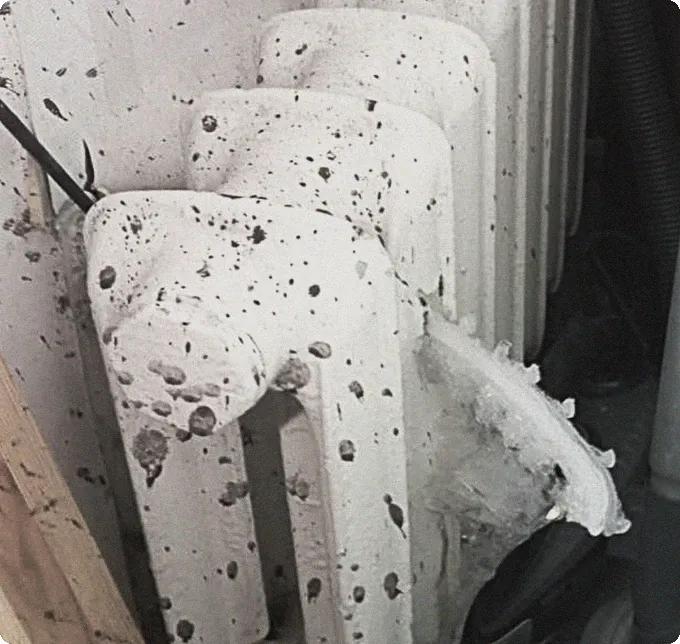
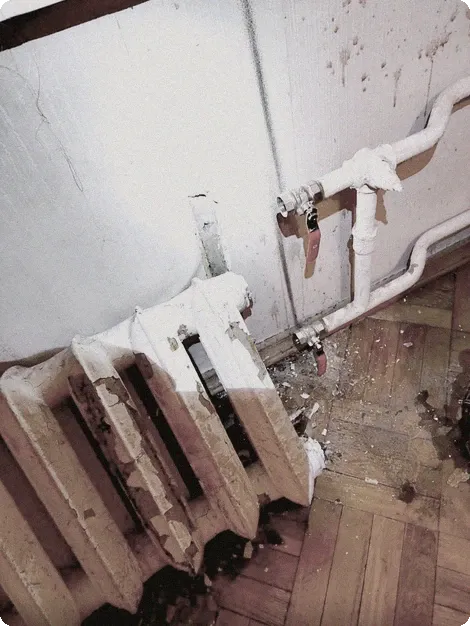
The temperature in the apartments is close to freezing, and in some places even lower. It’s even colder on the technical floors.
During a power outage, the magnetic locks on the entrance doors don’t work — anyone can walk in. In the morning, it turned out that the blowtorches and a bag of valves and plugs left in the first entrance the day before had been stolen. And someone stole a battery and a charger for tools from the repairman from Rivne.
The residents reimbursed the repairman for the lost items from their "emergency fund".
State Emergency Service workers brought an additional large industrial generator with a capacity of 400 kW to the building to power the heating pumps and the apartments.
The generator consumes 380 liters of diesel in six hours. The local government is supplying the fuel. The unit operates on a schedule: it provides electricity for six hours, then rests for two hours (during which time a small generator brought in earlier supports the heating pumps).
A point of invincibility has been set up next to the residential building, where those responsible for the generator are on duty. The high-rise has been temporarily disconnected from the city’s power grid because switching between the generator and the grid requires additional equipment. But the generator has limited capacity, so it doesn’t provide power to the elevators and stairwells.
"What else can you even turn on besides a light bulb?" people ask rhetorically in the group chat of the residents of the buildings.
Day 16
January 24
Another air raid alert during the night. The Russians attacked CHP-5 and CHP-6 plants, the substations that supplied the capital with nuclear power.
Repair crews continue to go from apartment to apartment, cutting off broken radiators.
In the morning, the water stopped running in the building. The generator shut down due to fuel shortages.
Day 17
January 25
The elevators have been connected to the city power grid. However, their operating hours do not always coincide with the availability of electricity in the apartments. The generator that powers the apartments is operating erratically due to fuel shortages.
Day 18
January 26
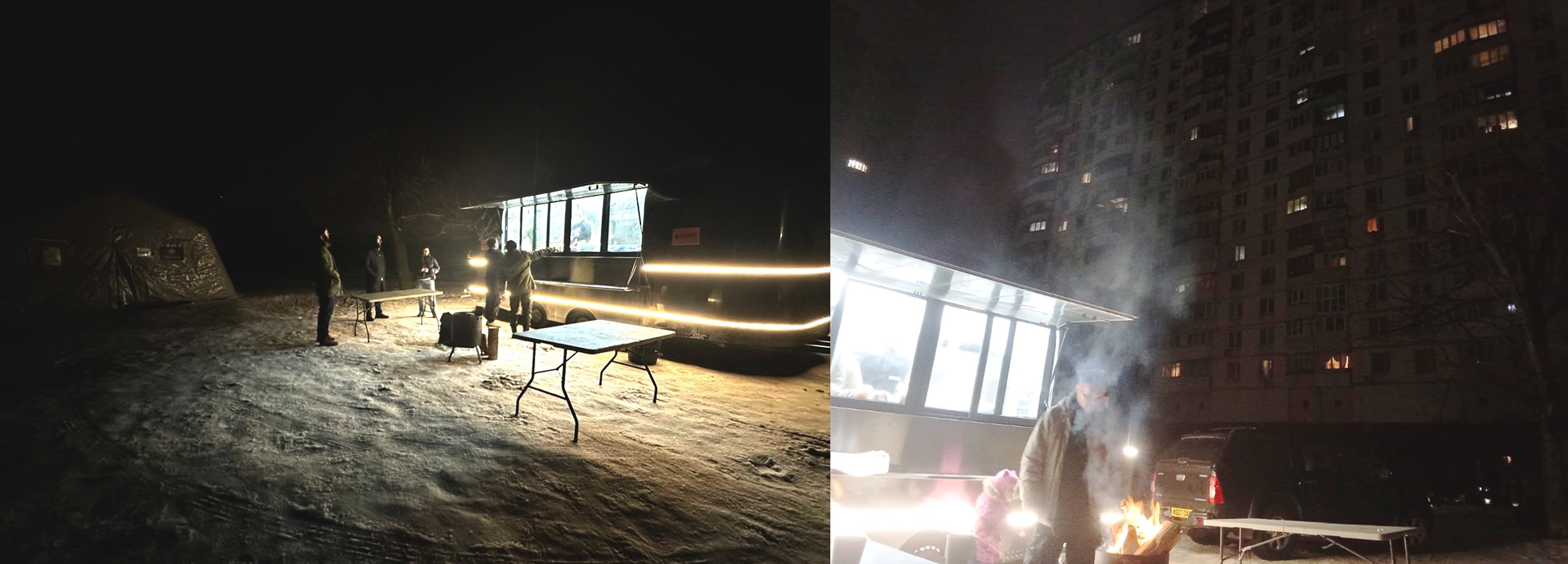
Veterans of the 3rd Army Corps brought a food truck — a cafe on wheels — to the building. They are serving residents hot meals and providing tea and coffee.
Day 20
January 28
Utility workers installed a power switch in the heating point to switch between the generator and the city power grid, so that both the heating pumps and the elevators would work. Later, the switch burned out. It was replaced.
Insulation of the technical floor
Day 21
January 29
In the first entrance, the stairwells on the 4th, 5th, and 6th floors are flooded. Water was leaking from a burst riser on the 7th floor.
Residents rushed out to mop up the water on the landings and in the lobby to prevent it from freezing.
Residents are insulating the pipes on the technical floor. The wind blows through the unglazed windows, and the pipes are freezing.
To insulate them, they’re buying spray foam, duct tape, mineral wool, and tools. These items are now in short supply in stores.
"No heat, no light", Volodymyr writes irritably in the group chat.
"That really helps the situation. But we need more emotion. Add as usual, or I knew it", his neighbors tease him.
In these difficult times, people in this chat tried not to argue and to keep negativity to a minimum.
Toward evening, a jet of hot water burst from the main heating pipe near the elevator on the first floor. Steam rose.
Day 22
January 30
An attempt to restart the frozen pipes at the first entrance flooded electrical panels on 12 floors.
The cause was likely a leak in apartment 83 (where not all the radiators had been removed) or in the heating pipes. Water gushed from the walls and dripped from the ceiling in several apartments.
In several dozen apartments that had already lost their heat, the power went out. The flooded electrical panels were shut off, and residents dried them out with hair dryers and blow dryers, running extension cords over to their neighbors.
Day 23
January 31
Due to an accident at the CHP plant, the radiators began to cool down. Repair crews from Mykolaiv restored heating to two more risers in the first entrance. In total, five out of eight risers are now operational.
Thirty-two apartments were completely without heat, and in another eight, one room still had no heat.
However, a cold-water pipe burst on the lower technical floor in the first entrance, and that was also repaired.
Day 27
February 4
Hot water is leaking from a heating pipe on the lower technical floor.
Day 28
February 5
One of the plumbers discovered that near the disconnected radiator in apartment 83, a valve — a tap on the pipe — had been shut off, blocking the flow of hot water to the lower floors. This could have been the reason for the lack of heat in the apartments further down the riser (from the 12th to the 2nd floors). But under these circumstances, it is no longer possible to determine exactly when this happened and how it affected the events.
Day 30
February 7
Flooding in the lobby on the first floor — water is leaking from burst heating pipes on the technical level.
The residents have drafted a joint letter to various instance authorities regarding everything that is happening in the building and requesting that the issues be resolved.
Day 34
February 12
The CHP plant isn’t supplying heat after yet another shelling, the radiators are getting cold.
The thaw
Day 36
February 13
Thaw. It’s −3 degrees Celsius outside. The snow has melted on the flat roof of the building. But the gutters are still frozen. Water is flooding the electrical panel on the technical floor above the first entrance.
Day 37
February 14
Outside, the temperature had risen to 3–5 degrees Celsius. The repair crew thawed the gutter with gas torches, drained the water from the roof, and dried out the electrical panels. They drained the meltwater from the non-functional risers. That was all that could be done. There were two weeks left until spring.
The Russians continued to shell the CHP plant and substations with missiles and drones until they finally destroyed the TPP-6 plant in Darnytsia (district on the Left Bank of Kyiv), leaving 1,126 buildings and 62 schools in Kyiv without heat.
In the spring, the residents of the high-rise building, having weathered a difficult winter together, decided to revisit the idea of forming a Homeowners Association to take control of the building themselves and properly prepare for the next cold spell.
To get this process moving, they scheduled another meeting and chipped in whatever they could for organizational expenses. They raised about 100,000 hryvnias.


Підпишіться, щоб отримувати найкращі статті на e-mail (раз на два тижні)

Підписатися