Girls, Mafia, Borscht and War. Ukrainians through the lens of world cinema
Girls, Mafia, Borscht and War
Ukrainians through the lens of world cinema
Rotate the screen. We recommend viewing in landscape orientation
We examined what global cinema has known about Ukraine since the country gained independence and spoke with Ukrainian filmmaker Antonio Lukich, best known for his film Luxembourg, Luxembourg, about how we should perceive and make sense of all this.
Ukrainian film fans have noticed that, lately, references to Ukraine in movies and TV series have become not only more frequent, but also more prominent.
For example, the latest, fifth season of the popular series The Boys (2026) takes a satirical swipe at U.S. policy toward Ukraine.
In the 22nd season of NCIS, one storyline revolves around the threat of a potential nuclear conflict. NCIS intercepts encrypted messages suggesting that Belarus is preparing a missile strike against targets in Europe. In the end, it turns out that Ukrainianforces had already destroyed the Belarusian mobile missile launchers before the United States could launch a retaliatory strike.
Just as importantly, Ukraine’s resistance is changing how the world sees not only us, but Russia as well. A striking example is the series Sweetpea (2025), in which the protagonist compares the woman who torments her to a cancerous tumor, climate change, and Russia, pointing out that the world would be better off without any of them.
Yet for 30 years, global cinema has been creating a very different image of Ukraine.
We examined what global cinema has known about Ukraine since the country gained independence and spoke with Ukrainian filmmaker Antonio Lukich best known for his film Luxembourg, Luxembourg, about how we should perceive and make sense of all this. The director’s thematic comments are highlighted in blue throughout the text.
— I am not beaten yet. I still have armies in the Ukraine.
— You know what the Ukraine is? It's a sitting duck. A road apple Newman. The Ukraine is weak. It's feeble
— I come from Ukraine. You aren't saying Ukraine is weak.
Seinfeld, USA, 1989–1998, Season 6, Episode 12
This episode aired in 1995, four years after the collapse of the Soviet Union. Michael Richards’s character, Kramer, casually says Ukraine is chaos, dirt in the road, a weak card not worth playing. He reflects the widespread perceptions of Ukraine at the time. A random subway passenger of Ukrainian descent interrupts the conversation between the two Americans.
Also in this scene, the Americans refer to Ukraine as "the Ukraine", while the Ukrainian says just "Ukraine". In other words, the distinction was already understood at the time, yet "the Ukraine" was still being used to refer to an already independent state.
The shift from "the Ukraine" to "Ukraine" is one of the clearest linguistic markers of how perceptions of the country have changed. "The Ukraine" gradually disappeared after 2010 and is now rarely used.
"Ukraine" vs. "the Ukraine"
Percentage of all references to Ukraine
Methodology
We used the OPUS OpenSubtitles corpus, which contains more than 62 gigabytes of English-language subtitles through 2023, and extracted all passages from 1991 onward that mention Ukraine or Ukrainians.
We analyzed only fictional and entertainment content: thrillers, dramas, comedies, reality shows, and even satirical news programs — productions where stereotypes about Ukraine can take shape and persist.
This yielded more than 5,000 mentions across 1,500 unique films and TV shows. We then applied BERTopic, a topic-modeling technique, to the data. The analysis produced more than 50 clusters, but in this article we focus on the main ones:
references to Ukrainian women (many of them stereotypical);
Ukrainian mafia and Ukraine as a source of danger;
Ukraine in the context of war and international politics;
Ukraine as an exotic or merely incidental backdrop.
Antonio Lukich on stereotypes in general:
I like stereotypes. I mean, I allow people to think of me stereotypically, and I also like thinking about people in stereotypical ways. Stereotypes are a good basis for humor. But at the same time, they are a poor basis for building bridges with the outside world. When you’re a director, and you think, 'Right, someone needs to steal something, so let’s make her Ukrainian', of course, you can take offense at that. But if she’s a Ukrainian woman who speaks Surzhyk (who speaks a mixed form of Ukrainian), or simply a beautiful woman, that’s not something to be offended by. Or if she works as a cleaner. That’s part of life, too. The question is how it is portrayed. Of course, there’s no reason to be grateful for it, either. You might be grateful if they showed some deeper side of a person from a developing country.
How to read the graphs
We clustered not entire film plots, but short passages of a few sentences containing references to Ukraine. Dividing them into clearly defined topics isn't straightforward. A single reference may fall at the intersection of several themes, and the position of each point on the graph is determined not only by the topic assigned to it by the algorithm, but also by its semantic proximity to other topics. So we ask you not to interpret the distribution too rigidly.
Take, for example, the group focused on food and cuisine. Most of its points are clearly separated from the other topics in the lower-right corner. This group includes references to borscht, varenyky, and memories of grandmother’s cooking. But some points from the group have drifted away and effectively share space with other clusters.
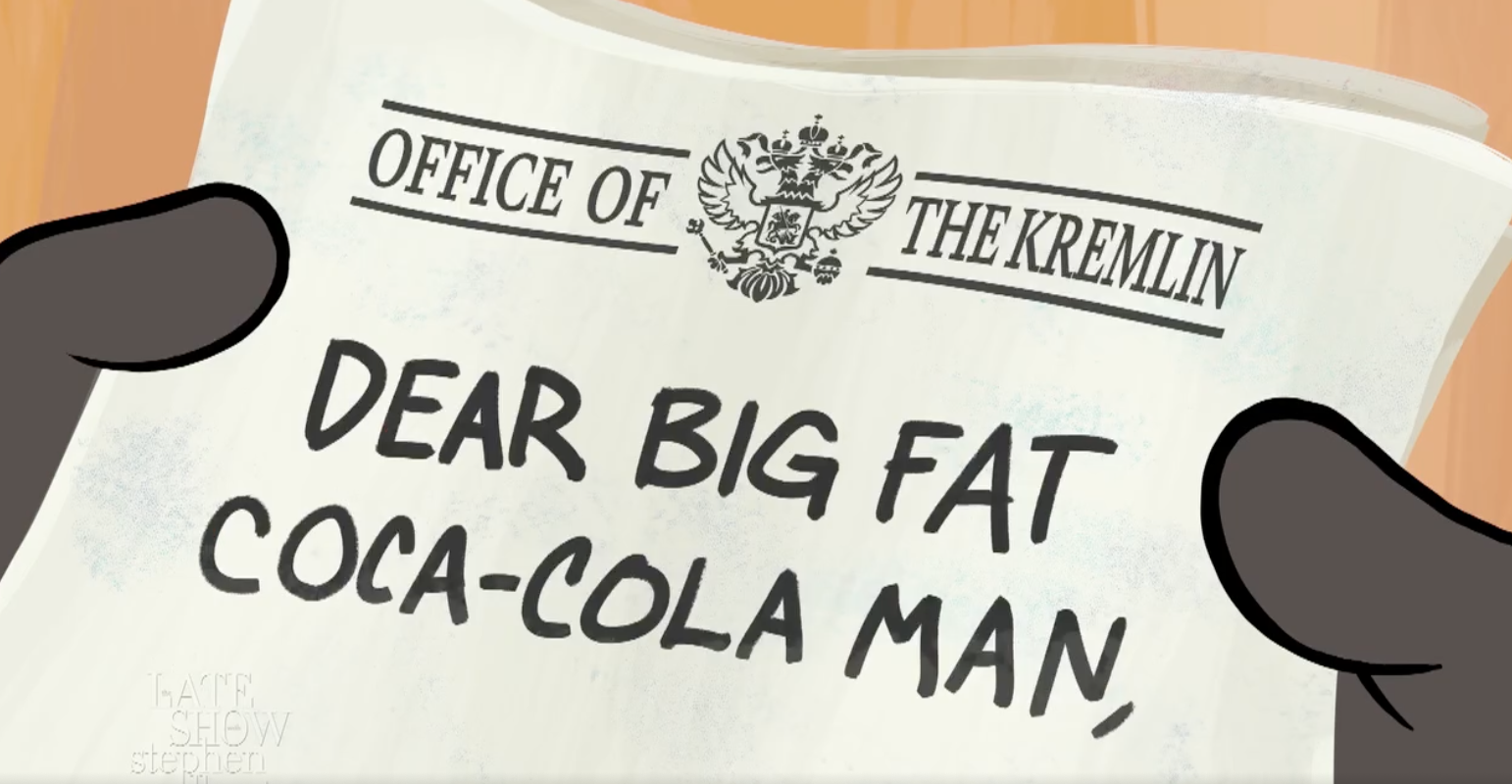
For instance, a joke from The Late Show in which Santa reads a letter written on official Kremlin letterhead ended up in the food group, probably because of a reference to Coca-Cola. However, this point is located closer to the group of news-related references about the war in Ukraine than to the food cluster.
— Dear big fat Coca-Cola man, I want Ukraine for Christmas. They will not give. You will give.
The Late Show, 2022
Ukraine as a source of marginalized characters, mostly women
There are three thematically related clusters that often overlap semantically. The first consists of sexualized stereotypes about Ukrainian women: girls, prostitution, human trafficking, objectification, and humiliation.
The second is the "mail-order bride" trope. This cluster consists largely of American reality shows such as 90 Day Fiancé, which follows couples who must marry within 90 days to avoid losing their K-1 visa — a visa that allows foreign fiancés of U.S. citizens to enter the country on the condition that they marry within that period.
— Ukrainian women only want to make it to the United States.
90 Day Fiancé, USA
The third cluster concerns marginalized women. "If a Ukrainian woman who works illegally disappears, no one will look for her". This line, or a variation of it, appears dozens of times in the corpus.
— Just take her somewhere far away where nobody will fucking find her. Nobody will care about her. If they did, that hippie wouldn’t have found her here.
— What if she’s some Ukrainian student and now the mafia is after us?
Brak, Czech Republic, 2002
— Until she ended up dead in a hotel in East Houston. She wouldn’t be the first Ukrainian girl to get involved in organized crime
Law & Order: Criminal Intent, USA, 2007
— Yes. Yesterday, six Ukrainian women disappeared from the refugee reception center. You and Holm will go there.
Arne Dahl: Europa Blues, Sweden, 2012
Antonio Lukich on stereotypes he doesn't like:
We need to create content, take actions, or do things that make those stereotypes funny to foreigners themselves. They should understand that it’s like joking about Belgians by talking about chocolate, or about the Swiss by talking about watches, or about Norwegians who have nothing but oil, or Japanese people who have nothing but sushi.
Ukraine as a source of danger
This group brings together several smaller thematic subclusters:
Ukraine as a setting for espionage and organized crime;
Ukraine as a source of threats and resources moving across borders;
nuclear weapons "leaking" out of Ukraine after the collapse of the Soviet Union;
Ukraine as a hub of cybercrime and cyberwarfare.
The phrase "Ukrainian mafia" ("Ukrainian mob") appears in the corpus as naturally as "Sicilian mafia" did in films of an earlier generation.
American TV shows use criminals of Ukrainian origin as a generic, interchangeable trope. In NCIS, Burn Notice, and dozens of other films and TV shows, "Ukrainian" means "post-Soviet criminal", with no particular Ukrainian specificity.
A particularly telling example is the cult film Lord of War (2005), starring Nicolas Cage. In the film, the protagonist, Yurii Orlov, an American of Ukrainian descent and an international arms dealer, travels to Ukraine after the collapse of the Soviet Union and, with the help of his uncle, a general, illegally buys up entire arsenals of the Soviet army. Yet Yurii is essentially an amalgamation of several real-life figures. His character is based partly on Russian arms dealers Viktor Bout and Leonid Minin.
The director took real Russian arms dealers and used them as the basis for a Ukrainian character. The protagonist could have been Russian, Chechen, or Moldovan, but the film chose to make him Ukrainian.
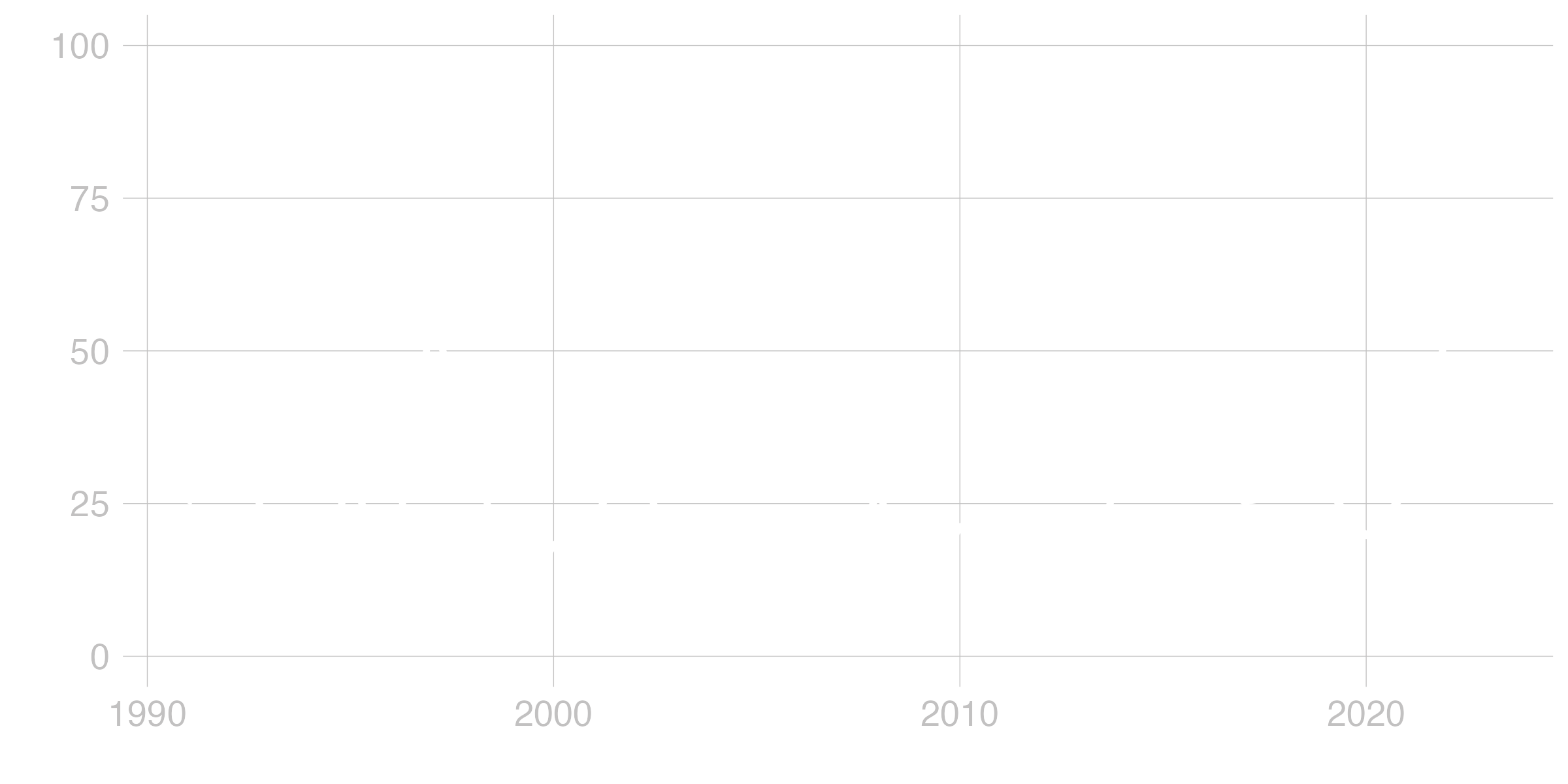
More broadly, Ukrainians are often mentioned in the same context as Russians. Before 2014, these references usually appeared in espionage-related contexts: both countries were portrayed as sources of danger, interchangeable elements of a post-Soviet landscape. And just as this association begins to weaken, Russia launches a war and once again pulls Ukraine back into the same frame.
References to Ukrainians or Ukraine in the same context as Russians
Percentage of all references to Ukraine
Хоча бувають приємні винятки:
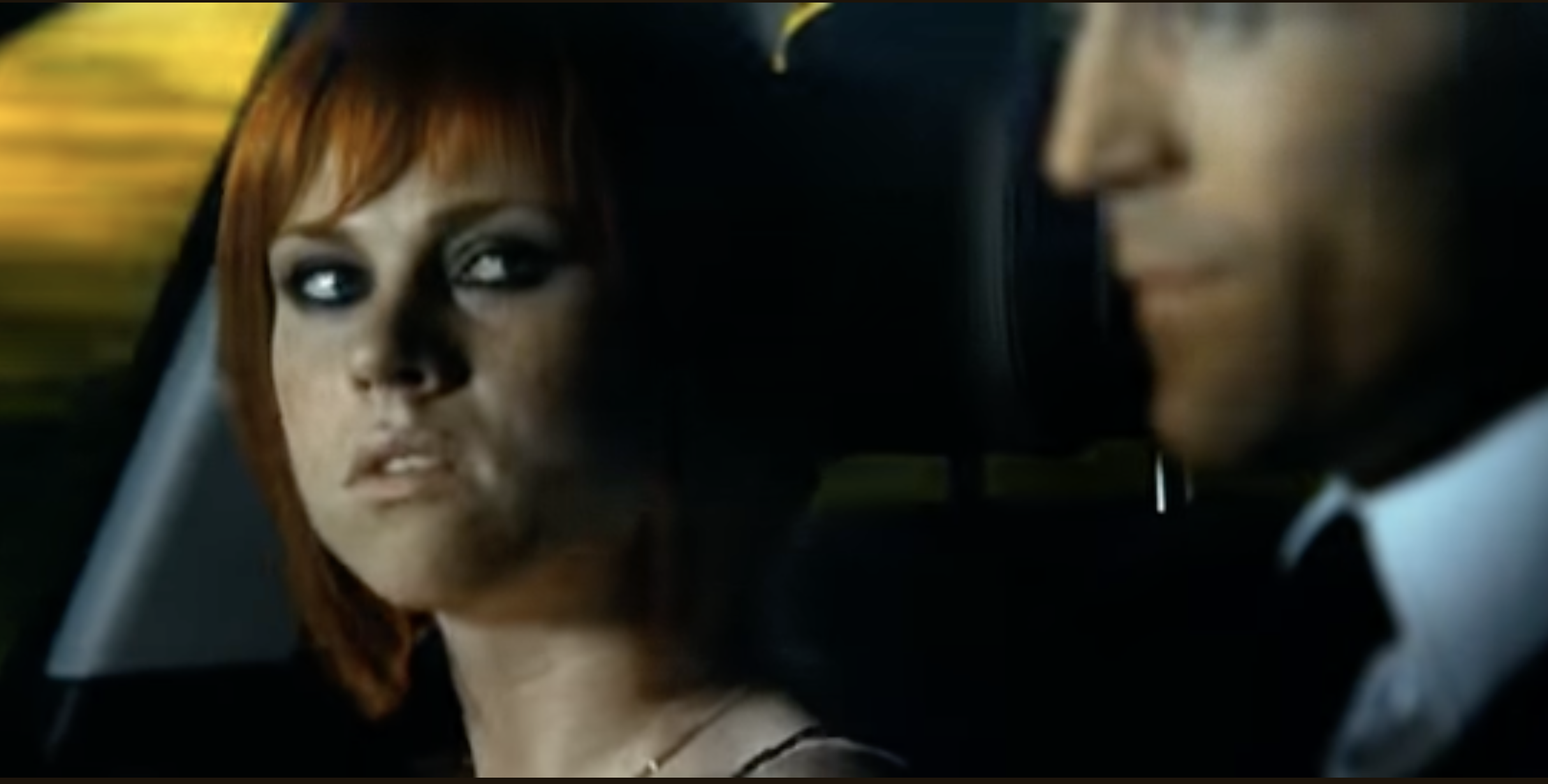
— I’m not Russian. I’m Ukrainian.
— Excuse me.
— Not excused. We’re different people. We’re different here [points to her head] and here [points to her heart].
Transporter 3, USA, 2008
In spy series of the 1990s and 2000s, Ukraine is a place where unsecured nuclear weapons are stored, mercenaries are recruited, and evidence can be covered up. Later, this cluster evolves into a cyber threat, while nuclear warheads are replaced by "servers with untraceable IPs", "hackers from Kharkiv", and the "Ukrainian dark web". It is portrayed as a lawless space where dirty business can be done.
The Israeli cluster differs from the American one. Israeli crime series such as Manayek, Downtown Precinct, and HaMidrasha often portray the post-Soviet organized crime world more specifically and realistically than American shows. This can be explained by the large-scale migration from former Soviet countries to Israel in the 1990s and the emergence of criminal networks linked to people from the post-Soviet space. As a result, post-Soviet organized crime has become a recurring theme in Israeli television. Unlike many American procedurals, where the Ukrainian mafia often serves merely as a plot device or a one-off reference, Israeli series often give these characters their own backstories, motivations, family ties, and roles in the plot.
There isn’t much about Ukrainian mafia in Russian cinema, with the notable exception of the early-2000s film Brother (Brat). More broadly, we will briefly touch on Russian cinema here because its films are translated into other languages, foreign audiences watch them too, and they can absorb stereotypes about Ukrainians that serve Russian interests.
Before 2014, Russian cinema portrayed Ukraine:
as a peasant country, a space of anarchy and rebellion;
through nostalgia for the Soviet Union and imperial unity;
through comic images revolving around language, borscht, salo, singing, and weddings;
as a periphery of a shared cultural space.
After 2014, references to Ukrainians in Russian films and TV series fall into the semantic cluster associated with films about World War II and the German army. This points to the use of a shared set of images and rhetorical patterns.
In Polish cinema, Ukrainians are portrayed in very different ways. This reflects the broader range of attitudes toward Ukrainians in Poland. Ukraine appears both as a dangerous border from which migrants arrive and as a source of crime. There are dismissive portrayals of migrant workers, but also references in friendly and sympathetic contexts.
Ukraine and war as background
A significant share of references to Ukraine functions as background, or as a source of exotic sounds. Characters speak, swear, shout, or sing in Ukrainian, while gunshots or other sounds may be heard in the background. This also includes films in which Ukrainians are portrayed through a language barrier: they speak Ukrainian, no one understands them, and they do not know English or the language of the country where the story takes place.
After 2014, a new wave of background noise appeared, distinct from what came before. These are news reports about Ukraine, protests, war, shelling, and refugees. They come from a TV or radio while the characters go about their lives. Missile strikes, Mariupol, Bucha — all become background noise.
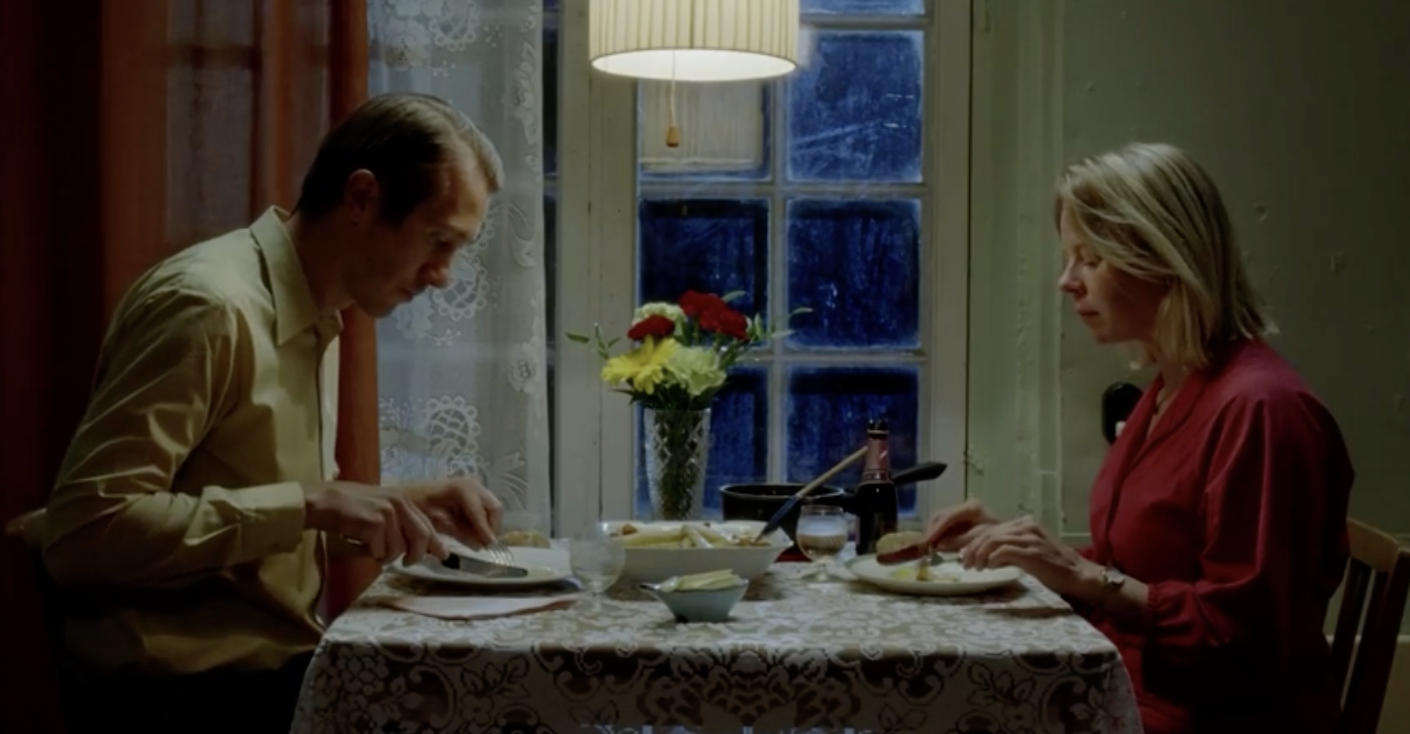
This cluster is largely shaped by Finnish director Aki Kaurismäki’s film Fallen Leaves (2023).
The film depicts the gray, depressing routine of life on the outskirts of Helsinki, where news about the war and shelling provides a constant backdrop. At one point, the protagonist simply turns off the radio as it reports yet another round of shelling, saying, “Damn war.”
Rescue efforts to locate victims are continuing following the shelling of the Drama Theater in Mariupol. The exact number of casualties is not yet known…
— Damn war.
Fallen Leaves, Finland, 2023
Antonio Lukich on Aki Kaurismäki’s films:
To talk about Fallen Leaves, you have to watch eight more Aki Kaurismäki films, each of which has a TV set as a character, broadcasting the news. Whether it’s the war in Iraq or 9/11, there always has to be something terrible happening on television. But Kaurismäki is actually a great supporter of Ukraine. He even used that TV set to say a few words about us at the Cannes Film Festival.
The war is also mentioned in the Romanian arthouse film Do Not Expect Too Much from the End of the World (2023), directed by Radu Jude. As she drives around Bucharest, the protagonist watches TikTok content about the war in Ukraine.
Geopolitics
American Democrats are portrayed here as stronger, more decisive, and more hostile toward Russia than they are in reality. But, much as in the real-world Western perception of Ukraine, the country is stripped of any agency.
In the series Madam Secretary (2014–2019), entire seasons are devoted to Ukraine, but through the lens of American diplomacy: the West is the savior, while Ukraine is a small country caught up in a larger game.
The same perspective appears in Designated Survivor (2016–2019), The Diplomat (2023), and other examples. Ukraine rarely appears as an independent actor in geopolitical affairs. Instead, it is portrayed as the object of an actual or potential conflict with Russia, as part of what is framed as Russia’s sphere of influence.
There is one curious, isolated reference to Ukraine in Turkish cinema, in the context of a comparison between either Ukraine, Taiwan, and Greece, or Russia, China, and Turkey:
— Ukraine, to stop the Russians; Taiwan, to stop China — that’s one thing. But Greece is the heart of Western civilization. In other words, can it be sacrificed to stop the Turks in the Middle East?
Lone Wolf (Yalnız Kurt), Turkey, 2022
War
And what about the war? It is difficult to isolate the war as a separate block because references to it are scattered across different clusters.
Both in 2014 and in 2022, the war first enters the Western public sphere through American, British, and Australian late-night and comedy shows such as Saturday Night Live, Have I Got News for You, The Daily Show, The Problem with Jon Stewart, and The Last Leg.
Before 2014, Ukraine was almost absent from these shows.
After 2014, references to Ukraine gradually began to appear in sharp, satirical, and often disparaging contexts. For example:
Ukraine is now in the hands of the Willy Wonka of Eastern Europe!
Last Week Tonight with John Oliver, USA, 2014
This is an escalating crisis in eastern Ukraine — or, if you're watching this on replay, in western Russia.
Have I Got News for You, USA, 2014
After 2022, the satire is more often directed at Russia or at the governments of the countries where these shows are produced, rather than at Ukraine. For example, the host of Shaun Micallef’s Mad as Hell mocks his own Australian government over the relatively small amount of aid it has provided to Ukraine:
Ukraine has 730,000 tonnes of coal left, enough for only 15 to 20 days of power, and we’re only sending them a tenth of that amount. Maybe we should have sent more? It’s just that when the prime minister said our coal would 'power the resistance', he didn’t make it clear that he only meant for an afternoon.
Shaun Micallef’s Mad as Hell, Australia, 2023
Or another example, this time about the Australian Bushmaster armored vehicles:
— How much do you think these Bushmasters we’re sending to Ukraine will cost us?
— It’s just a drop in the ocean, Shaun.
— You mean the cost, or the Bushmasters themselves when they fall out of the plane on the way there?
Shaun Micallef’s Mad as Hell, Australia, 2023
This cluster of references to the war in Ukraine is semantically close to the cluster of references to Ukraine in the context of U.S. domestic politics, which are also central themes in American satirical shows.
Antonio Lukich on the representation of war in films:
Nowadays, we live in a time when everyone has learned to respect strength and intelligence. The image of a strong, brave person needs to be reinforced. Good things are usually not called stereotypes. There is another wonderful word: archetype. An archetype conveys a unique experience, whereas a stereotype is not unique, but highly simplified. And some of the good stories can be stories about Ukrainian soldiers, whom I think are respected everywhere.
Unfortunately, the data we used only go through 2023, and films released in 2023 were shot earlier. So to objectively assess the impact of the full-scale invasion, we will need to return to this dataset in a few years.
However, the events of 2014 also inspired the global film industry to tell some compelling stories.
For example, Season 3 of Berlin Station (2016–2019) depicts Russia’s hybrid war against Estonia and NATO. The writers were clearly "inspired" by events following 2014: the annexation of Crimea, the war in Donbas, Russian cyberattacks, and information operations. After 2022, many viewers noted that the season had proved remarkably prescient in its depiction of methods Russia would later use against European countries.
Is there another perspective?
Stories about Ukraine can be different when Ukrainians speak about themselves and their country in their own voice, rather than being viewed through someone else’s eyes.
For example, the American cooking show Taste the Nation offers a different image of Ukraine. Its host, Padma Lakshmi, travels across the United States and uses food to tell the stories of immigrant and Indigenous communities, showing how they have shaped American cuisine and culture.
There are quite a few stories here about dishes and food. And here, for example, you can learn that borscht is a Ukrainian dish, not a Russian one, and that Russians and Ukrainians are different peoples.
Ukraine is not Russia. The misconception is that we are seen as the same, when in fact we are distinct and have our own unique identity.
Taste the Nation
Суперечки між українцями та росіянами можуть тривати й далі, але світ уже визнав буряковий борщ українською стравою.
Taste the Nation
Antonio Lukich on the creation of new myths:
Well, from the perspective of cinema, it’s actually very simple. As simple as what happened with the Swedish-Danish series The Bridge, which sparked an entire tourist industry out of nowhere. Or Martin McDonagh’s In Bruges. He created a stereotype of Bruges as the most beautiful city in the world. You could just as easily create the same kind of stereotype about Kamianets-Podilskyi or Zdolbuniv if you had the budget and the right idea. Bring in a famous director, create the right conditions, and that’s it. You could have the best film in the world called In Khmelnytskyi. Let’s say the Coen brothers made it. Khmelnytskyi would become a mecca for thousands upon thousands of fans. And there would be another stereotype about Ukraine: that it has this wonderful city. It all comes down to money.
The director is currently working on a film titled Screaming Girl. It tells the story of a young woman who finds herself in Ireland after the full-scale invasion of Ukraine begins and tries to pursue her dream of becoming an actress. As she takes on different roles, her costumes and characters literally begin to cling to her, and she cannot get rid of them. The film is therefore also an attempt to explore the influence of stereotypes and perceptions, as well as to search for a place for Ukrainians on the global cultural map.
The Korean adaptation of Money Heist (Money Heist: Korea – Joint Economic Area) contains an interesting reference to Ukraine. The character played by Yoo Ji-tae, the Professor, says that he dreams of escaping to Kherson.
— A port city where the Black Sea meets the Dnipro River… My father first heard about Kherson from an acquaintance who had been there, and it became his lifelong dream to move there with his family.
Money Heist: Korea – Joint Economic Area, South Korea, Season 1, Episode 10
The series was released in December 2022, shortly after Kherson was liberated. However, while the series was being made, the city was under Russian occupation, which makes its portrayal as a Ukrainian city worth dreaming about especially warm and meaningful. Even though, instead of Kherson, the character shows a photo of the Austrian town of Hallstatt.
More broadly, South Korean films and TV series contain the fewest negative references to Ukraine. Ukraine is simply a distant country that appears in contexts such as travel, acquaintances, colleagues, air travel, and so on. Russians, by contrast, are often portrayed in Korean cinema as criminals, scumbags, and crude, ill-mannered people.
And do you remember how Ukraine is mentioned in J.K. Rowling’s Harry Potter universe?
There is a dragon breed called the Ukrainian Ironbelly. In Harry Potter and the Deathly Hallows: Part 2, a dragon of this breed guards the Lestranges’ vault. Harry, Ron, and Hermione also escape on its back. The Ukrainian Ironbelly is also featured among the LEGO figures in the LEGO Harry Potter collection. Perhaps we really should name another long-range drone after it.
There is also a group of around 40 references to Ukrainian athletes and sporting achievements.
These exceptions exist on the fringes of a vast gray field. But their presence shows that a different image is possible — it simply does not dominate yet.
Enter the title of a film or TV series in the search field to see whether it contains references to Ukraine and what themes they relate to.
Antonio Lukich on the image of Ukrainians he would like to see in films
I want people to see us as people who have a sense of humor, because we’re more modern, in some ways more advanced than others, and just cool. That’s what I feel is missing. You feel more like you belong when you can make people laugh in their own language, for example. If you can do that, reality becomes less foreign than it was before. I don’t know, I guess that’s my little mission. I actually think that people with a sense of humor can’t be bad. So, when I interact with audiences or show my films, I try to break down this stereotype of a country where nothing but terrible things happen. A lot happens here.



 Rotate the screen. We recommend viewing in landscape orientation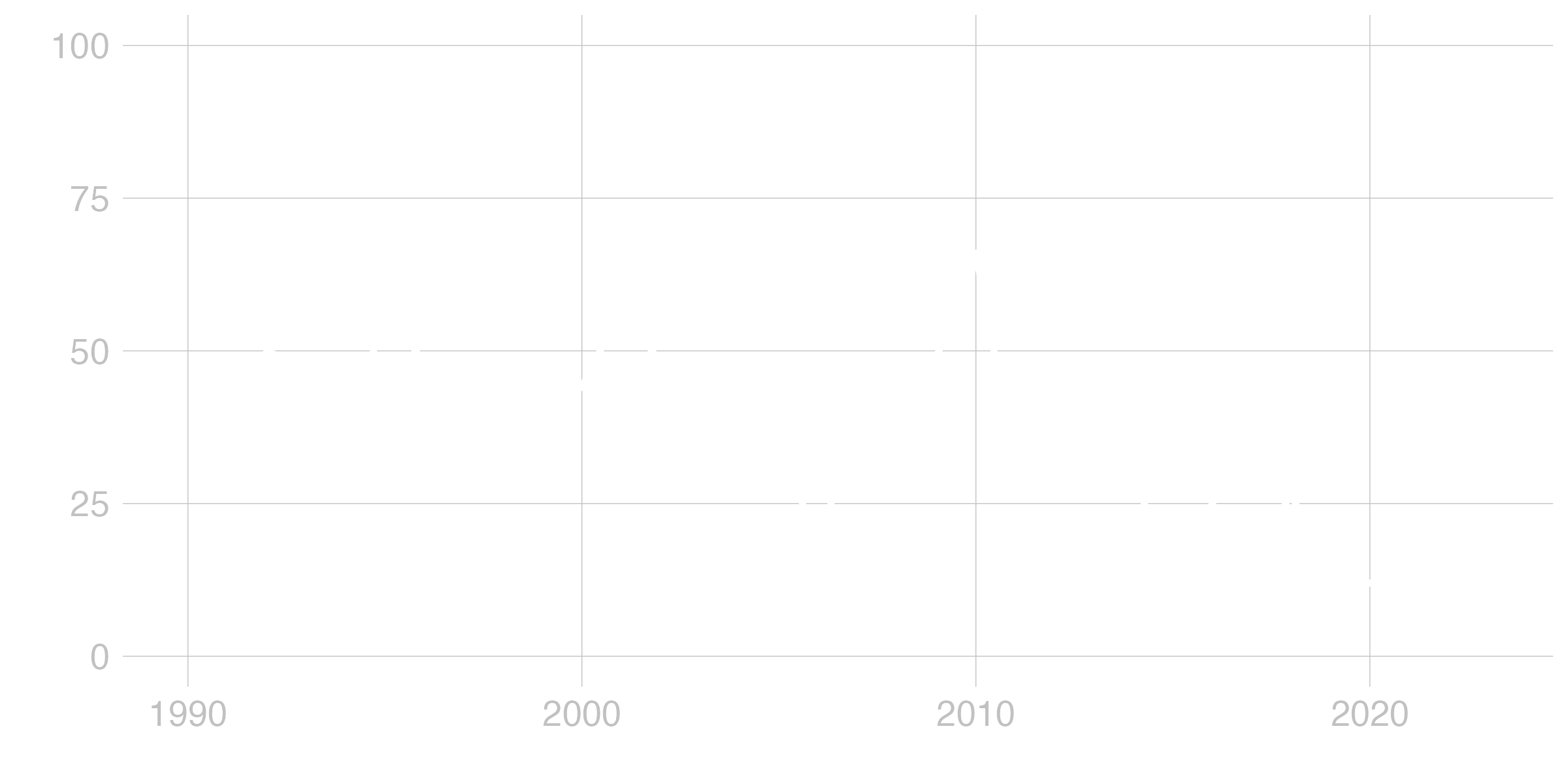


Antonio Lukich on stereotypes in general:
I like stereotypes. I mean, I allow people to think of me stereotypically, and I also like thinking about people in stereotypical ways. Stereotypes are a good basis for humor. But at the same time, they are a poor basis for building bridges with the outside world. When you’re a director, and you think, 'Right, someone needs to steal something, so let’s make her Ukrainian', of course, you can take offense at that. But if she’s a Ukrainian woman who speaks Surzhyk (who speaks a mixed form of Ukrainian), or simply a beautiful woman, that’s not something to be offended by. Or if she works as a cleaner. That’s part of life, too. The question is how it is portrayed. Of course, there’s no reason to be grateful for it, either. You might be grateful if they showed some deeper side of a person from a developing country.