Статті
Underground cities. How Ukrainian infantry survive under fire
The modern front line is steadily moving underground, echoing some of the darkest episodes of World War I and its "mole-like" existence. But now, instead of the filthy trenches of trench warfare, infantry are forced to take shelter underground, seeking refuge from the total dominance of drones. Lieutenant Colonel Roman Kovalov, commander of the motorized infantry battalion of the 43rd Separate Mechanized Brigade, explains how these "underground positions" are organized and defended.
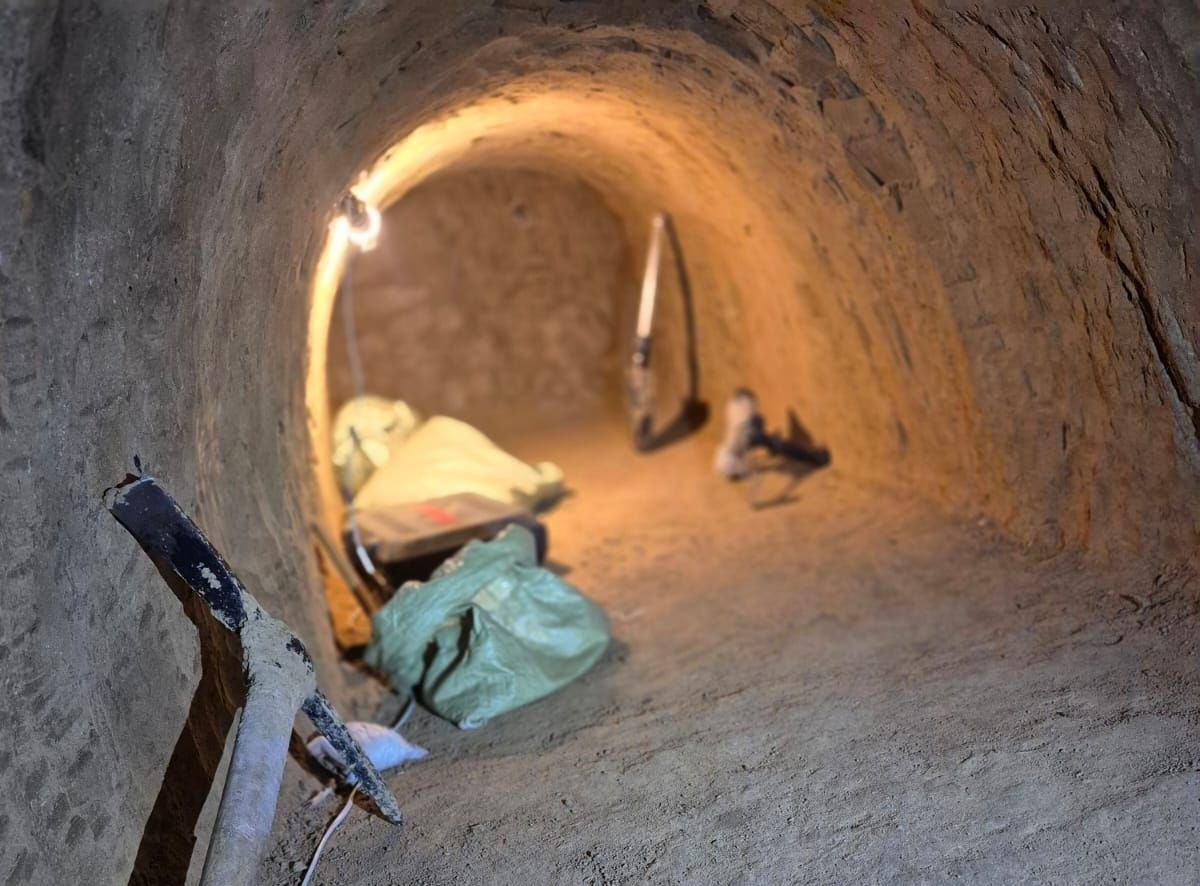
Classic dugouts with three or six layers of overhead cover are becoming a thing of the past. Today, on the front line, only those who dig in deep and strategically stand a chance of surviving. Infantry are tirelessly building "underground cities" — burrows no more than three feet wide, underground rooms and tunnels built on the principle that the longer, the better. They build them from scratch. These are the very "defensive lines" that are mentioned in the news, says Lieutenant Colonel Kovalov.
"It all started back in 2024 in Kupiansk, when we took up positions," the battalion commander recalls. "That was when the enemy began digging burrows on a massive scale. We laughed at them because we were still digging conventional trenches and building deep dugouts. Meanwhile, in our sector, they were already burrowing into underground tube-like dugouts. Of course, at the time the enemy didn’t have nearly as many FPV drones and Mavic drones, so their logic seemed strange to us. But now, such a burrow is the infantry’s only chance of survival".
Geology
The characteristics of the local soil directly shape underground construction. The eastern steppes, Donbas spoil heaps, treelines and river floodplains present infantry with a full range of engineering "surprises". Each type of soil imposes its own strict rules for survival.
Dense clay and loams, for example, seem to hold their shape well, but after rain they turn into an impassable mess, while once they dry out, they become so hard that a shovel can literally bounce off them. Digging is physically exhausting. Every bit of it is earned through sweat and blisters. But once a burrow is dug, its walls remain firm, and collapses are less frequent.
Black soil and loess soils are a different story. The thick, soft, fertile top layer is easy to dig through but highly unstable. Without constant reinforcement with boards or sandbags, such a burrow will not last long — it can quickly be washed away or simply cave in after the nearest powerful explosion.
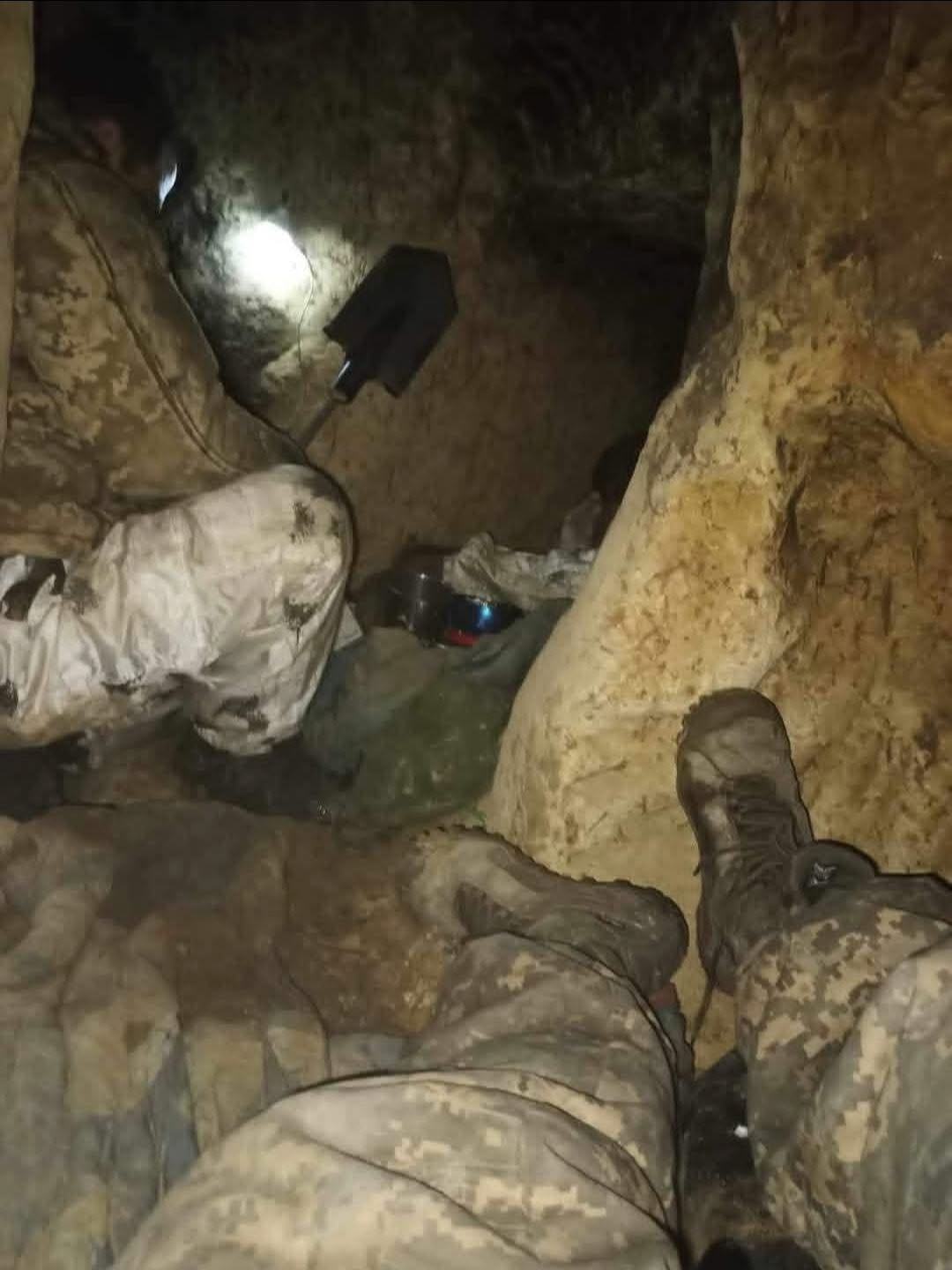
Sand and sandy loams are a real nightmare for fortifiers. Sand cannot hold vertical walls at all: once it dries, it crumbles like a waterfall, while when it is slightly wetter, it starts to "flow". Securing the entrance or ceiling of a burrow in sandy soil is a real challenge. Such a burrow requires a continuous supporting frame.
But if you encounter chalk, limestone, or rock, that is a completely different kind of hard work. In some areas, especially closer to chalk downs and river ridges, a shovel hits rock or dense chalk. You can hardly dig deeper by hand — you need a jackhammer, a rotary hammer, or explosives. But once finished, a burrow in chalk is strong, dry and withstands impacts better than any clay.
Psychological toll
Living in a burrow can go on for months, and sometimes even stretch to a year. They sleep there, cook food and use the toilet. The psychological strain under such conditions is enormous.
"If you look closely at the footage from there, you realize what it costs to live there for months or even years," says Roman Kovalov. "Some guys develop phobias. They are constantly afraid that all of this will collapse on top of them and they will suffocate. Because of their fear, they dig about five meters and decide that’s enough, but they are afraid to go deeper. And then, once the position starts getting 'taken apart', it’s already too late to dig any deeper".
The soldiers themselves admit that the confined space can be no less oppressive than artillery shelling.
"The scariest thing here isn’t even the strike itself, but the silence between them. When you’re lying in this 'tube' and listening through the ventilation opening to an enemy drone buzzing overhead, you think about only one thing: will it find your slit, or pierce the overhead cover?" one of the soldiers explains.
Fortress under siege
It is no secret that, like us, the Russians now control the skies over the treelines, detecting any new position that appears. The question is one of priorities: the enemy systematically destroys positions where it concentrates its efforts. Some positions deep in the rear may be left untouched for months. But once a position comes under attack, they start "taking it apart".
This is how Roman Kovalov describes the process of "taking apart" a position:
First, the enemy tries to punch through the burrow from above with artillery shells, including Krasnopol (152mm guided high-explosive fragmentation munition — Ed.). They then widen the hole by dropping munitions from FPV drones and may eventually send a fiber-optic drone inside. The infantry — usually just a few people — keep a supply of bags inside for precisely this situation (and they are always in short supply). While the drones are flying in, the soldiers fill the bags with soil and try to plug the breach, like on a damaged ship. The drone smashes through the wall again — they fill the bags again. And this continues from morning until evening, until they run out of bags, the burrow collapses, or they release gas and set everything on fire".
EVERY ASSAULT TROOPER CARRIES HALF AN AT MINE ON HIS BACK
Another threat is the standard tactic of close-range assaults using anti-tank mines (AT mines).
"The enemy tries to get as close as possible because every one of their assault troops carries half an AT mine on his back," Roman Kovalov explains. "First, they drive our troops out with drone drops and FPV drones. Then, while the infantry are still recovering from the explosions, they run up to the entrance, throw the mine inside, and quickly retreat. An explosion that powerful will usually either bury the soldiers completely under the rubble or destroy the position from the inside".
"The worst thing is when the weather is bad, and the drones stop flying. At that moment, you lose your eyes in the sky, and the most dangerous part begins: the enemy can approach almost silently and get right up to the entrance if there is no one keeping a close watch around the burrow," one of the soldiers says, describing the specifics of close combat at the entrance to the underground position.
Tactical paradox
Reconnaissance cameras on the surface do not last long — enemy artillery regularly takes them out. An infantry soldier inside the burrow is completely blind and cannot monitor the perimeter from above. This creates an almost impossible engineering and tactical dilemma.
"The protective wall of sandbags at the entrance has to be thick enough to prevent an FPV drone from accidentally flying inside and shredding everyone inside. But at the same time, it has to be thin and light enough for you to dismantle it instantly, jump outside, and engage the enemy if you hear their footsteps. Combining these two requirements in such a tiny space is almost impossible. Fighting under these conditions is incredibly difficult," Roman Kovalov explains.
If the infantry in the positions lack the backbone to hold them, while the sky is filled with enemy drones and unfavorable weather prevents our UAVs from operating, holding a burrow becomes almost impossible. The few positions that remain in place for months despite anti-tank mine blasts, shelling, and assaults are held only at the very limits of human endurance.

Підпишіться, щоб отримувати найкращі статті на e-mail (раз на два тижні)

Підписатися