Статті
Kyiv may face another month of Shahed attacks. Ukraine’s jet-powered interceptors are on the way
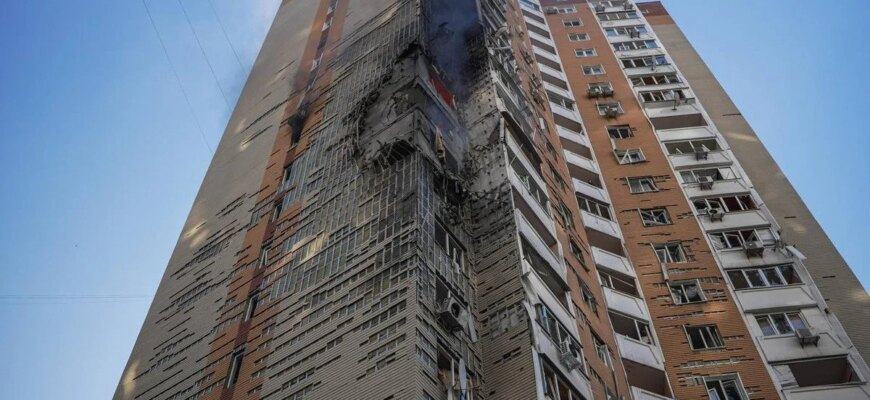
Since the end of August, Kyiv has been suffering from attacks by Russian jet-powered Shahed drones. The city is experiencing daily strikes on residential buildings, warehouses, shops, and gas stations. Many people have been killed and injured. How did the capital become so vulnerable to Russian attacks, and what can be done to counter them right now? Ivan Kyrychevskyi, a military expert and service member of the 413th Separate Regiment of Unmanned Systems "Raid", explains.
Unprepared once again
— Right now, as we speak, explosions can be heard outside the window. Kyiv residents are asking: What is happening? Where is our air defense?
We have failed to make the right decisions when it comes to civil defense. We should have dispersed food supplies and organized public transport so that the city does not come to a standstill for several hours just because a few jet-powered drones flew in while air defenses are still engaging them.
The civilian authorities may not be responding quickly enough to new threats. Even if the Russians were launching just one jet-powered drone at a time, the way the city is organized would still create problems.
— Serhii Beskrestnov (Flash), now an adviser to the President of Ukraine, first wrote about the threat posed by jet-powered Shaheds in December 2023. Since then, he has published 57 posts on this subject. And now it is autumn 2026, yet we are once again unprepared for an old-new threat. Why?
It takes time to adapt to a new weapons system used by the enemy.
Since jet-powered drones first emerged, work has been underway, at least on conventional air defense systems. The government reported that in 2025, Ukraine received missiles from its Western partners in five-digit quantities.
What to use to shoot them down
— What kind of weapons could be used against them?
There is a wide range of options. For example, the AGM-114 Hellfire. Hellfire missiles were originally designed to strike ground targets, but they can also be used against aerial targets. We are known to have received several systems designed to fire these missiles — small, mobile platforms, essentially buggies equipped with a launcher and a small radar. We have also received British systems using the short-range AIM-132 ASRAAM air-to-air missiles.
For Ukraine’s needs, Thales developed a European adaptation of the American APKWS, which fires 70 mm laser-guided rockets. It is a modification of the American Hydra rocket. Some OSINT analysts even revealed that our F-16s had been flying with external pods carrying these guided rockets.
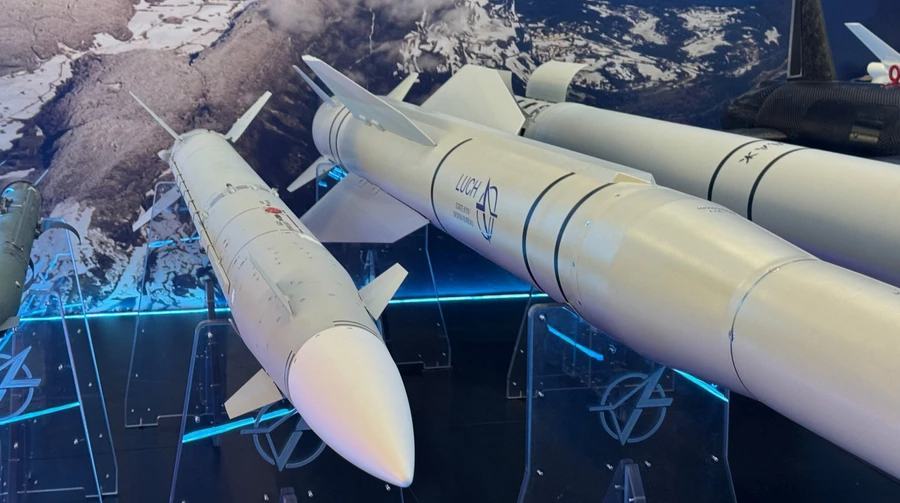
Our own Luch Design Bureau has also revived its earlier work on guided missiles and adapted it to current needs — namely, to equip our Strela and Osa-AKM anti-aircraft missile systems.
So it would be wrong to say that we are either "prepared" or "unprepared". The work is underway.
Russians were counting on us having no means or capability to shoot down the jet-powered drones at all. That is because cruise missiles, their surrogate weapons, the Banderol and the Dan-T, and propeller-driven Shaheds all fly together. The latter can be mistaken for a flock of birds on radar. With such a mix of targets, it is difficult to determine what to use to intercept each one.
Normally, intercepting a single gasoline-powered Shahed requires at least four interceptors. By the time you catch up to it (with an anti-aircraft drone — Ed.) and identify it clearly enough to engage it with another interceptor, you have already used up several assets.
I think jet-powered Shaheds may actually be easier to shoot down. They are large targets with a noticeable thermal signature, making them easier for radar to identify.
Mykhailo Fedorov’s legacy
— This spring, representatives of the Ministry of Defense of Ukraine met with manufacturers of Shahed interceptors, and the threat posed by the jet-powered version to Ukraine’s rear areas was discussed. Yet the danger has not been fully mitigated. Your colleague, Mykhailo Samus, believes Ukraine lacks an effective system for assessing threats, placing state orders for weapons development, producing them, and introducing them into the armed forces. Under former Minister of Defense Mykhailo Fedorov, there was an attempt to develop the Brave1 technology hub. Why is this initiative not working now?
Well, you know, let’s clarify one thing: we are still shooting down 70 percent of the targets.
The technological chain is still functioning. Who, then, is representing Brave1 at an exhibition in Poland right now, showcasing one of the developments designed to counter Russian Banderols? The technological structures created under Fedorov are still working.
THE RUSSIANS HAVE A HUGE MARKETPLACE CALLED CHINA
The problem is that we cannot scale up developments quickly enough. The Russians have a huge marketplace called China. It has the small jet engines needed for drones in the required quantities, along with all kinds of components. We, meanwhile, face a major constraint: our European partners cannot produce at anything close to the same scale. It is taking time to expand production capacity.
On top of that, the European defense industry itself depends on Chinese supplies. So the issue is not that our Brave1 platform has broken down. Thank God, it is functioning.
— There is a view that Ukraine’s response to jet-powered Shaheds slowed down because Deputy Commander of the Air Force Pavlo Yelizarov was dismissed in July this year. The position was filled only in September. How fair is this assessment?
I am a serviceman, so I cannot judge personnel decisions within the military. But it is sad when experienced people leave the armed forces for one reason or another. We cannot afford to waste people. We are outnumbered several times over by the Russians. Every person is therefore several times more valuable.
"Unfashionable" air defense
— You say that a jet-powered Shahed is a relatively easy target to intercept. Could Ukraine buy outdated air defense systems and their adaptations from the West — HAWK, Crotale, Chaparral, for example? Or find Soviet-designed anti-aircraft artillery in other countries, such as the ZSU-23-4 Shilka?
Unfortunately, they do not exist in sufficient numbers. France gave us Crotale NG systems in tiny quantities because the French themselves have only tiny numbers left. Chaparral systems were still formally listed as decommissioned equipment in Portugal. They use AIM-9 missiles, but we have learned to integrate these missiles into our own systems as well.
People ask: Why are we so stupid? Why not ask our Western partners for a good Cold War-era air defense system like the Roland? But the Germans have only one Roland left, as a museum exhibit. That’s it.
Ukraine was not the only country to reduce its air defenses after gaining independence. European countries reduced theirs even more aggressively. Air defense was considered "unfashionable". No one was thinking about a possible war. Germany had 40 Patriot batteries. Twelve remain.
It is hard to understand why the Germans scrapped their Roland systems. Why did the Americans scrap their HAWK launchers? The German Gepard self-propelled anti-aircraft guns were lucky — the Bundeswehr retired them only in 2012, so they had not yet rusted away in storage. That is how the Gepards ended up in Ukraine. Ukraine also bought some of these systems from around the world, by hook or by crook.
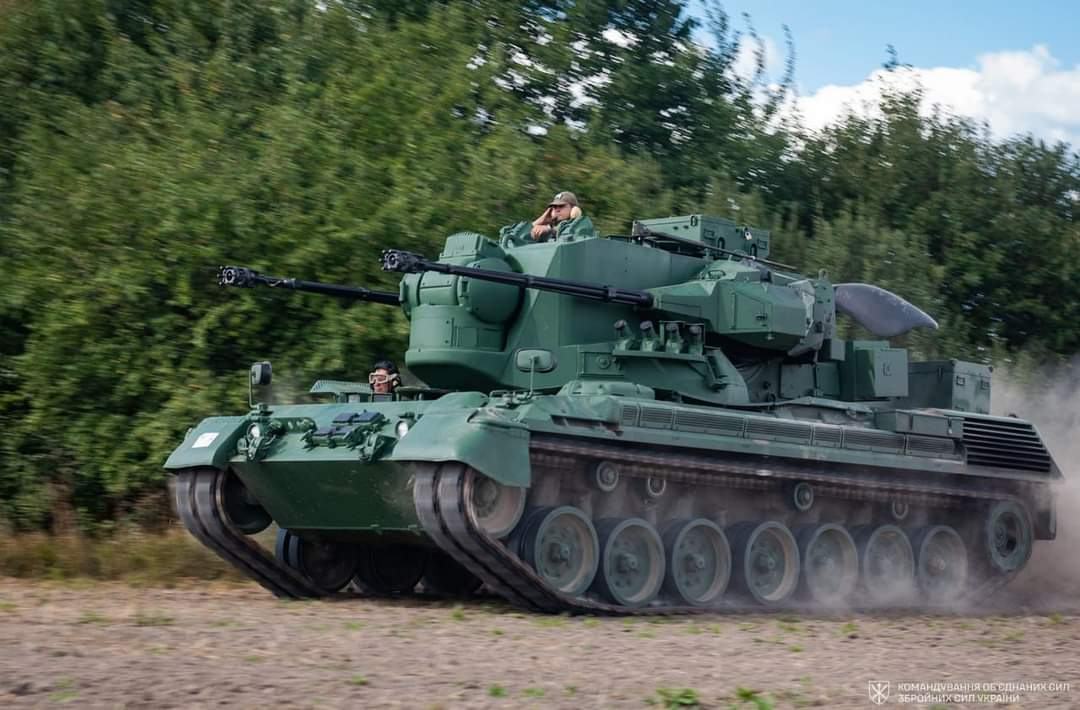
As for the Shilkas and other Soviet-made weapons, we have already asked for and received everything we could obtain.
— Is there a possibility of supplying our mobile fire groups with more man-portable air defense systems, such as Igla, and Stinger?
If only there were many of them left in the world… Missiles also have expiration dates.
Our partners supplied us with MANPADS, but many of them were used during the early stages of the full-scale invasion. According to the regulations, up to 15 MANPADS missiles may be used to engage a single airborne target. We followed those guidelines diligently — and often went beyond them.
Poland can now charge €3 million for a Piorun MANPADS system — and that includes just one launcher and missile. There is even a queue of buyers waiting.
When will we shoot down jet-powered Shaheds
— What should we do about the jet-powered Shaheds now, and what should we be planning two or three steps ahead?
Minister of Defense of Ukraine Yevhenii Khmara says that four types of jet-powered interceptors are currently being tested in Ukraine. I think even one manufacturer could pleasantly surprise everyone. People might say, "Wow, we can actually do this". But it takes time. We went through the same process with conventional Shaheds.
First and foremost, we need to talk about increasing state funding for the development and procurement of new weapons. We need to scale up our air defense systems, including those presented at this year’s exhibition in Poland. These include adaptations of the Strela-10 and Osa-AKM systems for missiles developed by the Luch Design Bureau, as well as the Desna system, about which little is known so far. We also need to scale up the production of jet-powered interceptors.
Meanwhile, the civilian authorities need to do their job. We have become accustomed to shifting responsibility onto the military. But why haven’t the authorities provided protective structures over power plants? Why does Kyiv get stuck in traffic during air raid alerts?
— In your video blog, you say that Ukraine will begin effectively shooting down jet-powered Shaheds in six months. But in six months, Kyiv will be in ruins.
I’m giving Ukraine six months to develop an effective response to Russian ballistic missiles. If we are talking specifically about shooting down jet-powered Shaheds, that is a matter of a few weeks.
— That sounds optimistic.
Let’s say a month. You can write two if you want. I won’t give away any spoilers. Experience shows that it is better to work quietly and let everyone say "wow" afterward.

Підпишіться, щоб отримувати найкращі статті на e-mail (раз на два тижні)

Підписатися