Статті
"The warehouse was damaged a month ago and destroyed a week later". How Ukrainian businesses survive Russian attacks
Russian attacks are making it increasingly risky to store large inventories, while warehouse space is in short supply. Ukrainian businesses are therefore being forced to devise new approaches and restructure their logistics simply to survive.
Yevheniia Zarudna, Head of Logistics at Persha Charivna Skrynia, spoke about how the war is reshaping warehouse logistics and how much it is costing businesses. Her company imports and sells coffee, coffee equipment, and related products for the coffee industry, and also operates its own coffee shops.
Yevheniia Zarudna: The first serious attack on our logistics came two years ago in Odesa. A drone hit a warehouse, and almost everything stored there burned down.
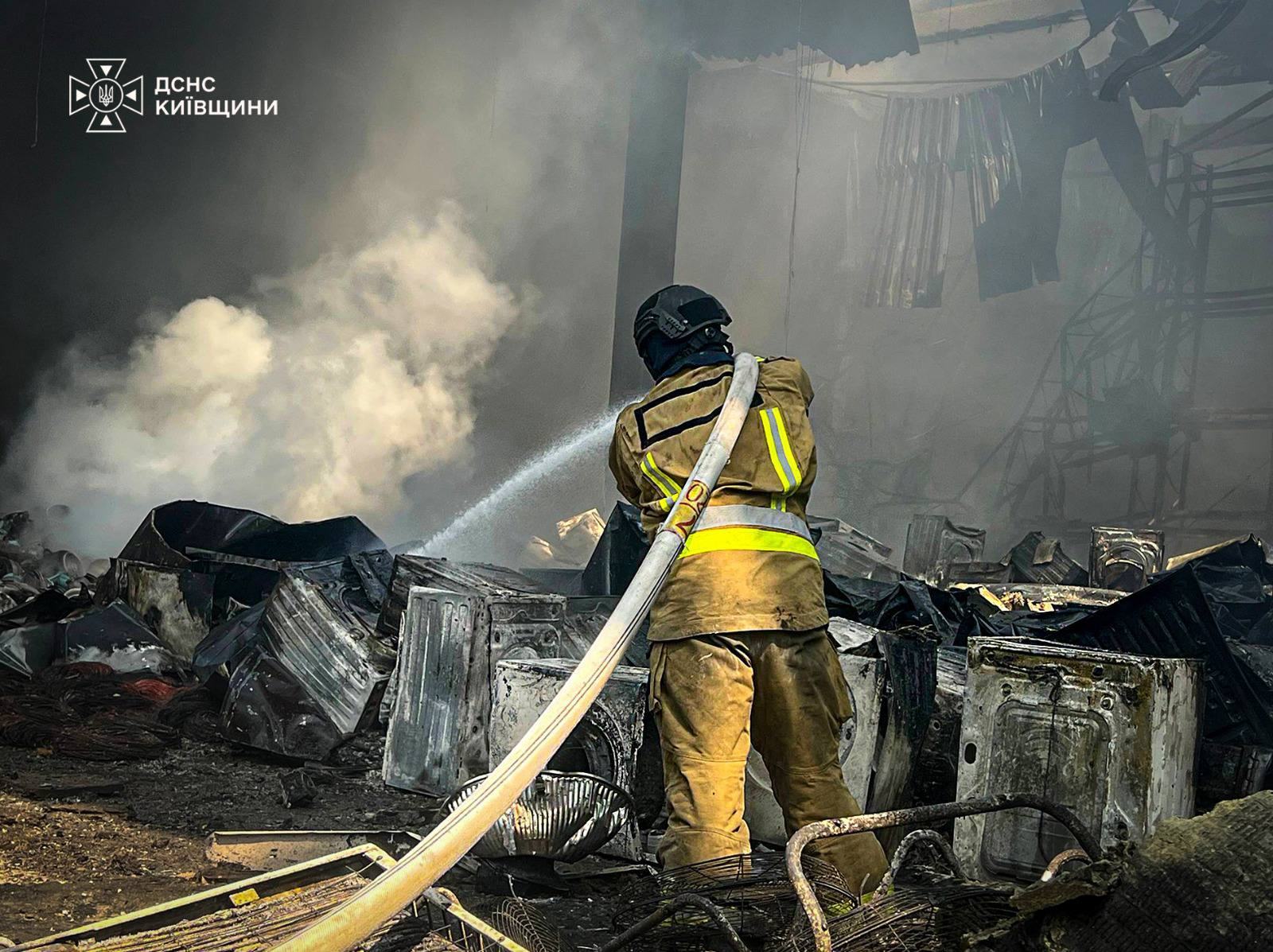
Later, we used the Etalon logistics center in Vyshneve (Kyiv region) to store and ship our products. On the night of July 31 to August 1, that center was also badly damaged.
About a month before that, a warehouse used for another part of our business — alternative energy — was hit. We import solar panels, inverters, and generators. This inventory was stored at a warehouse that was partially destroyed a month ago and completely destroyed a week ago.
It so happened that when the Russians struck the warehouse a month ago, a truck carrying our goods was at customs being cleared. Since our coffee and coffee equipment were stored in Vyshneve, we decided to send this shipment there as well. They had space and handled this type of cargo. And then, a month later, the Russians destroyed that warehouse too.
— What happened to your goods?
Coffee, coffee equipment, furniture for coffee shops, freezers, and refrigerators were all destroyed by fire. Batteries, generators, and solar panels that we had brought over from the already bombed warehouse were also destroyed.
— How much do you estimate your losses at?
Excluding the alternative energy business, we estimated the losses at UAH 45 million.
— Was that just from the strike on the warehouse in Vyshneve?
Yes.
The destroyed warehouse served the entire country
— How did your logistics operations work before?
We imported products. We have several suppliers: Sweden, France, and Italy. Our main supplier is from the Netherlands. We transported everything by truck to customs, cleared the goods, and then unloaded them at a warehouse where they were stored. Our clients placed orders, and the products were then shipped from that warehouse to customers across Ukraine.
— So the warehouse in Vyshneve served the entire country?
Yes.
— Do you work with suppliers on a prepayment basis?
Some suppliers have required prepayment only since February 2022.
With our main supplier, which accounts for about 70% of our business, we worked on deferred payment terms. So the goods we lost had not even been fully paid for yet.
— So the goods have already been destroyed, but you still have to pay for them?
Yes.
— Did you try to do anything to minimize the risks?
Over the past three months, we had been actively negotiating with our supplier about keeping our main stock at their warehouse in the Netherlands. That way, we could quickly access whatever products customers needed here and now.
In other words, if our supplier could fulfill orders quickly and keep the stock on their side, while we told them, "ship us this and this, in these quantities," we could reduce the risks here in Ukraine.
WE NEGOTIATED TO KEEP OUR STOCK AT A WAREHOUSE IN THE NETHERLANDS, BUT WITHOUT SUCCESS
But unfortunately, European suppliers are quite relaxed about the situation. They don’t see or understand the problems we are facing. No one agreed to keep stock there so that we could ship products to Ukraine more quickly. We spent three months talking to them and explaining what could happen. But nothing came of it.
And because our margins are small — our markup isn’t anywhere near 100% — we also couldn’t afford to rent a buffer warehouse in Europe and ship smaller batches to Ukraine more quickly. So we had to keep working under the conditions we had and hope for the best.
— Did you try to reduce the risks directly in Ukraine?
At the beginning of the year, we diversified the risks and distributed our stock among several warehouses. For example, equipment was kept at one warehouse, coffee at another, and if we needed instant chocolate, we had to go to yet another location and load it there.
But our clients in Ukraine didn’t want to load their orders from several warehouses. They wanted to come to one place and pick everything up. So we had to bring the products together at one warehouse to make it convenient for customers to load everything in one place. We moved the products between warehouses ourselves. If something ran out at one location, we brought it there from another, or vice versa.
OUR CLIENTS IN UKRAINE DIDN’T WANT TO LOAD THEIR ORDERS FROM SEVERAL WAREHOUSES
We worked this way for three months and realized that all those transfers were eating into our profits. It wasn’t financially viable for us. So in March, we moved everything to one warehouse.
— In Vyshneve?
Yes.
— Why didn’t your foreign suppliers want to keep stock for you in Europe?
They didn’t want to tie up money in inventory either. They didn’t want to look for warehouses. Warehouses cost money. Who would pay for them? They didn’t want to make additional investments. They said: either you pay for the warehouse, or the products will cost you more.
— Is there a big difference in warehouse rental costs, for example, between Poland and Ukraine?
In Poland, it’s not so much the warehouse space itself that is more expensive as the labor. A square meter may cost roughly the same as in Ukraine, but operations — loading and unloading goods, order picking — will be more expensive because of higher wages.
What comes next
— How are you planning to restructure your operations now?
All of last week, we were in shock, asking ourselves: what do we do next? As I said, we haven’t fully paid our suppliers for the goods. We immediately informed them about what had happened. The suppliers said they needed some time to think about what to do with us now.
We proposed what is known as debt restructuring. In other words, the suppliers would continue shipping products to us, and with each new shipment, we would pay for the current order and also repay part of the old debt. They thought about it for about a week. In the end, we agreed that, in addition to paying for new invoices, we would pay a certain amount toward the old debt.
— And how will you handle warehousing now?
You know, we were scared, but we had to keep working. The owner, the director, and I visited several warehouses and locations. There is huge demand for every location that is still available. There is literally a queue of companies wanting space because there are no other alternatives.
All the small warehouses scattered around Kyiv have also already been taken. Apparently, someone was faster than us.
We already know where we’ll put the truck that is currently on its way, but once again, it’s a logistics center the Russians just haven’t reached yet. While the truck is in transit, our sales department is collecting orders and issuing invoices. So that as soon as the truck arrives and is unloaded, the goods can immediately be shipped to our customers. We don’t want the products to stay at the warehouse for long — ideally, not to be stored there at all.
— How much stock did you normally keep before?
About one month’s worth of sales.
— So now the truck will basically arrive, and the goods will immediately go to customers?
Yes. Otherwise, we won’t be able to operate. We’ll essentially be bringing in goods against specific orders.
I know that some retail operators are now asking suppliers to deliver products not to a logistics center, but directly to individual stores.
For example, if a truck carrying the full range of products used to arrive at Silpo (one of the largest retail chains of grocery supermarkets in Ukraine), they now tell each supplier to deliver the goods directly to the store. I don’t know how they will handle such a flow of trucks or how they will organize it logistically. But this is how they are currently trying to avoid large logistics hubs and warehouses.
Rental costs have risen by 50%
— Will the changes in logistics affect the final price of your products?
We can’t raise prices so much that our customers would be hit hard. At the same time, our margins aren’t large enough to absorb the additional costs.
THE COST OF TRANSPORTATION HAS RISEN SHARPLY DUE TO HIGHER FUEL PRICES
Transportation has become much more expensive. Two years ago, you could order a truck from the Netherlands for around €2,600–2,800. Now, one truck costs €3,800–4,000. This is no longer directly related to the Russians. It’s due to global fuel prices.
— Have warehouse rental prices gone up as well?
By 50%.
— Over what period?
Compared with the price we were paying just two weeks ago.
— So, literally, a 50% increase in two weeks?
Yes.
We even checked prices in the west of Ukraine — Lviv, Ternopil, and Ivano-Frankivsk. Apart from the fact that there are hardly any facilities available there, probably because everything was already occupied after previous attacks, prices are also higher than in Kyiv.
Of course, with warehouse rental costs 50% higher, we will have to factor that increase into the price of our products. Our margins simply aren’t large enough to absorb it.
— How much could the products ultimately increase in price?
I think by 8–10%. And we still have to pay off our debt.
To give you an idea of our situation: immediately after the attack, we cut our staff by 10%. That was the first thing the owners had to do — cut costs.
— So you cut 10% of your staff immediately after the attack?
Yes. Then we started cutting services provided by contractors.
For example, if IT specialists were providing programming services or developing something for individual departments, we have now completely stopped those services.
We are cutting absolutely everything. We are even reviewing our mobile plans now: do we really need such expensive plans and that many minutes?
We are doing the math from morning till night, trying somehow to stay afloat and avoid being pushed out of the market altogether.
— Were the goods insured?
This is the interesting part. At the beginning of the year, when we split our products between two warehouses, I looked into insurance. The insurance company offered coverage against war risks. It would have cost 8–10% of the insured amount. At the time, we decided we couldn’t afford it. Our products would become more expensive by that amount, making us uncompetitive. So we decided against insurance.
Now we’ve calculated what makes more sense. Risk losing everything again, or insure our shipments so that at least some of the money could be recovered.
But another problem has emerged. As of yesterday, for example, the insurance company UNIQA was not offering insurance for warehouse facilities in Kyiv, Kyiv region, Odesa, or frontline areas. As recently as August 10, they were still insuring warehouses in Zhytomyr, but by August 12 they had stopped covering even warehouse facilities there.
For property worth, say, €400,000, the company would have to pay around €40,000 for insurance. The deductible is €26,000, meaning the company would have to cover that portion of the loss itself in the event of an insured incident.
Only after that might you receive the rest. It doesn’t work like this: your warehouse is hit today, and the insurance company transfers the money tomorrow. First, you have to go through all the procedures involving the State Emergency Service of Ukraine, the Chamber of Commerce and Industry, the Security Service of Ukraine, independent experts, and a number of other authorities. Only after that might you receive a payout.
— Is the government doing anything to help businesses reduce these risks?
A week ago, there was a notice from customs that they were considering allowing goods to be cleared directly at the border. In other words, the shipment would enter Ukraine, be cleared at the border, and then continue directly to its destination. This could reduce the risk of losing goods, for example, in a massive attack on Kyiv. But unfortunately, that didn’t happen. As of the day before yesterday, they said customs clearance at the border would not be introduced because it could create opportunities for corruption schemes.
I guess that this would also mean a loss of revenue for local customs offices in Kyiv and other regions, since each customs office has its own monthly targets.
— Could that also speed up the process?
They promise to speed up customs clearance, but I haven’t experienced that yet because the first trucks after we lost the shipment will only arrive on Monday or Tuesday.
They promise the clearance will be fast.
— How long does customs clearance take now?
Four to five hours, sometimes six. If the shipment is selected for inspection, it can take the entire day. For example, a truck arrives in the morning, and four hours later, you are told that it will be inspected. At the customs terminal, only two or three loaders work in the warehouse.
After the weekend, a huge number of shipments pile up. There might be ten trucks waiting, half of them selected for inspection, and you have to wait your turn while those two or three loaders inspect all the shipments and eventually get to yours. So it can take until evening — essentially the whole day. I don’t know what it will be like now.
Підпишіться, щоб отримувати найкращі статті на e-mail (раз на два тижні)

Підписатися