Статті
Expert outlines the possible reasons behind the disruption in Ukraine’s energy system
After another disruption in Ukraine’s energy system on January 31, 2026, public discussion once again boiled down to simplified, largely inaccurate interpretations of a complete power outage or total collapse. But, in a conversation with Texty.org.ua, energy sector expert Viktor Vidzigovsky offers a different, much more rational view with an analysis of how the system works in conditions of war, aging equipment, and depleted reserves of reliability.
Romanian route
— Mr. Viktor, how do you see the problem in the energy sector that most Ukrainians have experienced?
Like everyone else, I need additional information. However, even before Minister of Energy of Ukraine Denys Shmyhal announced the impending problem, Moldovan specialized websites reported that the Ministry of Energy of Moldova had recorded a voltage drop. About an hour later, Moldelectrica, the Moldovan power grid operator, confirmed that an accident had occurred on the line that previously ran from the South Ukraine Nuclear Power Plant (NPP) to Isaccea, Romania. The protection system kicked in and disconnected the line.
— So it's not so much about deliberate power cuts as an automatic response by the system?
That's right. Both Moldova and Ukraine received electricity from Romania via this line. It's a significant amount. Most likely, the problems arose on our side of the border.
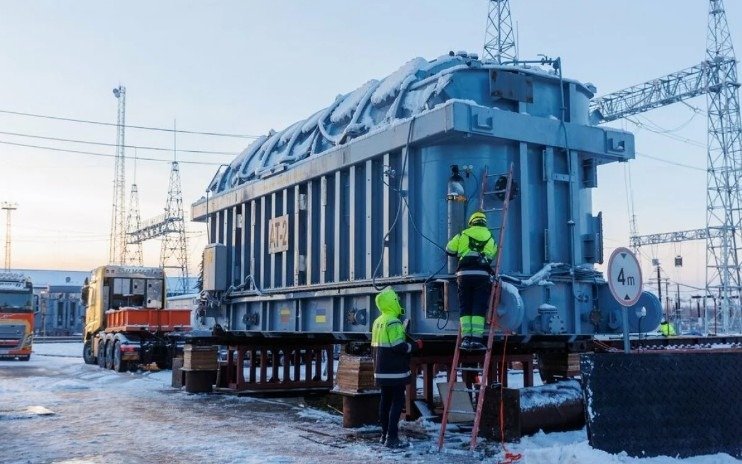
Shmygal mentioned the 750 kV line, and comments indicated that a voltage transformer on the Ukrainian switchgear could have burned out. The information has not been confirmed, but it sounds plausible. This is mostly old equipment, 40 years old or more. From my experience, it is not in the best condition.
A NUCLEAR POWER UNIT HAD TO BE SHUT DOWN
— So could this have been an ordinary technical failure?
Such things can indeed happen. If a transformer explodes, the line is automatically disconnected. And today, any problem on a high-voltage transmission line — especially in the southern direction — is a serious blow to the entire energy system.
What happened next? According to Ukrenergo (the national grid operator), the disconnection of the South led to excess generation, necessitating the shutdown of a nuclear power unit. This was essentially how it was explained: there was nowhere to dispatch the electricity, so the unit was shut down.
— Is this a critical situation, or is it under control?
It's unpleasant, but it has happened before. In peacetime, when all equipment is in good working order, the system should operate on the N-1 criterion: if one element fails, the rest must maintain balance. This was one of the conditions for synchronization with the European electricity network.
But if a specific line is physically unavailable, nothing can be done. The system automatically begins disconnecting consumers to maintain balance.
It's not a blackout yet
— Many people call this a "blackout." Is that correct?
No. A power outage, even an automatic one, is not a blackout. In Ukraine, it has reached the point where a burnt-out light bulb in the toilet is called a "blackout".
A REAL BLACKOUT OCCURRED IN SPAIN AND PORTUGAL
A true blackout is a cascading system failure when substations and power plants lose their own power consumption. When there is nothing to start the system with, there are no energy resources. This was the case in Spain and Portugal in April last year — literally nothing was working.
We have a different situation. In Moldova, the situation is different. Our neighbors lost almost all of their electricity generation, and also lost their imports. More than half of the country was cut off, but all power plants remained in operation. They immediately began restoring the system.
— And in Ukraine?
It's more difficult for us. It takes at least half a day to start up a nuclear power plant. Plus, we need to fix the problem with the switchgear. If the voltage transformer has indeed burned out, there is a replacement, but it will take some time.
I hope that by tomorrow, or maybe even sooner, the situation will stabilize. Dispatchers are currently looking for bypass circuits and opportunities to transmit power via lower voltage lines. This may partially improve the situation. If we can raise the unit to at least half its capacity, that would be very good.
Problems with nuclear power plants
— Are we talking specifically about the nuclear power plant?
Denys Shmyhal confirmed this, so there is no doubt.
The root cause of the accident — whether it was a transformer failure or a problem directly on the line — is not really that important. Such incidents happen.
The possibility of sabotage cannot be ruled out
Another question is whether there was sabotage. This assumption cannot be ruled out. At least, I have certain suspicions. For example, the Dubossary Hydroelectric Power Plant in Moldova was operating in a strange mode a few days before that. It disconnected and operated as an "energy island" on a separate load. This is not proof, but it is quite unusual.
In addition, it was recently reported that a new 400 kV line bypassing Transnistria and the Moldovan Cuciurgan power station in Transnistria was completed at the EU's expense. It has just begun testing. When all these factors (technical, political, informational) are taken together, suspicions arise. However, they lack any evidence.
— But even in this case, does the system know how to get out of the crisis?
This is nothing extraordinary. Energy specialists have worked with this in theory and in practice. Shutting down units is a regular occurrence: there are scheduled and unscheduled repairs. Safeguards are triggered, sometimes erroneously. This is how the safety system is designed.
If everything is done by the book, everyone will remain alive
Restoration requires compliance with all procedures. Rushing is dangerous here; electricity does not forgive mistakes. If everything is done by the book, everyone will remain alive. If not, the risks are completely different.
— So, what happened can be considered a more or less controllable situation, but one that is very unpleasant for our emotionally exhausted society?
The situation seems difficult, but overall it is normal. The problem lies elsewhere: nuclear power plants, like the entire system, had a two- or threefold margin of stability. It is thanks to this that we have survived three years of war relatively well. But this margin is gradually being depleted. The equipment is wearing out, and it is often operated in non-standard operating modes rather than in normal ones. It works with greater losses and less reliability.
Let's take a simple example. Why do substations usually have two transformers? Because they never operate at full capacity. One always backs up the other. But when equipment is damaged on a massive scale, I am almost certain that redundancy is not everywhere.


Підпишіться, щоб отримувати найкращі статті на e-mail (раз на два тижні)

Підписатися