

Статті
"Everything is working fine. It's just that there are a lot of drones now". How Zaporizhzhia lives under constant Russian attack
"A shuttle bus attacked by a Russian drone in Zaporizhzhia". "A guided aerial bomb strikes Zaporizhzhia". "A UAV struck a swimming pool building where people were training".
These are the kinds of news reports coming out of Zaporizhzhia every day, especially since early June, when Russian FPV drones began reaching the city. Russia is targeting civilians, public transport, gas stations, residential buildings, and other civilian infrastructure. How did this become possible? What do residents and authorities say? Read the report by Texty.org.ua.
Zaporizhzhia has a population of 700,000, of whom 55,600 are preschoolers and schoolchildren. One in five is an internally displaced person from the occupied territories.
Most of the city’s territory, including its central part, is located on the left bank of the Dnipro River. It is 27–30 km from the front line.
War statistics
Monday, June 29. The Telegram channel of Ivan Fedorov, head of Zaporizhzhia Regional Military Administration, is filled with reports of threats of attacks by drones, guided aerial bombs, and ballistic missiles. Explosions can be heard from time to time in various parts of the city, but this is now considered the norm.
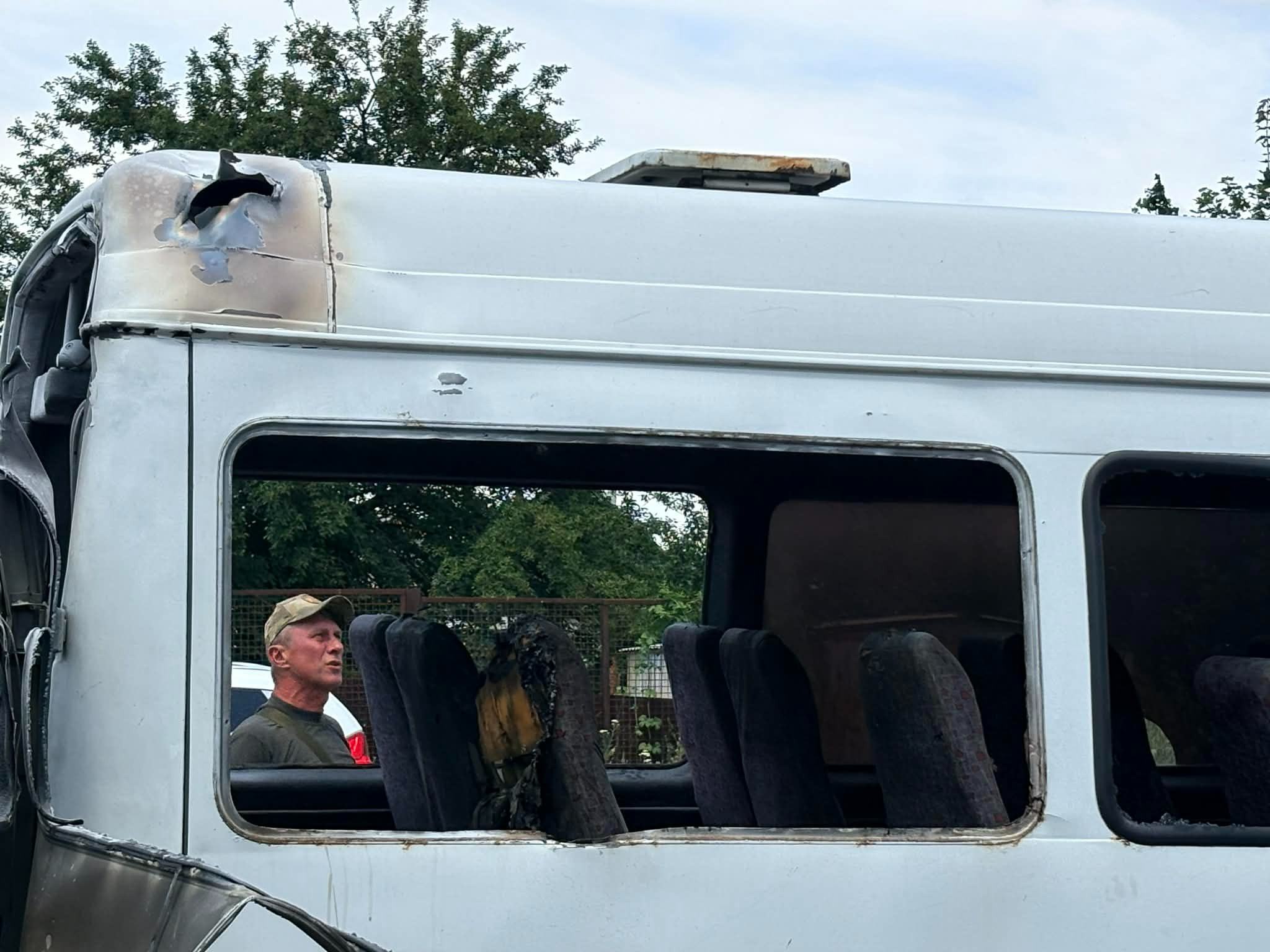
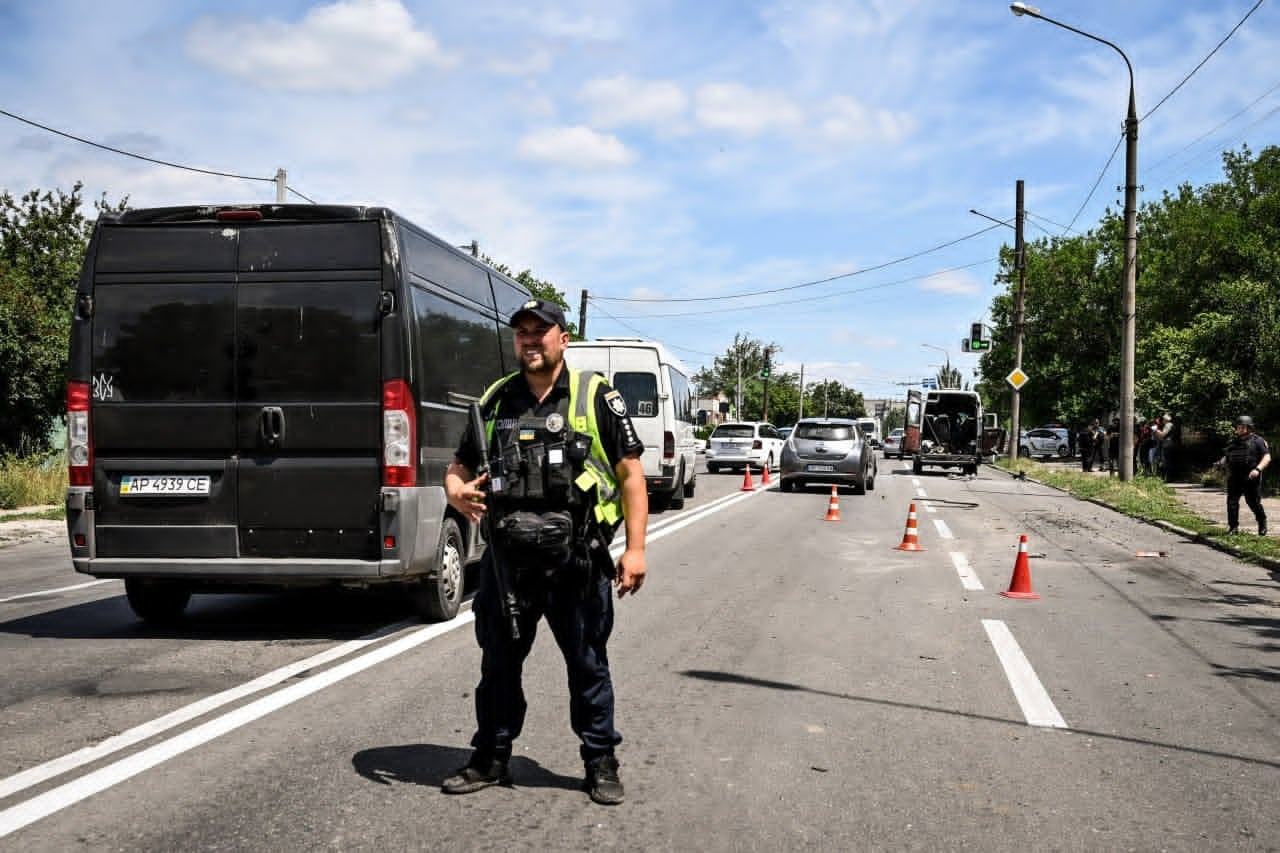
Around 11 a.m., the Russians began attacking the Kosmichnyi district of Zaporizhzhia with FPV drones. They hit a shuttle bus. Two men were killed instantly by debris, and another woman died from her injuries in the ambulance.
Anatolii Nadkin, a resident of the district, witnessed the tragedy. He was driving his car behind the shuttle bus. He saw the drone crash into the upper corner of the back of the bus. The explosion triggered all the airbags in his car. Anatolii believes that’s what saved him.
This is probably the fourth time a shuttle bus has been targeted
It turned out that the man had been working as a driver on this very route for 12 years and knows both the other drivers and even some of the passengers well.
"I know the driver of the shuttle bus that was hit by a drone. He stumbled out covered in blood, and the fire started. At first, they couldn’t get the woman who was in the back seat out because the door was badly damaged. She was critically injured (the third victim of this attack — Ed.). A man was near the front door — he was killed. Another was sitting in the middle — he was killed too. Thank God there weren’t many people on board. This is probably the fourth time a shuttle bus has been targeted," says Anatolii.
That’s exactly why Anatolii no longer wants to work as a driver. It’s too dangerous. When you’re behind the wheel, and the traffic is roaring, you can’t always hear the drone coming in time to jump out of the way.
An hour later, a drone struck a truck carrying food supplies near a hospital in the same district. In the evening, a drone exploded near a municipal bus traveling down the city’s main avenue. A few hours later, it attacked the Regional Military Administration building.
Tuesday, June 30. The morning began with explosions in the Oleksandrivskyi district — the old part of the city, which is always crowded. Historic buildings were damaged, cars were burned, and people were injured. During the day, there was an attack with guided aerial bombs and drones. In the evening, another round of guided bomb strikes followed.
Sometimes only minutes separate one air raid alert from the next all-clear
Sometimes only minutes separate one air raid alert from the next all-clear. As a resident of the city, I can say this honestly: you get used to it. Explosions, damaged buildings, even people being wounded — your mind and brain turn all of this into "statistics".
For security reasons, the authorities do not disclose the districts and streets where the strikes occurred. People turn to social media for details. Most of the injured and dead remain mere "numbers" in official reports — without names or stories. At best, their age and gender are reported.
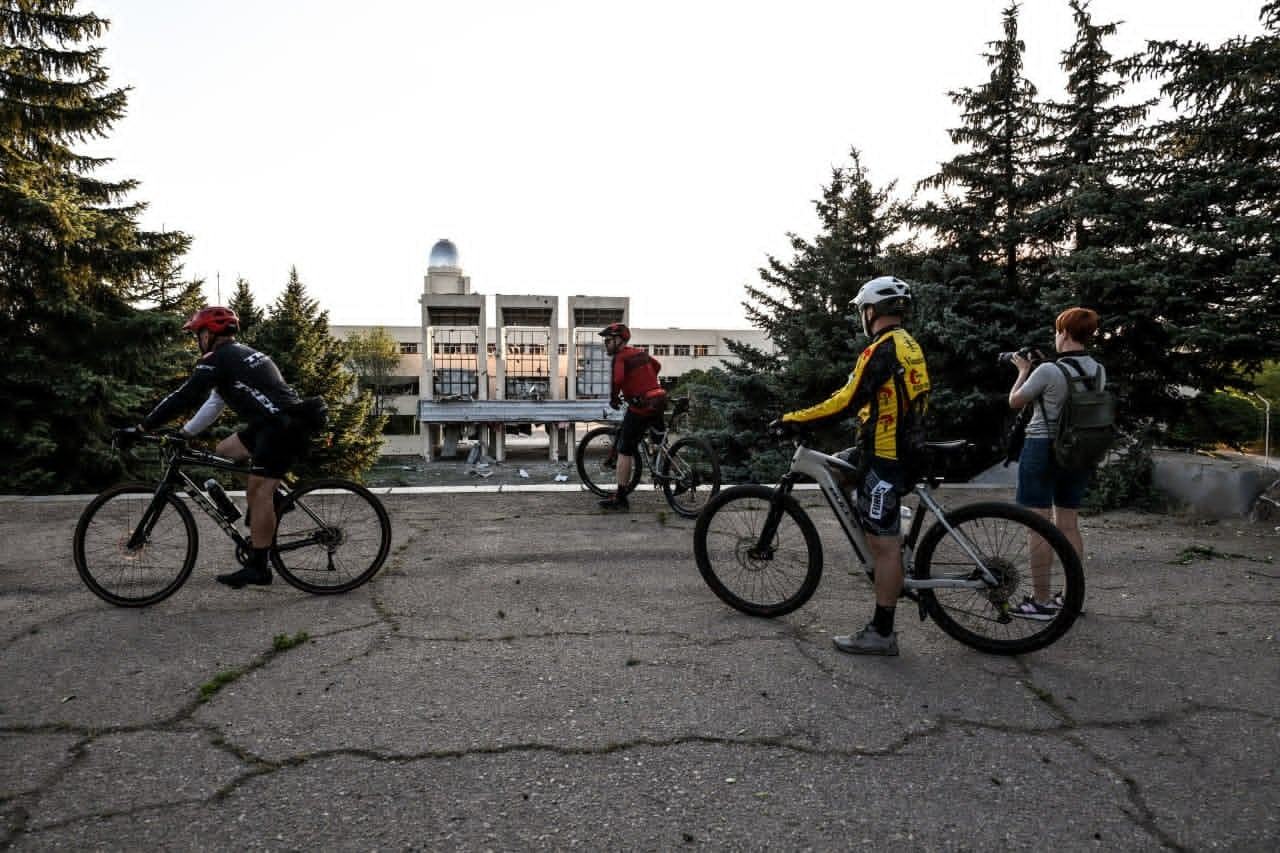
This is a brief account of the last few days of June. There are countless stories like this, but is there any need to tell them? Likewise, there’s no need to imagine that there’s absolutely no life in Zaporizhzhia right now. There is. It’s specific — not quite the same as even in the neighboring city of Dnipro — but it’s there.
City life
The curfew lasts from midnight to 5:00 a.m. Most pharmacies close at 8:00 p.m. Supermarkets are open until 10:00–11:00 p.m.
Public transportation is a whole other story. Shuttle buses, trolleybuses, and buses run along the central avenue from early morning until late at night. But getting to the more remote Shevchenkivskyi, Khortytskyi, or Dniprovskyi districts is a challenge. After 7 p.m., a taxi is often the only realistic option.
The city authorities say the shortage of public transport drivers is to blame. At the same time, June saw the launch of the first-ever bus route along Naberezhna Highway.
The first 24-hour pharmacy opened in central Zaporizhzhia
Last autumn, the first 24-hour pharmacy opened in central Zaporizhzhia. Residents had been eagerly awaiting this development. City authorities held talks with the owners of other pharmacies, and now there are significantly more of them operating around the clock.
Post offices used to be slow to respond to alerts — they would shut down only when they heard explosions right there and then. But since attacks on Nova Poshta (Ukrainian delivery company) have become more frequent, branches have started closing at the sound of an alert, and concrete shelters have been installed near them.
Some stores, banks, and movie theaters are closed during air raid alerts. An air raid alert can last 10 hours or more, so it’s difficult to plan your day.
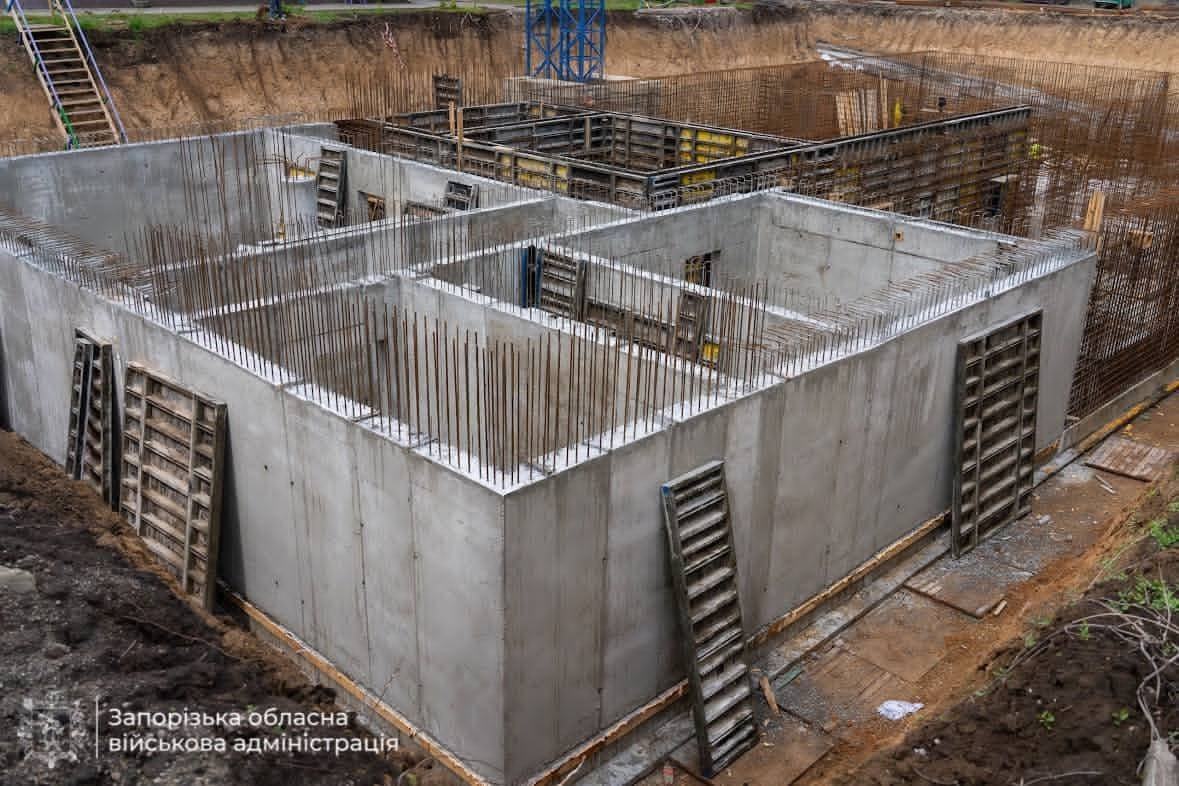
Kindergartens and schools remain open. The main condition is that classes must be held in shelters. Underground educational facilities are being actively built — the first ones are scheduled to open in the fall.
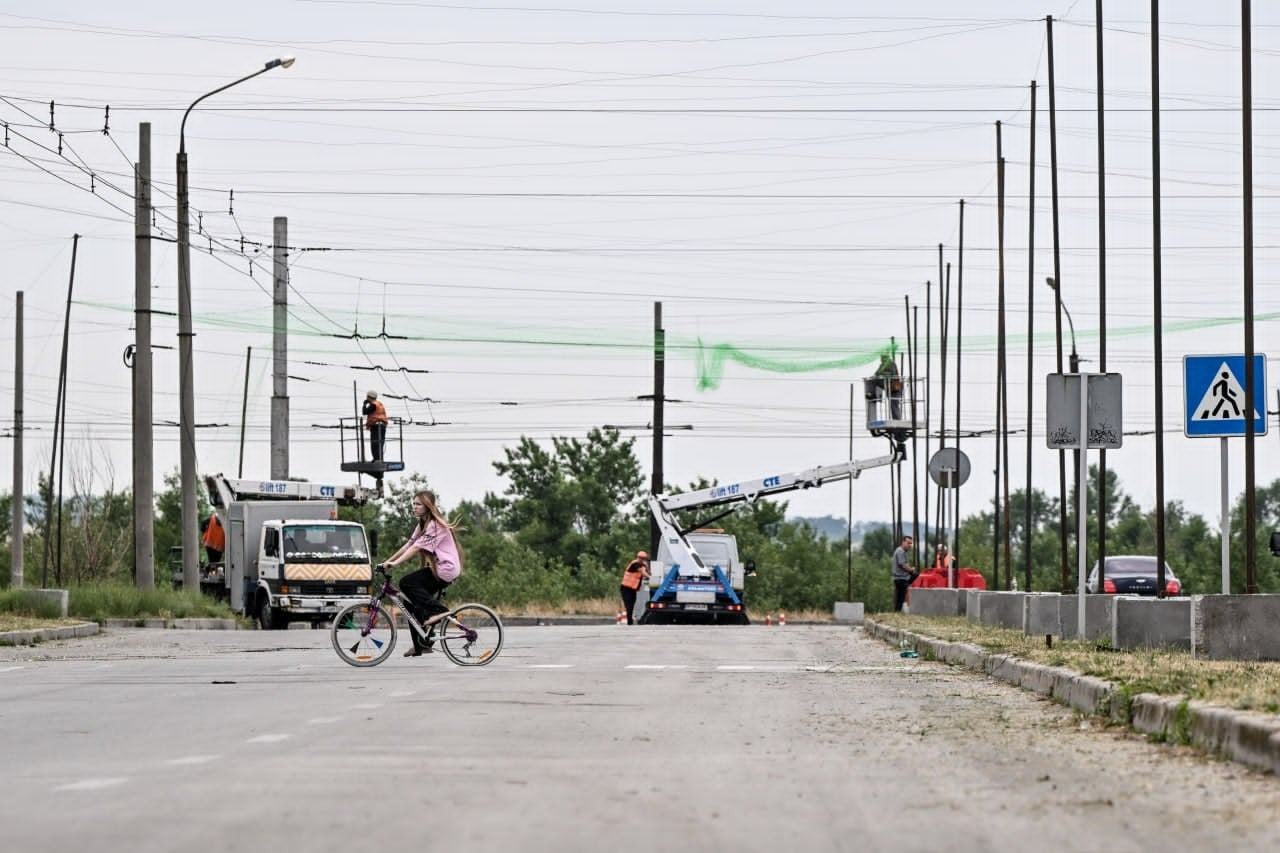
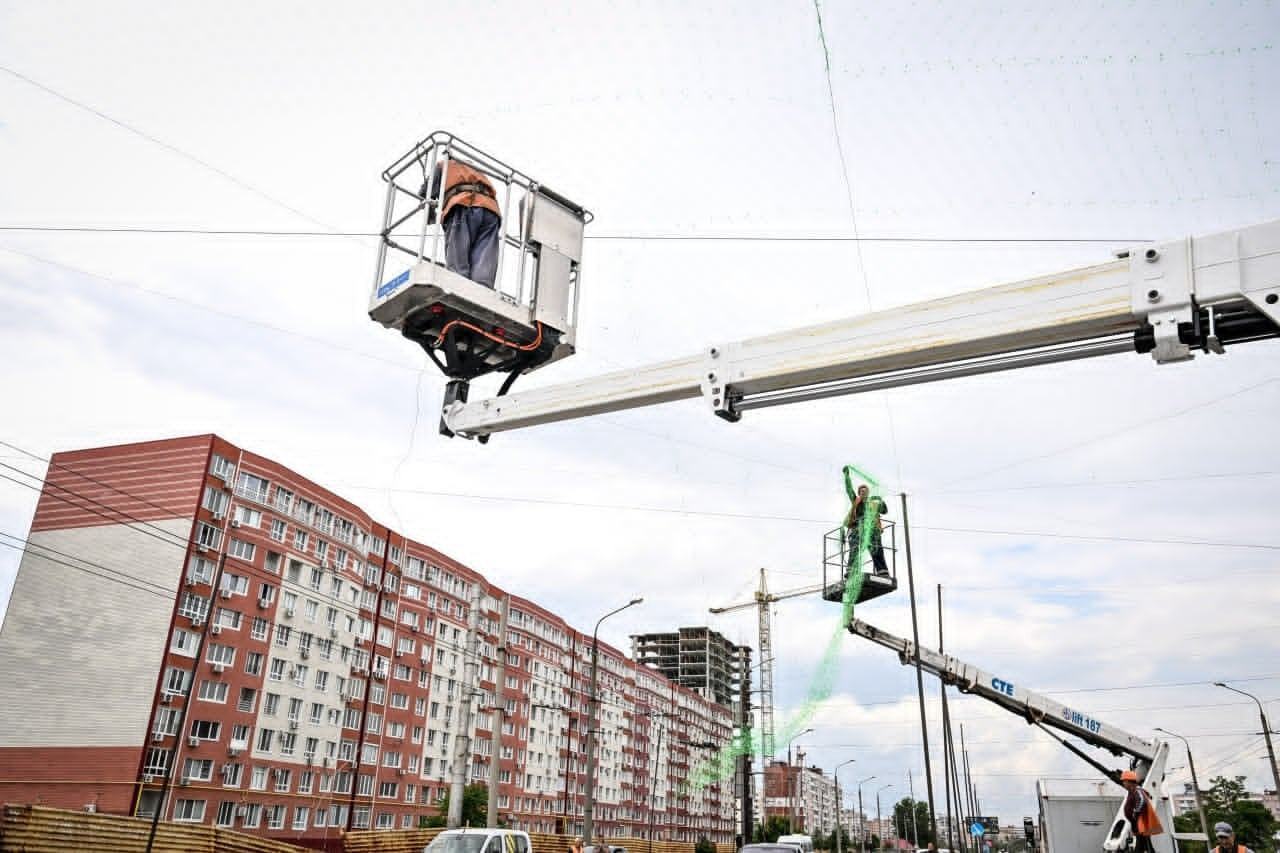
One of the signs of the current "season" is the installation of concrete shelters in public spaces and anti-drone mesh over bus stops, bridges, hospital access roads, and some streets. Meanwhile, the city is also completing construction of a new building at the children’s hospital, among other projects.
A new expression has entered the vocabulary of Zaporizhzhia residents: "the little willy is flying". It refers to Ukraine’s P1-Sun interceptor drones. People often hear their distinctive buzzing overhead, followed by a flash of fire when the target is hit.
"The FPV drone hovered above us"
The first anti-drone mesh appeared in the Pivdennyi neighborhood. It’s the area most frequently targeted by Russian FPV drones. We’re heading there.
Steshenko Street is the last stop. There are usually a lot of shuttle buses here, but this time we found only three. One of the drivers is named Leonid. On June 8, he was caught in a drone attack. The drone exploded just a few meters from the bus stop.
"We were standing here with the other drivers. The FPV drone hovered above us and then fell. It was over in about five seconds. It happened very quickly. It grazed my body, but there were no deep wounds. If there are trees and the drone is high up, you can still take cover. But they appear out of nowhere, so your chances aren’t great," the man says.
Leonid lives in the Kosmichnyi district. He makes no secret of the fact that he’s become afraid lately.
“Who isn’t afraid? Here, where we’re standing right now, there might be some sense of security. But what about further on? The meshes are good, but strikes have hit places where there aren’t any. They (the drone operators—Ed.) know exactly where to strike,” he adds.
The man has a house in the Dnipropetrovsk oblast. I ask: maybe he should move there for safety? He pauses to think and says that the drones are already reaching there too.
Leonid has noticed that there are fewer passengers. Before, people would go places even without a pressing need, but now they think twice.
Another man named Viktor works as a driver on Route 37. Many buses aren’t running because drivers refuse to get behind the wheel, he admits.
There are anti-drone meshes here, but the avenue isn’t covered further on
"The owner says, 'If you don’t want to, don’t drive'. But we have to work to earn at least something. So far, drivers aren’t quitting en masse, but it all depends on the situation," he explains.
Viktor lives in the Shevchenkivskyi district, which is constantly under attack. He admits he’s thinking about leaving the city.
"There are protective meshes here, but the avenue isn’t covered further on. Yesterday there was a strike right in the center. Today my wife called and said a drone was flying overhead," he adds and gets behind the wheel.
A few meters from the bus stop, a woman is selling apricots, raspberries, peaches, sweet cherries, and vegetables. Every evening, she and her husband drive to their dacha to tend the garden, then return to their apartment in the city to spend the night.
"It’s frightening," says Oleksandra. "When I hear a drone, I hide behind bushes or a tree and wait. If I hear one near my residential building, I stay in the hallway. It’s become really scary. Very scary".
"Have you thought about leaving?" I ask.
"There’s nowhere to go, and we don’t have the money. We’re pensioners. My daughter is abroad with her children, my son is serving in the military, and my daughter-in-law and grandson are here. There are fewer people now… fewer children. There was a strike at that gas station, that residential building was hit too, there was one in our courtyard, another at our neighbors'… then at the school, and farther down," she says, gesturing faster than she can point everything out.
One of the nine-story residential buildings Oleksandra points to was damaged on June 27. Volunteers wearing badges are standing outside one of the entrances, talking to a woman who lives in a ground-floor apartment.
I WALKED INTO THE ROOM AND SAW THE BLAZE
"The strike happened at 11:16 p.m.," recalls Nataliia. "At night I switched on the water heater — we have a day/night electricity meter — and then I read a message saying: 'Take shelter immediately'. I walked into the room and saw the blaze. I ran into the hallway, and then there was a huge explosion. Everything came crashing down. My daughter ran out, and the windows were blown out".
Nataliia has no plans to leave. Her pension is small, and she has health problems.
"I was in a supermarket when another attack began. People got scared and started running. I just stood there, called my daughter, and asked, 'Where am I supposed to go?' She said, 'Go home!'" Nataliia adds with a laugh.
According to her, everything is working fine. It's just that there are a lot of drones now.
The front line
According to Vladislav Voloshin, spokesperson for the Southern Defense Forces of Ukraine, what is happening now is the terrorization of the civilian population. The enemy is trying to demonstrate that it possesses certain technologies capable of reaching Zaporizhzhia.
"On the front lines, the enemy is not advancing toward Zaporizhzhia. On the contrary, the Defense Forces of Ukraine are trying to push them back. That is why the occupiers are targeting logistics, trying to create a situation in the rear that undermines morale. Many of the defenders in the Zaporizhzhia sector are residents of Zaporizhzhia. When the situation at home is unstable, it takes a toll on morale,” says Voloshin.
The Russians have deployed the 50th Separate Unmanned Systems Brigade "Varyag" to the area around the occupied village of Kinski Rozdory, he explains.
They may also be attacking the city with newly developed drones
"This is a reserve unit under the Russian Supreme Commander-in-Chief. This brigade is operating in Zaporizhzhia, on the city’s Right Bank, in Marhanets, and in Nikopol. It has fiber-optic drones that can fly more than 30 km. It uses LTE modems, which are difficult to jam. They may also be attacking the city with newly developed drones," says Voloshin.
He adds that meshes are an effective countermeasure against drones.
"You can shut down mobile communications, but then there won’t be any at all. We won’t discuss other options, because as soon as we find a countermeasure, the enemy will learn about it and immediately start looking for something new," Voloshin explains.
Gray zone?
Meetings on strengthening the city’s security are held every day — sometimes even twice a day, says Rehina Kharchenko, Secretary of the Zaporizhzhia City Council. I ask whether the city is considering installing electronic warfare (EW) systems on municipal transport
"Not at the moment. First of all, they’re expensive. A single EW system costs at least UAH 400,000. But we are considering protective structures for municipal transport, especially large buses. Zaporizhzhia Electrotrans is preparing a proposal — by the end of the week, there should be one such pilot project," the official replies.
Currently, the main efforts are focused on protecting public utilities and infrastructure facilities with protective structures and installing shelters.
"See what’s happening with the gas stations? The strikes are symmetrical: we hit theirs, they hit ours. We’re working as closely as possible with businesses and the Ukrainian Red Cross Society," Rehina Kharchenko commented.
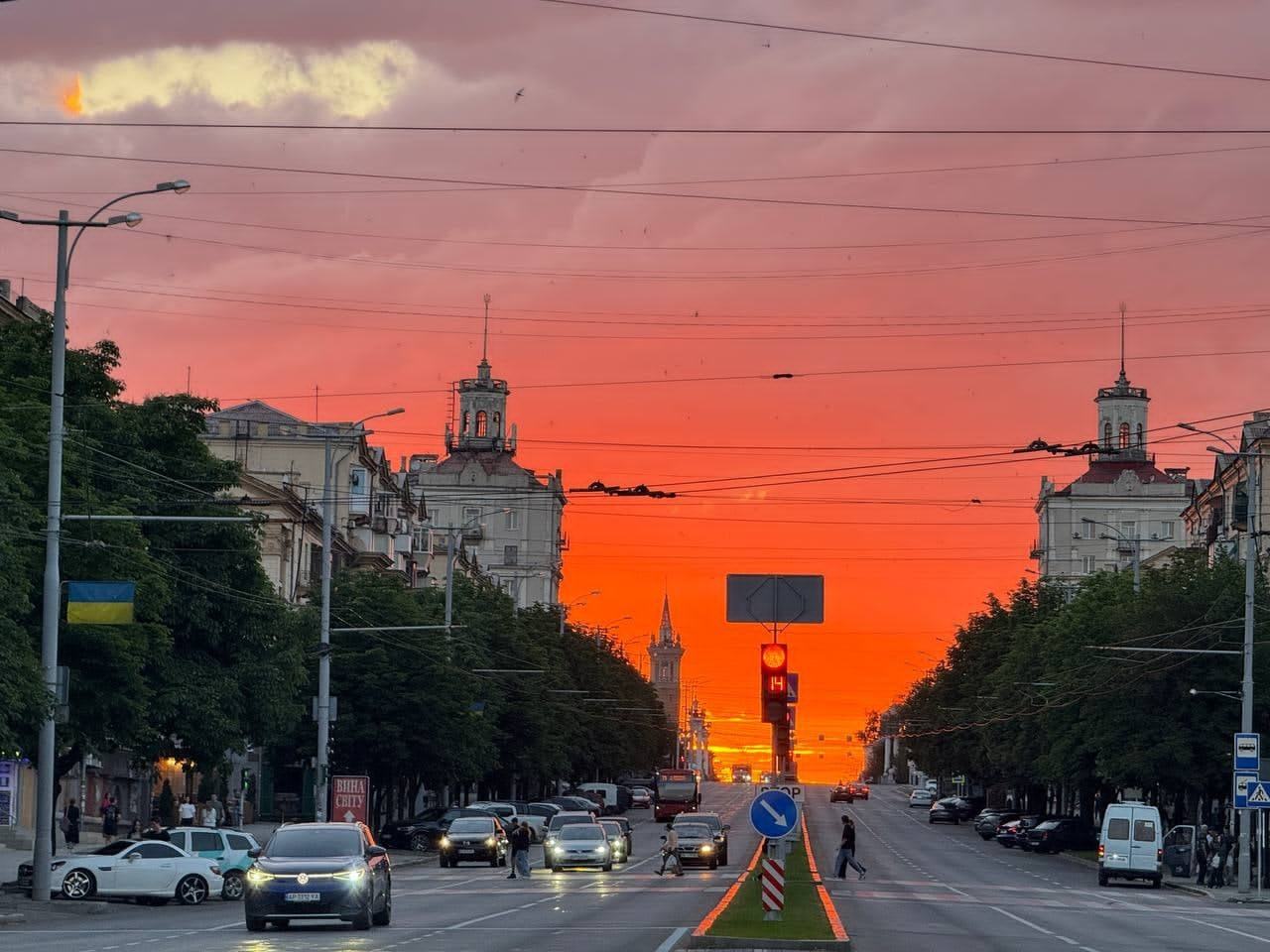
The city is alive: coffee shops are open, people are strolling in the parks
Businesses aren’t leaving the city, according to city authorities. There are many children.
"Simply put, we have to be fully prepared for September 1," Kharchenko adds.
If you only read the news summaries and headlines in your feed, it might give the impression that today’s Zaporizhzhia is nothing but a gray zone, a place where nothing remains except despair. But if you step outside, you can see that the city is alive: coffee shops are open, people are strolling in the parks. You don’t see “Closed” signs at every turn.
Yes, the city’s pace has changed somewhat, but life goes on. Zaporizhzhia is more about resilience — the ability to be the first to step up where others might give up.
Підпишіться, щоб отримувати найкращі статті на e-mail (раз на два тижні)

Підписатися