

Статті
The battle for people: Ukraine is losing population faster than Russia
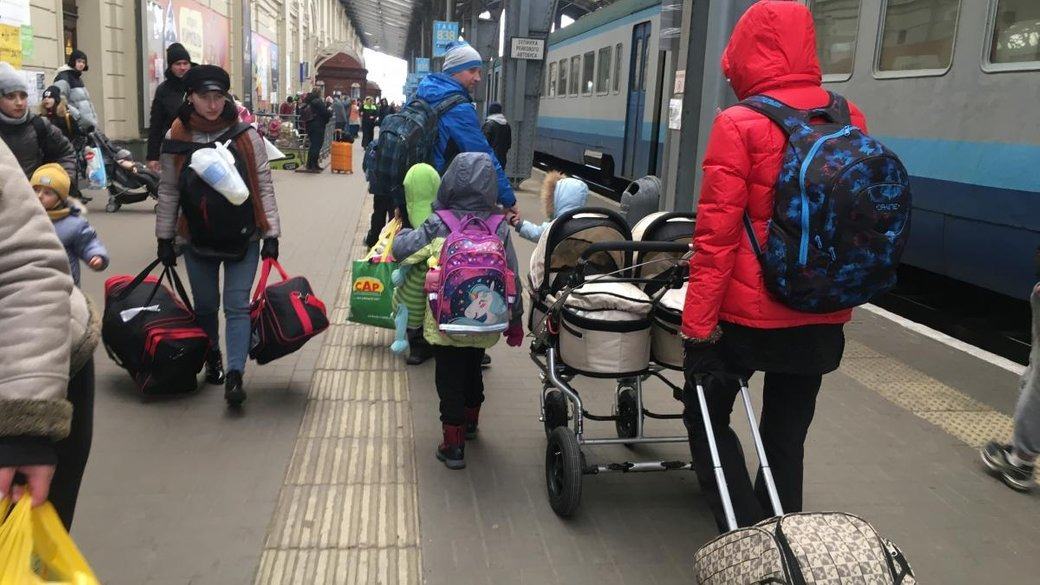
In recent months, heated debates about migrants have been raging in Ukraine — from arguments on social media to public statements by officials. A wave of memes about "Indians in Ukraine" has swept across those same social media platforms. But amid all the emotional uproar, the main issue is being lost: the demographic crisis is becoming truly dangerous. The country’s population is shrinking faster than it was before 2022. That is precisely why the state needs a well-thought-out migration policy, a strategy to bring back its own people and attract foreigners. The state migration policy strategy adopted in 2017 expired in 2025, and a new one — covering the period up to 2035 — is still only being developed.
History. Why numbers matter
It would seem that in war, the side with greater numbers wins. In the middle of the last millennium, the Grand Duchy of Moscow annexed the Novgorod Republic with a sevenfold population advantage, the Khanate of Kazan with a fifteenfold advantage, and Astrakhan with a hundredfold advantage. But this "arithmetic" does not always work.
During the reign of Tsar Ivan the Terrible (or Ivan IV), Moscow entered the Livonian War with a force twice as large as that of the Grand Duchy of Lithuania. Yet it emerged weakened: it lost its conquests and found itself in an economic crisis, exhausted by the oprichnina (a state policy of mass terror, executions, and land confiscations implemented by Ivan the Terrible). The Grand Duchy of Lithuania was also weakened, which prompted it to enter into a union with Poland.
At the beginning of the 17th century, the Polish-Lithuanian Commonwealth emerged as a contender for hegemony in Eastern Europe, with a population that now exceeded that of Moscow. Its troops captured the Kremlin with a small force, as Muscovy was mired in internal problems. Moscow ceded Smolensk, Chernihiv, and Novhorod-Siverskyi to the Polish-Lithuanian Commonwealth. And thus gained the necessary "break".
In the mid-17th century, everything changed. Taking advantage of Bohdan Khmelnytsky’s uprising, Moscow launched an attack on the Polish-Lithuanian Commonwealth. A significant portion of the population was deported or resettled to Muscovy.
By the mid-18th century, the Polish-Lithuanian Commonwealth had become a weakened state. Its population still allowed it to wage war, but the outdated noble system was suffocating it. Russian troops marched through Polish territory just as they do through Belarusian territory today. The critical factor was not the difference in numbers, but the institutional incapacity of the Polish-Lithuanian Commonwealth. As a result, Poland was partitioned by its stronger neighbors.
Two demographic policies
The strength of the Polish-Lithuanian Commonwealth long rested on its openness. Germans began settling in Polish lands as early as the 12th–13th centuries, and cities were founded under Magdeburg law (a medieval system of municipal self-government). Jews received privileges from Polish kings, and Rusyns (Ukrainians and Belarusians), Armenians, and Tatars were invited to settle. In the 16th century, Stephen Bathory granted privileges to Scottish merchants. Poland welcomed several waves of Dutch Mennonites. This was a consistent policy of attracting people, technology, and capital.
Moscow did the same, especially as its population plummeted. After the Time of Troubles (Smuta), the central regions of the tsardom were depopulated, and the first Romanovs — Mikhail and Alexei — established a system for attracting human resources from outside — the Dutch built factories. Scottish and German officers led regiments of a new model. Moscow accepted Orthodox Christians from the Balkans, Moldova, and the Greeks. It incorporated the Tatar nobility and settled refugees from Ukraine along its southern borders. Tens of thousands of artisans, printers, and clergy were taken from Belarus and Lithuania — mostly as captives.
UKRAINE AND BELARUS BECAME A SOURCE OF DEVELOPMENT FOR MOSCOW
The paradox is that Ukraine and Belarus became for Muscovy what Latin Europe had become for the Polish-Lithuanian Commonwealth — a source of development. Without this influx, the Russian Empire would not have existed.
The difference between the two states was in their capacity to implement reforms. A paralysis of the nobility and the political class gradually afflicted the Polish-Lithuanian Commonwealth. Meanwhile, Moscow was building an absolutism that allowed it to systematically absorb people, technologies, and territories even during years of weakness.
Demographics, resources, and population size matter greatly, but without effective institutions and deliberate state policy, they cannot be converted into power. It was precisely the ability to make and implement decisions that allowed Moscow to recover after every blow.
The situation in Ukraine 100 years ago
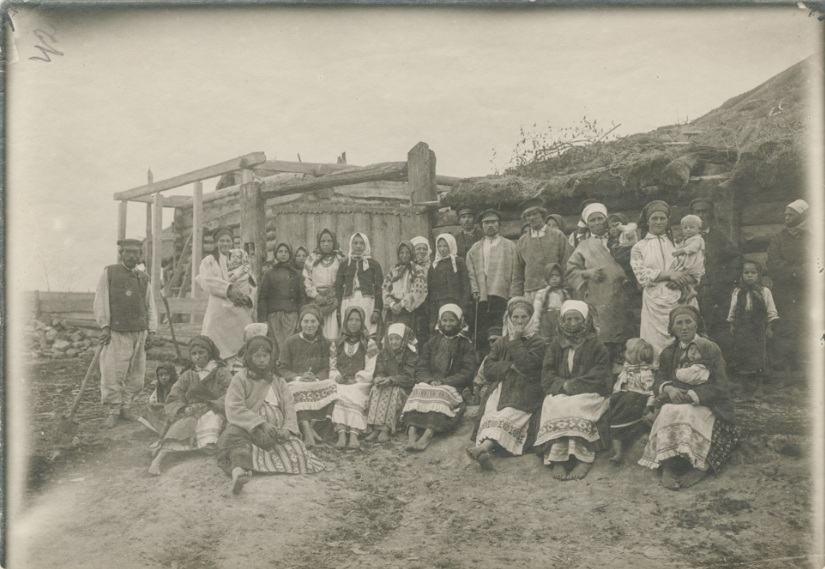
The collapse of the Russian and Austro-Hungarian Empires demonstrated the importance of institutional capacity. Following the population growth of the 19th century, some 30 million people lived in Ukrainian lands — more than in Poland under Józef Piłsudski (the first Marshal of Poland). During Vladimir Lenin's rule, the population initially stood at around 65 million. Millions of Ukrainians served in the tsarist army. But what happened?
After the October Revolution, the Bolsheviks disbanded the old imperial army and created a new one, numbering several million. They moved to general mobilization in 1918, the same year that the Ukrainian State of Hetman Pavlo Skoropadsky, supported by the German Empire, was established. The Bolsheviks began mobilization, but Pavlo Skoropadsky, despite understanding the need for it, was unable to do so. The hetman was overthrown, and the opportunity had been lost.
IN TERMS OF POPULATION, UKRAINE OUTNUMBERED POLAND
At its peak in 1919, the Red Army had about 3 million troops. Poland under Józef Piłsudski had 600,000. The Ukrainian People's Republic had several tens of thousands. In terms of population, Ukraine outnumbered Poland, but fielded an army several times smaller. Yet even that was enough to force the Bolsheviks to establish the Ukrainian Soviet Socialist Republic and form the USSR as a federation. This would have far-reaching consequences.
Despite the inability to translate demographic growth into full political agency, population size matters. A peak in the birth rate helped the country survive during the wars. According to demographer Oleksandr Hladun, approximately 1.57 million children were born in 1912 in what is now Ukraine — a record in our history.
This enabled the Ukrainian people to survive unimaginable upheaval: the Holodomor, the Holocaust, occupations, and Joseph Stalin’s terror. According to estimates by demographer Omelian Rudnytskyi, Ukraine lost more than 19 million lives, including over 8 million during World War II.
The current situation
Today, Russia has nearly a five-to-one advantage in population, although in 1991 it had only a three-to-one advantage. People are Putin’s strongest asset in the war and Ukraine’s weakest.
Ukraine is holding on thanks to technology, a grueling general mobilization, external support, and a consensus against an alliance with Russia.
Some even say that Ukraine’s resistance is shifting the historical balance of power in Central and Eastern Europe (CEE) — the same balance that Bohdan Khmelnytsky once shifted in Moscow’s favor. Only now, instead of Moscow, the European Union countries are the victors, and Putin’s Russia plays the role of the inept elites of the Polish-Lithuanian Commonwealth. The battlefield remains the same — Ukraine.
However, today’s army, numbering 800,000 – 900,000 troops, represents a level of mobilization unprecedented in Ukrainian history — an order of magnitude higher than that of the Ukrainian People’s Republic, the Ukrainian Galician Army, the Ukrainian Insurgent Army, or Nestor Makhno’s Black Army. This was made possible by funding from EU countries, US technology, and the demographic growth of recent decades.
Human capital is dwindling as the population shrinks
Meanwhile, human capital is dwindling as the population shrinks. Over the past 33 years, Ukraine has lost approximately 20 million people due to mortality, annexation, and migration.
In the 20th century, demographics helped the country weather the upheaval. After the current war in Ukraine, this mechanism will no longer be in place. The number of women of childbearing age is declining year by year. Even if the war ends tomorrow and some of the refugees return, there will be no natural population recovery.
The war is also taking its toll on Russia, though to a lesser extent. According to estimates by Russian demographer Alexei Raksha, the birth rate in Russia fell to approximately 1.178 million children last year. If these figures are accurate, the ratio of birth rates between Russia and Ukraine has reached 7 to 1 — not in our favor.
For Ukraine, the current trajectory from one worst record to the next is a trend that calls into question the very future of the country.
What does this imply
The classic 20th-century mindset of "if we survived the war, we’ll have more children" no longer works.
The state of the labor market is telling. Between 28 and 30 million people live in the territory controlled by Ukraine. Of these, approximately 13 million are employed — less than half. The rest are either in the informal sector or unable to work due to age or other circumstances. Seventy-four percent of Ukrainian companies are experiencing a labor shortage. Over the next decade, this gap is becoming systemic. The government cites a figure of 4.5 million people who need to be brought into the workforce by 2035. The Employment Strategy in Ukraine through 2030, adopted in January 2026, sets an interim target of increasing the number of employed people by 2 million. The government will attempt to bridge this gap by ensuring that everyone works officially for a formal salary and by the return of refugees. But will they return?
Even under the most optimistic repatriation scenario, the state will still need models for integrating foreigners.
GDP GROWTH WILL REQUIRE MORE WORKERS
The same applies to labor productivity: while it needs to grow, this alone will not solve the problem of labor shortages. Furthermore, GDP growth will require a larger and more skilled workforce.
But the truth is, quickly filling the 4.5 million-worker shortage with foreign workers isn’t the best solution for the country either. Demographer Oleksandr Hladun puts it bluntly: "The gradual, evolutionary integration of foreigners and the evolutionary development of Ukrainian society are better than any revolutionary change, which is what bringing 4.5 million migrants into Ukraine’s economy would amount to".
A large influx of immigrants in a short period of time can alter a country’s ethnic and religious structure. Therefore, it is important to discuss in advance who we want to welcome: people in which professions, from which countries, which migration flows to encourage, and which to restrict. But we will have to choose from what is available: from post-Soviet countries, South Asia, Africa, and Latin America. The pace of the migrant influx is acceptable for national security, and the regions of origin are a separate issue. This must also be taken into account.
Integration comes first
Integration through employment and military service is the only realistic path. At the same time, the government must consciously select priority sources of immigration.
The first promising source is the South Caucasus: Georgia, Armenia, and Azerbaijan. A shared Soviet educational heritage, knowledge of Russian as a bridge to Ukraine, and a long tradition of professional mobility to Ukraine. Target groups include teachers, doctors, engineers, and military personnel.
Colombians and other Latin Americans who have gained combat experience in the Defense Forces deserve a streamlined path to residency and citizenship — following the model of the French Foreign Legion or the US practice of naturalization through military service. Furthermore, remembrance policy should take into account the number of foreigners who have died for Ukraine and pay close attention to their countries of origin. That would be fair.
South Asia is an underrated source of skilled workers
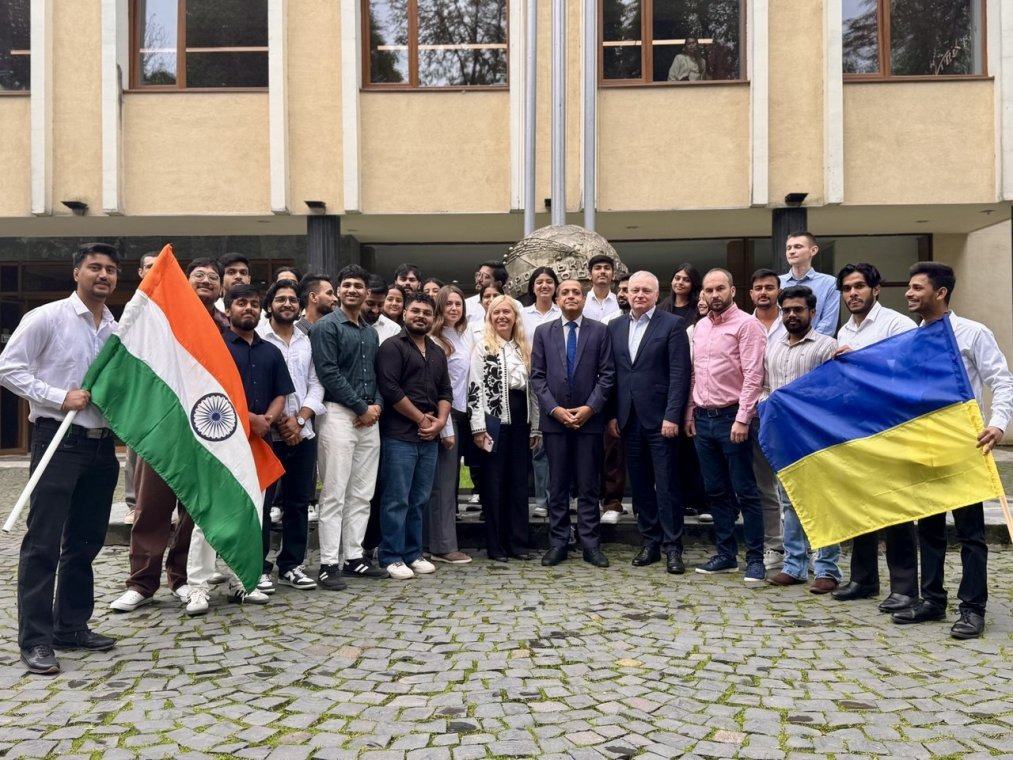
South Asia is an underrated source of skilled workers. Many students from the region study in Ukraine and earn professional qualifications, so it makes sense that some of them would stay. However, there are still no systematic tools in place to address this segment.
Another small but valuable target group consists of Europeans and North Americans — professionals ranging from farmers to military engineers. They may be attracted by the relatively low barriers to starting a business in Ukraine. Targeted engagement with this group is a separate strategic objective.
What we really need to prevent is the formation of closed, monoethnic enclaves with weak ties to the rest of society — modern-day ghettos.
A UNIVERSAL "FILTER" FOR EVERYONE — LANGUAGE
A universal "filter" for all categories — language. No work permits should be issued without a requirement to pass a Ukrainian language test at least at the A2 level within the first year. The Ukrainization of migrants is a strategically important task (funds for language adaptation courses should be allocated now). Ultimately, Ukrainization as a policy is an ongoing process that must apply to everyone, including ethnic Ukrainians.
Of course, these are just ideas that experts need to discuss. But the lack of a national migration strategy and policy will have far-reaching negative consequences for Ukraine’s very existence. Inaction or hasty decisions without a professional foundation will mean we decline faster than Russia.
Ukraine must remain a viable state by preserving its institutional capacity, and demographically, by slowing the rate of population decline.
Підпишіться, щоб отримувати найкращі статті на e-mail (раз на два тижні)

Підписатися